
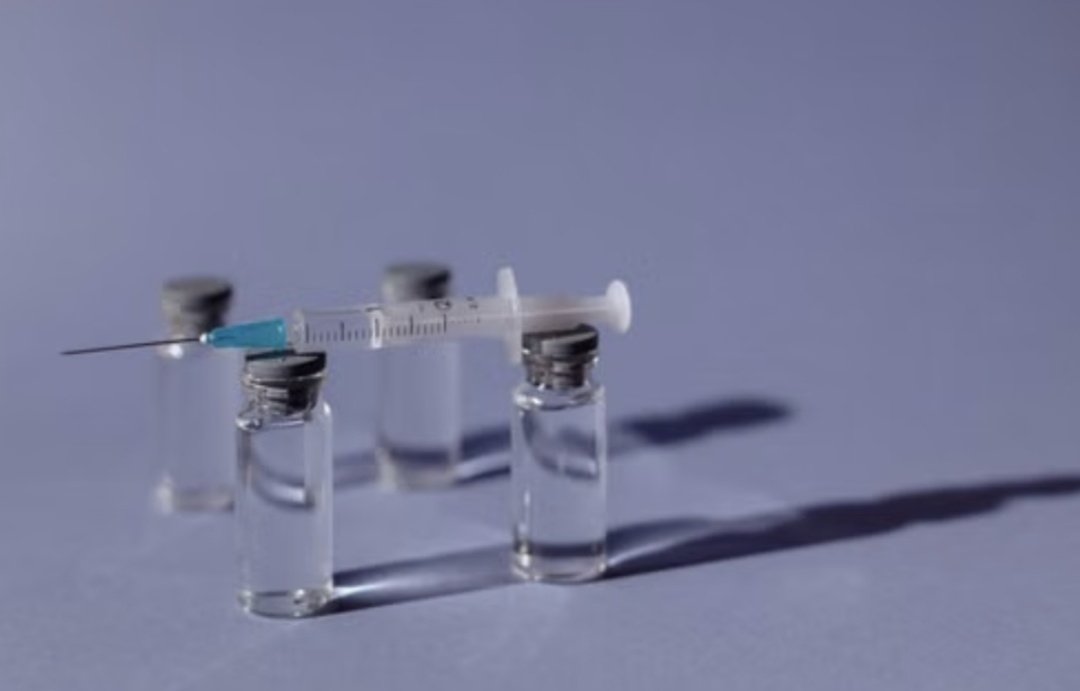
Modern vaccines often use recombinant proteins or nucleic acids instead of weakened or inactivated pathogens. These vaccines are safer, but may not start a strong immune response on their own. This happens because purified antigens do not have some natural signals that help the immune system recognize and respond to pathogens.
This is where a vaccine adjuvant emulsion plays an important role. The emulsions are made from biocompatible oils and surfactants and enable the body to recognize vaccine antigens. Thus, they trigger a stronger immune response. They have the ability to reduce the amount of antigen needed per dose, which is significant during global pandemics.
However, moving a vaccine adjuvant emulsion from lab development to large-scale cGMP manufacturing is not easy.
Droplet sizes should be below a single micron, and sterility should be ensured without damaging heat-sensitive ingredients. There’s also the challenge of maintaining the emulsion’s physical and chemical properties.
High-intensity ultrasonic homogenization addresses these challenges. The homogenizer presents a scalable alternative to traditional high-pressure homogenization systems.
Why Droplet Size Dictates Efficacy and Sterility?
Among lipid-based delivery vehicles, the squalene oil-in-water emulsion is the gold standard for pandemic influenza vaccines and emerging infectious disease candidates. These systems have squalene oil dispersed in an aqueous buffer. It’s stabilized by non-ionic surfactants such as polysorbate 80 and sorbitan trioleate.
If the vaccine adjuvant emulsion needs to have effective performance in a clinical setting, its droplet size distribution must meet these morphological criteria:
- Immune response and distribution: Nano-emulsion droplets measuring 100–160 nm can move efficiently into the lymphatic system and be taken up by antigen-presenting cells (APCs), such as dendritic cells. Larger droplets tend to stay at the injection site and lead to local reactions without improving the immune response.
- Physical stability: Larger droplets separate faster under gravity and lead to creaming or sedimentation. When droplets are 200 nm and have a polydispersity index below 0.15, the emulsion is uniform. This reduces droplet clumping and extends the shelf life.
- Sterile filtration: Ingredients such as squalene, saponins, and synthetic Toll-like receptor agonists may be damaged by heat or oxidation during steam sterilization. For this reason, sterile filtration through a 0.22-micron (220 nm) membrane is used when the formulation is compatible with this process.
If an emulsion contains a “tail” of droplets larger than 200 nm, it will foul and blind sterilizing-grade filters. This will lead to costly batch losses and membrane pressure spikes.
Acoustic Cavitation: Production of Sub-Micron Emulsion Manufacturing
A uniform emulsion with droplets smaller than 160 nm requires strong mechanical forces, and only then do the oil droplets break down.
In sub-micron emulsion manufacturing, formulators use rotor-stator mixers, high-pressure homogenizers, and ultrasonic liquid processors. Rotor-stator mixers often lack the energy needed to produce droplets at the nanoscale.
High-pressure homogenizers force the pre-mixed emulsion through tiny channels using pressures of up to 30,000 psi. It’s effective, but the channels can clog easily and generate significant heat. The machine’s components can experience wear because of particle friction. The consequences are particle contamination and frequent maintenance.
How Ultrasonic Homogenization Works
An ultrasonic homogenizer in biopharma applications run on high-frequency acoustic cavitation. An electronic generator converts electricity into a 20 kHz signal, which drives a piezoelectric transducer. The transducer converts this signal into mechanical vibrations, which are amplified and move into the liquid via the sonotrode.
The probe’s vibration creates high-frequency sound waves that travel through a liquid. It creates quick alternating cycles of high pressure and low pressure. Tiny bubbles form and grow, and when they become unstable, they collapse violently.
The collapsing bubbles create tiny liquid jets that move at hundreds of metres per second and strong localised shear forces. These forces break the squalene oil droplets into smaller and more uniform nanoscale droplets.
How Barbell Horn Ultrasonic Technology Helps Overcome Scale-Up Challenges?
In conventional ultrasonic horns, increasing the horn’s diameter to process larger volumes can reduce its vibration amplitude. Stronger vibrations help create intense acoustic cavitation. But larger horns may not generate enough force for sub-micron emulsion manufacturing at industrial scales.
Industrial Sonomechanics (ISM) addressed this challenge with its patented Barbell Horn Ultrasonic Technology (BHUT).
BHUT uses a specially designed horn shape to maintain high vibration amplitude across larger surfaces. ISM ultrasonic processors can thus maintain amplitudes of up to 90–100 microns. The horn’s diamond-shaped tip and curved transition areas also direct acoustic energy into the liquid inside a flow-through reactor chamber.
Biopharmaceutical formulators gain the following benefits:
– Formulators can develop a 50 mL squalene oil-in-water emulsion using a benchtop ISM system and find the required amplitude and processing time. These settings can then be transferred to industrial-scale flow-through systems to keep processing conditions consistent.
– The Barbell Horn creates a large area of intense cavitation without any loss of vibration amplitude. The production flow rates can then increase by 10 to 50 times while aiming to maintain the same droplet size measurements achieved in the laboratory.
Benefits of Using an Ultrasonic Homogenizer in Biopharma cGMP Manufacturing
When adding an ultrasonic homogenizer to biopharma production, engineers must manage contamination risks, temperature, and cleaning requirements. Flow-through ultrasonic homogenizers address these challenges.
– Reduced clogging and contamination: Ultrasonic flow cells do not have narrow channels but open pathways. They also avoid high-pressure seals and plungers to reduce clogging and equipment wear.
– CIP/SIP compatibility: ISM reactor chambers use pharmaceutical-grade 316L stainless steel and electropolished surfaces. Their designs minimise dead spaces. The reactor chambers can be connected to automated Clean-in-Place (CIP) and Steam-in-Place (SIP) systems.
– Precise temperature control: Integrated cooling jackets and BHUT’s energy conversion efficiency control emulsion temperatures during processing and assist in protecting heat-sensitive antigens.
– Improved 0.22 µm filtration: Ultrasonic processing reduces D90 droplet sizes below 200 nm in a single pass and improves the membrane filter throughput. This reduces consumable costs and supports sterile filtration.
Conclusion
High-quality vaccine adjuvant emulsion needs a technology that can scale from early laboratory research to commercial cGMP conveniently. By combining acoustic cavitation with the scalable design of Barbell Horn Ultrasonic Technology, Industrial Sonomechanics helps biopharma teams produce uniform and sterile-filterable nano-emulsions at scales ranging from millilitres to thousands of litres per hour.