
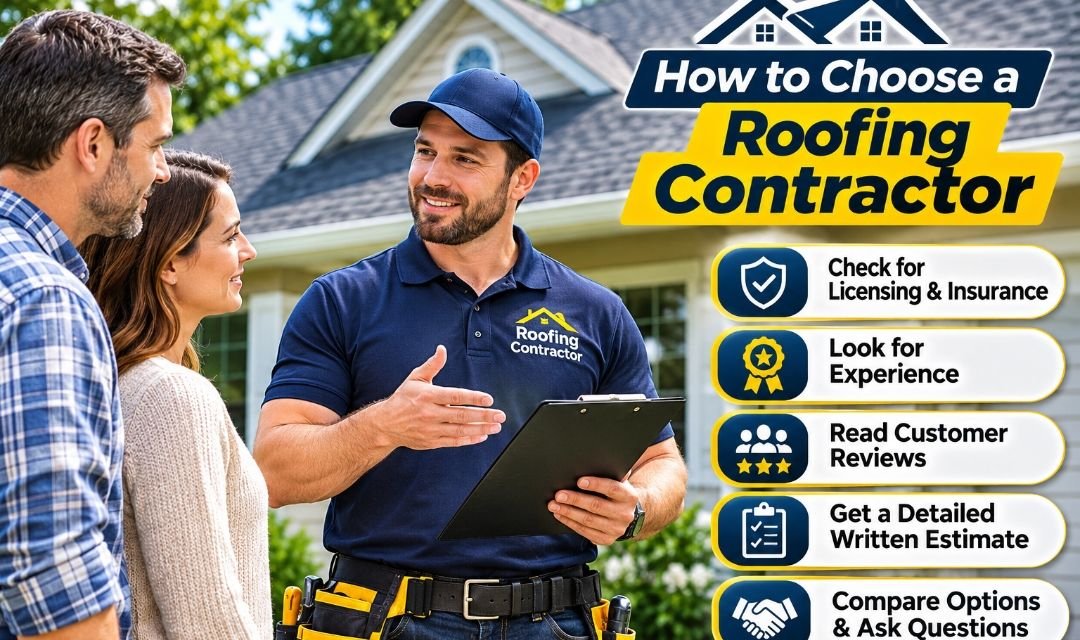
How to choose a roofing contractor is an important question for homeowners planning roof repairs, replacement, or maintenance. Your roof protects your home from rain, wind, sunlight, and moisture, so hiring the right professional can make a major difference in the quality and durability of the work. A reliable roofing contractor should have suitable experience, proper insurance, clear pricing, and a strong understanding of different roofing materials. Since a roof is a major part of your home’s structure and weather protection, choosing an experienced contractor can help you avoid poor workmanship, unexpected expenses, and future leaks.
Quick Overview: How to Choose a Roofing Contractor
| Category | Details |
|---|---|
| Main topic | How to Choose a Roofing Contractor |
| Main purpose | Hire a reliable roofing professional |
| Important qualifications | Experience, applicable licenses, insurance |
| Common roofing services | Repairs, replacement, inspections, maintenance |
| Recommended estimates | Compare at least three detailed quotations |
| Important documents | Written contract, insurance details, warranty terms |
| Contractor experience | Relevant experience with your roof type |
| Common warning signs | Pressure tactics, vague pricing, missing documents |
| Roofing materials | Asphalt shingles, metal, tile, flat-roof membranes |
| Payment method | Written, milestone-based payment terms |
| Warranty types | Manufacturer warranty and workmanship warranty |
| Main goal | Receive safe, durable, professionally completed roofing work |
Hiring a roofing contractor can feel confusing, especially if you have never managed a major home improvement project.
Many companies offer roofing services, but their experience, qualifications, and workmanship can vary.
Some contractors specialize in roof replacement.
Others focus on repairs, waterproofing, metal roofing, or flat-roof systems.
Choosing the wrong contractor may result in recurring leaks, poor installation, unexpected costs, and difficult warranty claims.
However, choosing the right professional becomes easier when you know what to look for.
This guide explains 20 essential tips for selecting a roofing contractor, comparing estimates, reviewing qualifications, identifying warning signs, and protecting your investment.
Why Choosing the Right Roofing Contractor Matters
Roofing work involves more than installing shingles or tiles.
A complete roofing system includes several important components.
These may include roof decking, underlayment, flashing, ventilation, insulation, and drainage.
If one part is installed incorrectly, the roof may develop problems even when high-quality materials are used.
An experienced roofing contractor understands how these components work together.
The right contractor can also identify existing damage before installation begins.
For example, replacing roofing materials without repairing damaged decking may leave serious problems unresolved.
Professional workmanship is therefore just as important as material quality.
What Does a Roofing Contractor Do?
A roofing contractor is a professional or company that installs, repairs, replaces, and maintains roofing systems.
Common services include:
-
Roof inspections and condition assessments
-
Roof leak investigation and repairs
-
Asphalt shingle installation
-
Metal roofing installation
-
Clay and concrete tile replacement
-
Flat-roof waterproofing
-
Flashing and drainage repairs
-
Complete roof replacement
-
Storm damage assessment
-
Preventive roof maintenance
However, not every contractor offers every service.
Choose someone with relevant experience in the specific work your home requires.
20 Essential Tips for Choosing a Roofing Contractor
1. Start With a Professional Roof Inspection
Before hiring a contractor for major roofing work, understand the condition of your roof.
A professional inspection can help identify damaged roofing materials, leaks, deteriorated flashing, and drainage problems.
It may also reveal signs of structural damage.
However, some problems remain hidden until roofing materials are removed.
Ask the contractor to explain the findings clearly.
A reliable professional should distinguish between necessary repairs and optional improvements.
2. Look for Relevant Roofing Experience
Experience is one of the most important factors when selecting a roofing contractor.
However, the number of years in business is not the only consideration.
A contractor should have experience with your specific roofing system.
For example, installing asphalt shingles requires different techniques from installing single-ply flat-roof membranes.
Metal roofing also has specialized fastening and flashing requirements.
Ask about similar projects.
A contractor with relevant experience may be better prepared to handle your roof’s requirements.
3. Verify Licensing Requirements
Roofing contractor licensing requirements vary by country, state, province, and municipality.
Some locations require specific roofing licenses.
Others regulate contractors through general construction licenses or business registration.
Before hiring, check the requirements in your area.
Ask the contractor for applicable license information.
Verify the details with the relevant authority when possible.
However, do not assume that a business registration alone proves roofing competence.
Proper qualifications depend on local regulations and the type of work.
4. Check Insurance Coverage
Roofing work involves serious safety risks.
Workers may be exposed to falls, tools, and hazardous weather conditions.
Accidental property damage can also occur.
Ask about appropriate liability insurance and worker coverage.
However, insurance requirements vary by jurisdiction.
Request current evidence of coverage and verify it when appropriate.
Do not rely only on verbal assurances.
Proper coverage can help reduce financial risks if an accident occurs.
5. Compare at Least Three Roofing Estimates
Comparing multiple estimates can help you understand the expected project cost.
Request detailed quotations from at least three qualified contractors when practical.
However, do not compare prices alone.
Check whether the estimates include the same materials and services.
One contractor may include flashing replacement.
Another may exclude it.
A lower estimate may therefore represent a smaller scope of work rather than better value.
6. Request a Detailed Written Estimate
A written estimate should explain the proposed roofing work.
It should identify materials, labor, removal, disposal, and other relevant expenses.
Ask whether the estimate includes underlayment, flashing, and drainage work.
Also ask how unexpected damage will be priced.
However, avoid approving a major project based on vague verbal figures.
A detailed estimate helps reduce misunderstandings.
7. Check Customer Reviews Carefully
Customer reviews can provide useful information about a roofing company’s reputation.
Look for comments about communication, punctuality, workmanship, and problem resolution.
However, individual reviews may not tell the complete story.
Consider patterns across multiple reviews.
Be cautious of unusually repetitive or suspicious feedback.
Ask the contractor for recent references when appropriate.
A combination of reviews and direct references can provide a better understanding of the company.
8. Ask for Previous Roofing Project Examples
A reliable contractor should be able to explain previous work.
Ask for photographs of completed roofing projects.
Look for examples involving materials similar to yours.
However, photographs alone do not prove workmanship quality.
Ask about project challenges and how they were addressed.
You may also request references from previous customers.
Relevant project experience can help you assess the contractor’s suitability.
9. Understand the Roofing Materials Being Offered
Different roofing materials have different requirements.
Common choices include asphalt shingles, metal panels, clay tiles, concrete tiles, and waterproofing membranes.
Ask why the contractor recommends a particular material.
Consider local climate, roof slope, structural capacity, and maintenance needs.
However, avoid choosing materials based only on appearance.
The roofing system must be appropriate for your property.
10. Review Manufacturer Certifications
Some roofing manufacturers provide training or certification programs for installers.
These programs may indicate familiarity with particular products.
However, certification does not automatically guarantee perfect workmanship.
Ask what the certification covers.
Confirm whether it is current.
Check whether it affects warranty eligibility.
Manufacturer training can be useful, but it should be considered alongside experience, insurance, and references.
11. Ask About Roofing Warranties
Roofing projects may include different warranties.
A manufacturer warranty generally relates to specified product defects.
A workmanship warranty may cover certain installation problems.
However, coverage varies significantly.
Read the terms carefully.
Ask about exclusions, registration requirements, and claim procedures.
A long warranty period does not necessarily mean every problem is covered.
12. Discuss the Project Timeline
Ask how long the roofing work is expected to take.
The schedule depends on roof size, material, complexity, and weather.
A small repair may take a short time.
A complete roof replacement may require several days or longer.
However, unexpected damage or weather conditions can cause delays.
Ask how schedule changes will be communicated.
A realistic timeline helps you prepare your household.
13. Check Safety Procedures
Roofing is hazardous work.
A professional contractor should have appropriate safety procedures.
These may include fall protection, safe equipment use, and controlled work areas.
However, safety requirements depend on the project and local regulations.
Ask how workers and people around the property will be protected.
Avoid contractors who dismiss obvious safety concerns.
A safe project is more important than a rushed installation.
14. Ask Who Will Perform the Work
Some roofing companies use their own employees.
Others hire subcontractors.
Either arrangement may be appropriate when properly managed.
However, homeowners should understand who will be working on the property.
Ask who supervises the project.
Confirm responsibility for workmanship.
Review insurance arrangements.
Clear accountability can help prevent confusion.
15. Review the Payment Schedule
Payment terms should be clearly documented.
Some projects require an initial deposit.
Others use payments linked to completed milestones.
However, payment practices and legal limits vary by location.
Avoid paying the entire project cost upfront without appropriate protections.
Use traceable payment methods.
Request receipts.
A written payment schedule helps both parties understand their obligations.
16. Confirm Permit Responsibilities
Some roofing projects require building permits.
Requirements depend on location and project scope.
Major structural changes may require additional approvals.
Ask whether permits are necessary.
Confirm who will obtain them.
However, do not assume that minor repairs and complete replacements follow the same rules.
Proper permits and inspections can help ensure compliance with applicable building requirements.
17. Ask About Unexpected Roof Damage
Hidden damage may become visible after old roofing materials are removed.
For example, roof decking may have moisture damage.
Flashing may be more deteriorated than expected.
Ask how the contractor handles unexpected work.
Request written approval procedures for additional expenses.
However, avoid agreeing to unlimited extra charges.
A clear change-order process can protect your budget.
18. Evaluate Communication and Professionalism
Good communication is important throughout a roofing project.
A reliable contractor should answer reasonable questions.
They should explain the proposed work.
They should provide clear documentation.
However, communication does not need to be overly complicated.
The goal is to understand what work will be completed, when it will happen, and how problems will be handled.
A contractor who avoids basic questions may not be the best choice.
19. Avoid High-Pressure Sales Tactics
Be cautious of contractors who demand immediate decisions.
Some may claim that a special price is available only if you sign immediately.
Others may recommend complete replacement without explaining the roof’s condition.
However, genuine roofing emergencies do sometimes require prompt action.
Even then, homeowners should receive clear information about necessary work.
Avoid signing contracts you do not understand.
Take reasonable time to review major financial decisions.
20. Get Everything in Writing
A written contract is one of the most important protections in a roofing project.
It should describe the agreed scope of work.
Include roofing materials, pricing, payment terms, and expected timelines.
It should also explain warranties and procedures for changes.
However, contract requirements vary by jurisdiction.
Review all terms before signing.
Keep copies of important documents.
Clear written agreements can help prevent disputes.
Roofing Contractor Comparison Table
When comparing roofing companies, focus on qualifications and overall value.
| Factor | What to look for | Why it matters |
|---|---|---|
| Experience | Relevant roofing projects | Supports suitable installation |
| Licensing | Applicable current credentials | Helps verify legal compliance |
| Insurance | Appropriate active coverage | Reduces certain financial risks |
| Estimate | Detailed written quotation | Helps compare project scope |
| Materials | Suitable products and specifications | Influences roof performance |
| Reviews | Consistent, credible feedback | Provides reputation information |
| Warranty | Clear written terms | Explains available protections |
| Timeline | Realistic schedule | Helps with planning |
| Safety | Appropriate work procedures | Protects workers and property |
| Contract | Complete written agreement | Reduces misunderstandings |
Roofing Contractor Comparison Checklist
Use this checklist when reviewing potential roofing contractors.
Contractor Hiring Checklist
0 of 14
Use this list as a hiring aid. It does not replace checking applicable local licensing, insurance, and construction requirements.
Questions to Ask a Roofing Contractor Before Hiring
Before signing a contract, ask the contractor several important questions.
-
How long have you worked with this type of roofing system?
-
Do you hold the licenses required in this area?
-
Can you provide current insurance documentation?
-
Can you share references from similar projects?
-
What roofing materials do you recommend and why?
-
Does the estimate include removal and disposal?
-
Will you inspect the roof deck and flashing?
-
Who will supervise the project?
-
Will subcontractors be involved?
-
What warranties are included?
-
How will unexpected damage be handled?
-
Are permits required?
-
What is the expected project schedule?
-
What payment terms apply?
-
How will you protect my property during construction?
These questions can help you compare contractors more effectively.
How to Compare Roofing Contractor Estimates
Roofing estimates should be compared based on the same project requirements.
For example, one estimate may include premium underlayment.
Another may include a less expensive product.
One contractor may replace flashing.
Another may reuse existing components.
These differences can affect both price and long-term performance.
Example Roofing Estimate Comparison
| Item | Contractor A | Contractor B | Contractor C |
|---|---|---|---|
| Total price | $7,500 | $6,800 | $8,200 |
| Written scope | Detailed | Basic | Detailed |
| Flashing replacement | Included | Unclear | Included |
| Waste disposal | Included | Included | Included |
| Workmanship warranty | Written | Not specified | Written |
| Insurance verification | Confirmed | Pending | Confirmed |
This table uses fictional contractors and hypothetical prices for illustration.
Contractor B has the lowest price, but important details remain unclear.
Contractors A and C provide more complete information.
However, price and documentation alone do not establish which contractor is best.
Qualifications, materials, references, and the actual project requirements must also be considered.
How Much Does a Roofing Contractor Cost?
Roofing contractor costs depend on the type of work.
Minor repairs may require less labor and material than a complete replacement.
Complex roof shapes can increase installation time.
Material selection also affects pricing.
Illustrative Roofing Project Costs
| Roofing service | Example cost range (USD) |
|---|---|
| Minor roof repair | $150–$600 |
| Flashing repair | $200–$900 |
| Professional roof inspection | $100–$400 |
| Localized shingle replacement | $200–$800 |
| Flat-roof membrane repair | $300–$1,500 |
| Complete asphalt shingle replacement | $4–$9 per square foot |
| Metal roof replacement | $7–$16 per square foot |
These are broad illustrative planning ranges, not verified current quotations. Actual prices vary by location, roof condition, materials, access, and labor requirements.
Always request local written estimates for accurate project pricing.
Red Flags When Hiring a Roofing Contractor
Some warning signs deserve special attention.
No Written Contract
A contractor who refuses to provide a written agreement may create unnecessary risk.
Major roofing work should have clearly documented terms.
Missing Insurance Information
Be cautious when a contractor cannot provide appropriate insurance details.
Verify coverage before work begins.
Extremely Low Estimates
A very low estimate may exclude important work or materials.
However, a low price does not automatically mean poor quality.
Compare the complete scope.
Pressure to Sign Immediately
Avoid making major decisions under unnecessary pressure.
Review the contract and estimate carefully.
Unclear Warranty Terms
A warranty should explain what is covered and how claims are handled.
Vague promises may be difficult to enforce.
Poor Communication
Repeatedly unanswered questions or changing project details can indicate potential problems.
Clear communication is important throughout construction.
Large Unexplained Upfront Payments
Be cautious of unusual payment demands.
Review local rules and use a documented payment schedule.
How to Choose a Contractor for Roof Repairs
Roof repairs require accurate diagnosis.
A visible ceiling stain does not always identify the actual leak location.
Water can travel through roofing components before appearing indoors.
Choose a contractor who investigates the cause.
Ask whether the repair addresses the underlying problem.
However, avoid contractors who simply recommend applying sealant without examining the roofing system.
A suitable repair should address the actual source of damage.
How to Choose a Contractor for Roof Replacement
Complete roof replacement is a larger project.
Choose a contractor experienced with the selected roofing material.
Ask about roof decking, underlayment, flashing, ventilation, and drainage.
Confirm removal and disposal arrangements.
Review the installation schedule.
However, do not focus only on the visible roofing material.
The entire roofing system affects long-term performance.
How to Choose a Flat Roofing Contractor
Flat roofing requires specialized knowledge.
Common systems include single-ply membranes, modified bitumen, and built-up roofing.
Different materials require different installation techniques.
Ask whether the contractor has experience with the specific system.
Review drainage planning.
Confirm how seams, edges, and roof penetrations will be sealed.
However, avoid choosing a contractor based only on general roofing experience.
Relevant flat-roof expertise is particularly important.
How to Choose a Metal Roofing Contractor
Metal roofing requires attention to fastening, expansion, flashing, and corrosion protection.
Ask about experience with the selected metal system.
Review installation details.
Check product specifications.
However, metal roofing designs vary.
Standing-seam systems may have different requirements from exposed-fastener panels.
Choose a contractor familiar with the exact product.
How to Choose a Roofing Contractor After Storm Damage
Storm damage may require urgent attention.
However, homeowners should still verify contractor qualifications.
Document visible damage from safe locations.
Avoid climbing onto the roof.
Contact your insurer when appropriate.
Request a written assessment.
Be cautious of contractors who make unsupported promises about insurance coverage.
A reliable contractor should explain the proposed repairs without pressuring you.
Roofing Contractor Warranties Explained
Roofing warranties are an important part of contractor selection.
Two common types are manufacturer warranties and workmanship warranties.
Manufacturer Warranty
This generally covers specified defects in roofing products.
Coverage depends on the manufacturer’s terms.
Some warranties require approved installation methods.
Workmanship Warranty
This may cover certain installation-related problems.
The duration and exclusions depend on the contractor.
However, a warranty is only useful when its terms are clear and the responsible company can honor it.
Read the documents carefully before signing.
Should You Choose the Cheapest Roofing Contractor?
The cheapest contractor is not always the best choice.
A low price may be reasonable when the company operates efficiently.
However, some low estimates exclude important work.
For example, one contractor may include new flashing and proper waste disposal.
Another may charge extra for those services.
Compare the complete project.
Consider qualifications, materials, warranties, and workmanship.
The goal is to receive good value rather than simply the lowest initial price.
Local Roofing Contractor vs. Large Roofing Company
Both local contractors and larger companies can provide quality roofing services.
Local contractors may offer familiarity with regional weather and building conditions.
Larger companies may have more extensive equipment or staffing.
However, business size does not guarantee quality.
Evaluate each company individually.
Check qualifications, references, insurance, and project details.
Choose the contractor who best meets your needs.
How to Prepare Before the Roofing Contractor Arrives
Proper preparation can help the project run smoothly.
Move vehicles away from work areas.
Protect fragile outdoor items.
Keep children and pets away from construction zones.
Discuss access requirements.
Ask how landscaping will be protected.
However, do not enter active work areas.
Roofing work can involve falling debris and other hazards.
Follow the contractor’s safety instructions.
What to Check After Roofing Work Is Completed
Once the roofing project is finished, review the agreed work.
Confirm that visible debris has been removed.
Ask about flashing and drainage.
Review warranty documents.
Keep invoices and material information.
However, do not climb onto the roof to inspect it yourself.
Ask the contractor for photographs or arrange an independent professional inspection when appropriate.
A final review can help identify incomplete work before the project is closed.
Final Thoughts
Learning how to choose a roofing contractor can help homeowners avoid expensive mistakes and protect their property.
A roofing project involves important decisions about materials, installation methods, safety, and long-term maintenance.
The right contractor should understand your roofing system and explain the work clearly.
Start with a professional roof assessment.
Compare several detailed estimates.
Verify applicable licensing and insurance.
Review previous projects and customer references.
Ask about materials, warranties, and payment terms.
Avoid unnecessary pressure.
Most importantly, get the agreed work in writing.
Whether you need a small roof repair, complete roof replacement, or specialized flat-roof waterproofing, careful contractor selection can help you receive safer, more reliable, and longer-lasting roofing work.
Frequently Asked Questions About Choosing a Roofing Contractor
1. How do I choose a good roofing contractor?
Check relevant experience, applicable licensing, insurance, references, written estimates, and warranty terms.
2. How many roofing estimates should I get?
Comparing at least three detailed estimates is a practical approach when possible.
3. Should a roofing contractor have insurance?
Contractors should carry appropriate insurance and worker coverage according to local requirements.
4. How can I verify a roofing contractor’s license?
Check with the relevant local or regional licensing authority.
5. Is the cheapest roofing contractor the best?
Not necessarily. Compare materials, scope, qualifications, and warranties.
6. What questions should I ask before hiring a roofer?
Ask about experience, insurance, materials, timelines, warranties, permits, and payment terms.
7. How do I know if a roofing contractor is reliable?
Look for clear documentation, credible references, professional communication, and relevant experience.
8. Should I hire a local roofing contractor?
Local experience can be useful, but qualifications and workmanship matter more than business location alone.
9. What should a roofing estimate include?
It should describe materials, labor, removal, disposal, and other agreed project expenses.
10. Should roofing work have a written contract?
Yes. A written contract helps clarify responsibilities, pricing, and project requirements.
11. What is a roofing workmanship warranty?
It is a warranty that may cover specified installation-related problems.
12. How long should a roofing project take?
Duration depends on roof size, material, weather, and project complexity.
13. Do roofing contractors need permits?
Permit requirements vary by location and the type of roofing work.
14. Can a roofing contractor inspect my roof?
Qualified roofing contractors commonly provide roof inspections and condition assessments.
15. What are common roofing contractor scams?
Warning signs include high-pressure sales tactics, vague contracts, unsupported claims, and unusual payment demands.
16. Should I pay the full roofing cost upfront?
Avoid doing so without appropriate protections. Follow local rules and agree on clear payment terms.
17. What if a contractor discovers hidden damage?
The contract should explain how additional work will be documented and approved.
18. Can roofing contractors help with storm damage?
Many contractors inspect and repair storm damage, but insurance decisions remain with the insurer.
19. How do I compare roofing materials?
Consider climate suitability, durability, weight, cost, and maintenance requirements.
20. Is manufacturer certification important?
It can indicate product-specific training, but it does not replace checking experience and qualifications.
21. What should I do if a contractor refuses to provide insurance information?
Consider another contractor who can provide appropriate documentation.
22. Should I check roofing contractor reviews?
Yes. Reviews and references can help you understand customer experiences.
23. Can I hire a general contractor for roofing work?
That depends on local regulations, qualifications, and the contractor’s experience with the roofing system.
24. What should I check after roof installation?
Review the completed scope, cleanup, warranty documents, and any required inspections.
25. What is the most important roofing contractor selection tip?
Choose a qualified, properly insured professional who provides clear written documentation and has relevant roofing experience.
For more home improvement guides, roofing advice, renovation planning tips, and practical household maintenance ideas, visit Picanto Magazine