
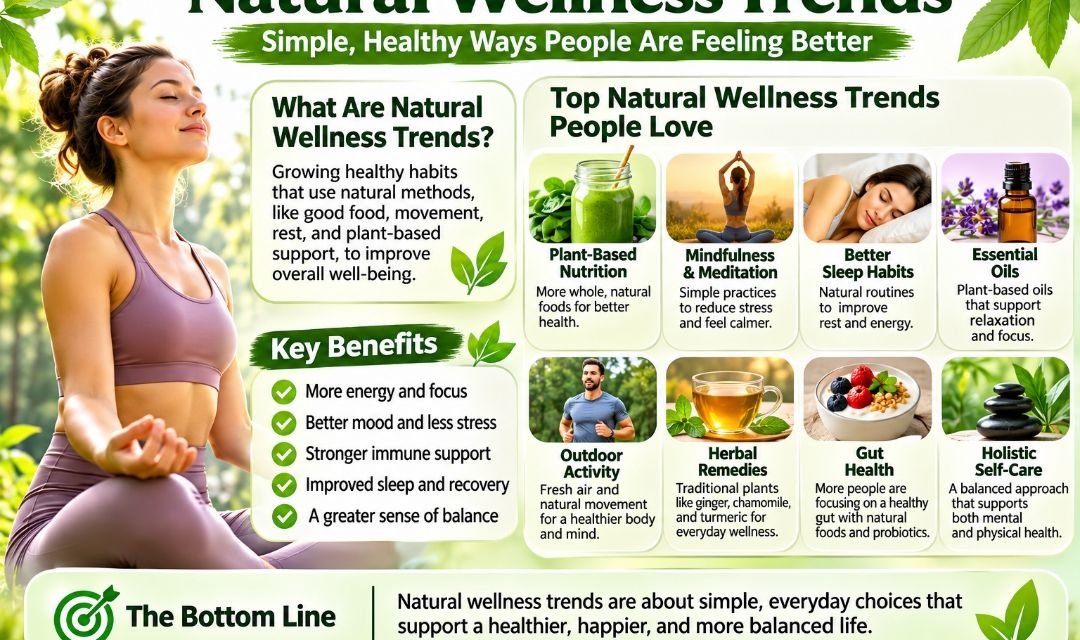
Quick Overview of Natural Wellness Trends
| Category | Details |
|---|---|
| Main topic | Natural Wellness Trends |
| Focus year | 2026 |
| Main goal | Supporting physical and mental well-being |
| Popular areas | Nutrition, fitness, sleep, mindfulness |
| Nutrition trends | Plant-based meals, whole foods, fermented foods |
| Mental wellness | Meditation, breathing exercises, stress management |
| Physical wellness | Walking, strength training, mobility exercises |
| Natural products | Herbal teas, botanical skincare, plant-based ingredients |
| Sleep wellness | Consistent sleep schedules and healthy bedtime habits |
| Environmental wellness | Outdoor activities and sustainable choices |
| Main concern | Unsupported health claims |
| Evidence-based foundation | Balanced diet, physical activity, adequate sleep |
| Long-term approach | Sustainable daily habits |
Natural wellness is not a single treatment or product.
It is a broad approach to maintaining health through everyday choices.
Some practices have strong scientific support.
Others are popular mainly because of social media, advertising, or personal experiences.
For example, regular exercise has well-established health benefits.
However, claims that a particular herbal drink can detoxify the entire body may lack reliable evidence.
The most useful approach is to understand which wellness practices are supported by research and which require more investigation.
What Are Natural Wellness Trends?
Natural wellness trends are lifestyle practices and consumer interests that emphasize everyday habits, natural ingredients, and preventive health.
They often involve food, movement, relaxation, sleep, and environmental awareness.
Some people prefer simple routines such as walking outdoors or preparing home-cooked meals.
Others explore herbal products, wellness technology, or alternative health practices.
However, the word natural does not automatically mean safe or effective.
Natural substances can still cause allergies, side effects, or medication interactions.
A balanced wellness approach should combine healthy habits with reliable medical information.
1. Plant-Based Nutrition
NUTRITION AND HEALTHY EATING
Plant-based eating remains an important topic in wellness discussions.
This approach emphasizes vegetables, fruits, beans, lentils, nuts, seeds, and whole grains.
It does not always require eliminating animal products.
Many people simply aim to include more plant foods in their regular meals.
Plant-based dietary patterns can provide fiber, vitamins, minerals, and other nutrients.
However, nutritional balance remains important.
People following restrictive diets may need to pay attention to nutrients such as vitamin B12, iron, calcium, and protein.
Benefits of Eating More Plant Foods
A balanced diet rich in plant foods can support cardiovascular health and digestive function.
Fiber helps maintain normal bowel function.
Fruits and vegetables provide important nutrients.
However, plant-based does not automatically mean healthy.
Highly processed plant-based foods may still contain excessive salt, added sugar, or saturated fat.
2. Gut Health and Fermented Foods
Gut health is another widely discussed wellness topic.
The digestive system contains a complex community of microorganisms called the gut microbiome.
Researchers are studying how these microorganisms interact with digestion, immunity, and other biological processes.
Fermented foods such as yogurt, kefir, kimchi, and sauerkraut are often included in gut-health discussions.
Some fermented foods contain live microorganisms.
However, not every fermented product provides clinically established probiotic benefits.
What About Probiotics?
Probiotics are live microorganisms that may provide health benefits when used in appropriate amounts.
Evidence depends on the specific strain and condition.
Some probiotics have demonstrated benefits for particular digestive problems.
However, broad claims that probiotics improve every aspect of health are not supported.
3. Mindfulness and Meditation
Mindfulness involves paying attention to the present moment.
Meditation practices may involve breathing, attention, or awareness exercises.
These activities are often used to support stress management.
Some research suggests that mindfulness-based programs can help certain people manage stress and anxiety symptoms.
However, they are not replacements for medical treatment when someone has a significant mental health condition.
Simple Mindfulness Practices
Examples include:
-
Paying attention to breathing
-
Taking short breaks from screens
-
Practicing gentle stretching
-
Spending quiet time outdoors
-
Noticing thoughts without immediately reacting
The goal is to develop sustainable habits rather than achieve perfect relaxation.
4. Better Sleep Habits
Sleep wellness has become an important part of healthy lifestyle discussions.
Sleep supports memory, immune function, metabolism, and emotional regulation.
Adults generally need around seven to nine hours of sleep, although individual needs vary.
Consistent sleep schedules can help support the body’s natural rhythms.
Reducing late-night distractions may also improve sleep habits.
Healthy Sleep Practices
Useful habits include maintaining a regular bedtime, keeping the bedroom comfortable, and limiting caffeine close to bedtime.
Regular daytime physical activity can also support sleep.
However, persistent insomnia or excessive daytime sleepiness may require professional evaluation.
5. Walking and Low-Impact Fitness
Not every fitness routine requires expensive equipment.
Walking remains one of the most accessible forms of physical activity.
It can support cardiovascular health, mobility, and general fitness.
Low-impact activities may also be suitable for people who prefer gentler movement.
Examples include swimming, cycling, and certain forms of yoga.
However, physical activity should match an individual’s abilities and health conditions.
6. Strength Training for Long-Term Health
Strength training is increasingly discussed as part of healthy aging.
Muscle strength supports everyday movement, balance, and physical independence.
Resistance exercises may involve body weight, resistance bands, or weights.
Strength training can benefit adults across different age groups.
However, beginners should focus on appropriate technique and gradual progression.
People with medical limitations may need individualized guidance.
7. Outdoor Activities and Nature Exposure
Spending time outdoors is another popular wellness practice.
Parks, gardens, walking paths, and natural environments can provide opportunities for movement and relaxation.
Some research suggests that access to green spaces is associated with mental and physical health benefits.
However, these findings can be influenced by other lifestyle and environmental factors.
Nature exposure should be viewed as one part of a broader healthy lifestyle.
8. Digital Detox and Screen-Time Balance
Digital wellness focuses on developing healthier relationships with technology.
Many people spend substantial portions of their day using phones, computers, and other screens.
Excessive or poorly timed screen use may interfere with sleep, concentration, or social activities.
However, technology itself is not necessarily harmful.
The goal is balanced use.
For example, reducing unnecessary notifications may improve concentration.
Avoiding stimulating screen activities close to bedtime may also help some people sleep.
9. Herbal Teas and Botanical Drinks
Herbal teas are commonly included in natural wellness routines.
Popular ingredients include chamomile, peppermint, ginger, and hibiscus.
These drinks may offer enjoyable alternatives to sugary beverages.
Some herbs have been investigated for specific biological effects.
However, the evidence varies significantly.
Herbal products can also interact with medications or cause allergic reactions.
They should not be assumed safe simply because they come from plants.
10. Natural Skincare and Simple Ingredients
Natural skincare is another widely discussed wellness category.
Many products contain botanical oils, plant extracts, or other naturally derived ingredients.
Examples include aloe vera, shea butter, and certain seed oils.
However, natural skincare products are not automatically safer than synthetic formulations.
Some botanical ingredients can irritate the skin.
Fragrances and essential oils may cause allergic reactions.
Effective skincare depends on formulation, individual skin needs, and appropriate testing.
11. Personalized Wellness
Personalized wellness involves adapting health habits to individual needs.
Factors may include age, activity level, medical history, dietary preferences, and lifestyle.
For example, one person may benefit from a structured exercise routine.
Another may need a more gradual approach.
However, personalization should not be confused with unproven commercial tests or expensive supplement programs.
Reliable medical assessments are more useful than unsupported wellness predictions.
12. Functional Foods
Functional foods are often marketed as providing benefits beyond basic nutrition.
Examples include foods containing added fiber, plant sterols, or certain probiotics.
However, the term functional food can be used broadly in marketing.
The evidence depends on the specific ingredient, amount, and health claim.
Whole foods should remain an important foundation of a balanced diet.
13. Sustainable Wellness
Sustainable wellness connects personal health choices with environmental considerations.
Some consumers are interested in reducing food waste, choosing reusable products, and purchasing durable household goods.
Others focus on seasonal foods or environmentally responsible packaging.
However, sustainability claims require careful evaluation.
A product marketed as eco-friendly may still have substantial environmental impacts.
Reliable lifecycle information is more useful than vague green marketing.
14. Breathwork and Relaxation Exercises
Breathing exercises are often promoted for relaxation and stress management.
Slow, comfortable breathing may help some people feel calmer.
However, not all breathwork methods have equal scientific support.
Intense breathing techniques can cause dizziness or other symptoms.
People should be cautious about practices involving prolonged breath-holding or hyperventilation.
Simple relaxation techniques are generally more appropriate for everyday wellness.
15. Yoga and Mobility Training
Yoga combines physical postures, breathing, and sometimes meditation.
Different styles emphasize different goals.
Some research suggests yoga may help with flexibility, balance, and certain stress-related symptoms.
However, benefits depend on the program and individual.
Yoga should not be presented as a cure for serious medical conditions.
Mobility exercises and stretching can also support comfortable movement.
16. Healthy Aging and Longevity
Longevity is an increasingly visible wellness topic.
However, many commercial anti-aging claims exceed scientific evidence.
Healthy aging is supported by several established lifestyle factors.
These include physical activity, balanced nutrition, adequate sleep, social connection, and preventive healthcare.
Avoiding tobacco and managing chronic medical conditions are also important.
No supplement or wellness product has been proven to stop human aging.
17. Social Wellness and Community Connection
Wellness is not limited to diet and exercise.
Social relationships also matter.
Supportive relationships can contribute to emotional well-being.
Community activities may provide opportunities for connection and shared experiences.
Examples include group exercise, volunteering, hobbies, and spending time with friends or family.
However, social needs differ between individuals.
The goal is meaningful connection rather than a specific number of social interactions.
18. Plant-Based Supplements and Natural Extracts
Plant-derived supplements remain a major area of wellness marketing.
Examples include botanical extracts, herbal capsules, and products containing naturally occurring compounds.
However, supplements vary in quality and scientific support.
Some ingredients have evidence for specific uses.
Others have little reliable human research.
Natural extracts may also affect drug metabolism.
Consumers should be cautious about products promising rapid weight loss, detoxification, or cures for chronic illnesses.
19. Hemp-Derived Wellness Products
Hemp-derived products are another topic within natural wellness discussions.
Hemp seeds and hemp seed oil are used in foods and cosmetics.
Hemp seeds provide protein and unsaturated fats.
Hemp seed oil may be used as a cosmetic ingredient.
However, hemp seed oil is different from CBD oil.
CBD is a biologically active cannabinoid.
Although CBD is marketed for relaxation, sleep, and other purposes, many commercial health claims remain unproven.
CBD can also cause side effects, liver-related concerns, and medication interactions.
Some hemp-derived products contain THC or related intoxicating compounds.
Therefore, consumers should distinguish ordinary hemp foods from cannabinoid products.
20. Preventive Health and Everyday Habits
Preventive wellness focuses on reducing health risks before serious problems develop.
Evidence-based preventive habits include regular physical activity, balanced nutrition, adequate sleep, and avoiding tobacco.
Preventive healthcare also includes vaccinations, recommended screenings, and management of medical risk factors.
Natural wellness should complement appropriate healthcare rather than replace it.
A healthy lifestyle cannot prevent every illness.
Which Natural Wellness Trends Have Strong Evidence?
Not all wellness trends have the same scientific support.
| Wellness practice | Evidence overview |
|---|---|
| Regular physical activity | Strong evidence for many health benefits |
| Balanced diet rich in whole foods | Strong evidence |
| Adequate sleep | Strong evidence |
| Strength training | Strong evidence for physical function |
| Smoking avoidance | Strong evidence |
| Mindfulness | Some evidence for selected outcomes |
| Yoga | Some evidence for selected outcomes |
| Probiotics | Strain- and condition-specific evidence |
| Herbal supplements | Highly variable |
| CBD wellness products | Limited evidence for many commercial claims |
| Detox products | Generally lack convincing evidence |
| Anti-aging supplements | Limited evidence for major longevity claims |
The strongest wellness foundations are often simple daily habits.
Expensive products are not always necessary.
Natural Wellness vs Conventional Healthcare
Natural wellness and conventional healthcare are sometimes presented as opposing approaches.
However, they do not need to conflict.
Healthy eating, physical activity, and stress management can support general well-being.
Medical care provides diagnosis, treatment, prevention, and monitoring when needed.
For example, someone with high blood pressure may benefit from lifestyle changes.
However, they may also require medication and regular medical monitoring.
A balanced approach recognizes the value of both healthy habits and evidence-based healthcare.
Common Mistakes in Natural Wellness
Some wellness practices become less useful when people rely on misleading claims.
Common mistakes include:
-
Assuming natural products cannot cause harm
-
Replacing prescribed medication with unproven supplements
-
Following restrictive diets without nutritional planning
-
Believing detox products remove all toxins
-
Spending excessively on products with weak evidence
-
Ignoring persistent symptoms
-
Following social media health advice without checking reliable sources
The most useful wellness routine is one that supports health without creating unnecessary risks.
How to Build a Natural Wellness Routine
A healthy routine does not need to be complicated.
The foundation can include balanced meals, regular movement, sufficient sleep, and opportunities for relaxation.
For example, a person might begin the day with a nutritious breakfast.
A short walk during the day can provide movement.
Evening routines may focus on reducing unnecessary distractions and maintaining a consistent bedtime.
However, the ideal routine varies according to personal circumstances.
Sustainable habits are generally more useful than extreme short-term programs.
Natural Wellness Trends for Different Age Groups
Wellness needs change across life stages.
Younger adults may focus on physical activity, nutrition, and healthy sleep habits.
Middle-aged adults may pay greater attention to cardiovascular health, strength, and preventive screenings.
Older adults may benefit from maintaining mobility, muscle strength, balance, and social connection.
However, age alone does not determine a person’s health needs.
Medical history and individual abilities remain important.
The Role of Mental Health in Natural Wellness
Mental health is an essential part of overall well-being.
Stress management, supportive relationships, and adequate rest can contribute to emotional health.
However, mental health conditions may require professional assessment and treatment.
Meditation, herbal products, or lifestyle changes should not be promoted as guaranteed cures for depression or anxiety disorders.
Seeking qualified help is an important part of responsible wellness.
Natural Wellness Trends and Social Media
Social media has increased awareness of wellness practices.
It allows people to share recipes, exercise routines, and personal experiences.
However, it can also spread misleading health information.
Some influencers promote supplements without reliable clinical evidence.
Others may present personal experiences as scientific proof.
Readers should distinguish testimonials from controlled research.
A product’s popularity does not establish effectiveness.
Future of Natural Wellness Trends Beyond 2026
Natural wellness is likely to remain an important area of consumer interest.
Nutrition, sleep, physical activity, and mental well-being will continue to attract attention.
Researchers are also studying the gut microbiome, personalized nutrition, and relationships between lifestyle factors and long-term health.
However, new scientific discoveries may confirm some popular practices while challenging others.
The most valuable future developments will be those supported by reliable evidence.
Consumers should remain cautious about exaggerated promises.
Frequently Asked Questions About Natural Wellness Trends
1. What are natural wellness trends?
They are lifestyle practices and consumer interests focused on health through nutrition, movement, sleep, relaxation, and natural ingredients.
2. What are popular natural wellness topics in 2026?
Common topics include plant-based nutrition, gut health, mindfulness, sleep, strength training, and sustainable living.
3. Is natural wellness scientifically proven?
Some practices have strong evidence, while others remain experimental or unsupported.
4. Are natural products always safe?
No. Natural ingredients can cause side effects, allergies, and medication interactions.
5. Is plant-based eating healthy?
A well-planned plant-based diet can provide important nutrients and support general health.
6. What is gut wellness?
Gut wellness refers to maintaining digestive health and understanding factors affecting the gut microbiome.
7. Are probiotics useful?
Some probiotics have evidence for specific conditions, but benefits depend on the strain and situation.
8. Can meditation reduce stress?
Some research supports mindfulness-based practices for certain stress-related outcomes.
9. How important is sleep for wellness?
Adequate sleep supports physical health, cognition, and emotional regulation.
10. Is walking enough exercise?
Walking provides health benefits, although complete fitness recommendations also include muscle-strengthening activities.
11. Why is strength training important?
It supports muscle strength, physical function, and healthy aging.
12. Can spending time outdoors improve wellness?
Outdoor activities can provide opportunities for movement, relaxation, and social connection.
13. What is digital wellness?
It involves maintaining healthy habits around technology and screen use.
14. Are herbal teas healthy?
Some herbal teas can be part of a balanced diet, but specific medical claims require evidence.
15. Are herbal supplements safe?
Not always. Some can cause side effects or interact with medications.
16. What is natural skincare?
It generally refers to skincare products containing naturally derived ingredients.
17. Is natural skincare better than synthetic skincare?
Not necessarily. Safety and effectiveness depend on the formulation and individual skin needs.
18. What are functional foods?
They are foods marketed for potential health benefits beyond basic nutrition.
19. Is hemp seed oil the same as CBD oil?
No. Hemp seed oil is pressed from seeds, while CBD oil contains extracted cannabidiol.
20. Can CBD improve sleep?
Evidence remains limited for many CBD sleep claims, and CBD can cause side effects.
21. What is sustainable wellness?
It involves considering environmental impacts alongside personal lifestyle choices.
22. Can natural wellness replace medical treatment?
No. Healthy habits can support well-being but should not replace necessary medical care.
23. What is the best natural wellness habit?
There is no single best habit for everyone, but regular activity, balanced nutrition, and adequate sleep have strong evidence.
24. Are detox products necessary?
The body has natural systems for processing and eliminating waste, and most commercial detox claims lack convincing evidence.
25. How can beginners start a wellness routine?
Start with manageable habits such as regular walking, balanced meals, consistent sleep, and realistic stress-management practices.
Final Thoughts
Natural wellness trends in 2026 reflect growing interest in healthier lifestyles, preventive habits, and everyday well-being.
Plant-based nutrition, physical activity, mindfulness, sleep improvement, and outdoor activities are important areas of discussion.
Some practices have strong scientific support.
Others remain experimental or are promoted using exaggerated marketing claims.
The word natural should never be treated as a guarantee of safety.
Herbal products, supplements, and cannabinoid-containing products can cause adverse effects and medication interactions.
A sustainable wellness approach focuses on habits that are realistic, affordable, and supported by reliable evidence.
Healthy living does not require following every new trend.
Often, consistent daily choices provide more meaningful benefits than expensive wellness products.
For more health education, natural wellness guides, nutrition information, CBD and hemp articles, and beginner-friendly lifestyle advice, visit Picanto Magazine.
Medical Disclaimer: This article is for general educational purposes only and does not replace professional medical advice, diagnosis, or treatment. Consult a qualified healthcare professional before starting supplements, changing prescribed treatments, or using cannabinoid-containing products, especially if you have a medical condition or take medication.