
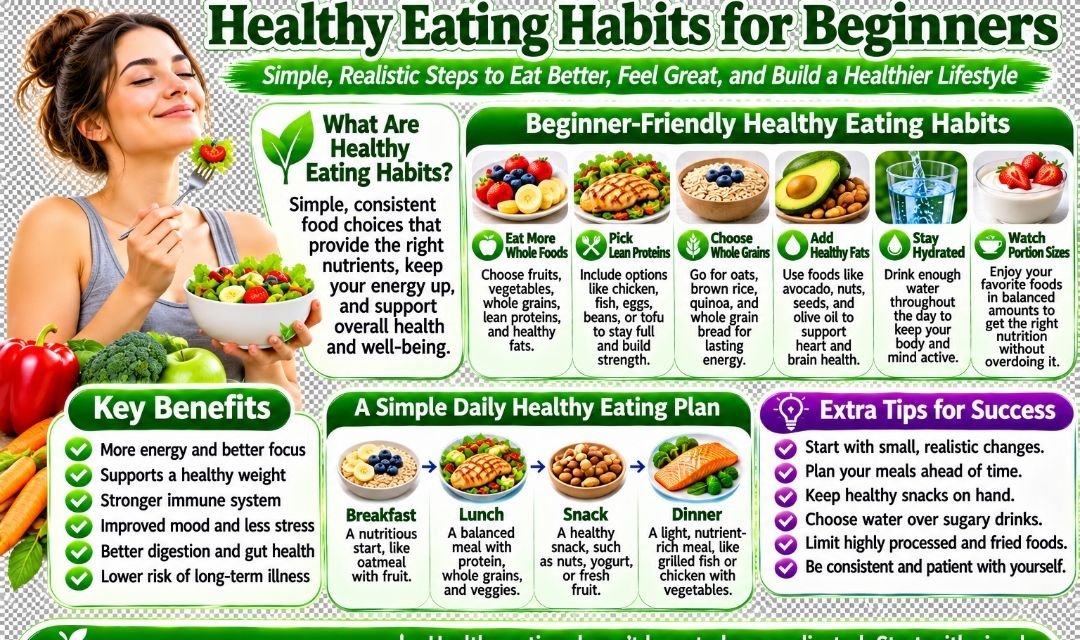
Healthy eating habits for beginners start with making small, realistic changes to everyday food choices rather than following strict diets or complicated nutrition rules. Eating well means choosing a variety of foods that provide the nutrients your body needs for energy, growth, repair, and normal functioning. Understanding the basics of healthy eating can help beginners build balanced meals, recognize nutritious foods, and develop habits that support long-term health. A healthy diet does not require expensive ingredients, special supplements, or eliminating entire food groups without a medical reason. Instead, it focuses on balance, variety, appropriate portions, and consistency.
Quick Overview of Healthy Eating Habits for Beginners
| Category | Details |
|---|---|
| Main topic | Healthy Eating Habits for Beginners |
| Primary goal | Building balanced and sustainable eating habits |
| Best starting point | Small, manageable dietary changes |
| Important food groups | Vegetables, fruits, grains, proteins, dairy or alternatives |
| Healthy carbohydrates | Whole grains, beans, fruits, vegetables |
| Protein sources | Eggs, fish, poultry, lentils, beans, tofu |
| Healthy fats | Nuts, seeds, olive oil, certain fish |
| Hydration | Water and other appropriate fluids |
| Meal planning | Simple, flexible weekly preparation |
| Foods to limit | Excessive added sugar, sodium, saturated fat |
| Supplements | Not necessary for everyone |
| Long-term approach | Variety, moderation, and consistency |
Many people want to improve their diet but feel confused by conflicting nutrition advice.
One website may recommend avoiding carbohydrates.
Another may promote expensive superfoods or supplements.
Social media can make healthy eating seem more complicated than it really is.
However, basic nutrition principles are relatively straightforward.
Most people can begin by eating more vegetables, choosing whole grains regularly, including appropriate protein sources, and reducing excessive added sugar.
The following guide explains 25 practical habits that can help beginners eat better without unnecessary restrictions.
What Does Healthy Eating Mean?
Healthy eating means consuming foods that provide appropriate amounts of energy and essential nutrients.
These nutrients include carbohydrates, protein, fats, vitamins, minerals, and water.
A healthy dietary pattern also includes fiber-rich foods.
However, nutritional needs vary according to age, activity, medical conditions, and other factors.
There is no single diet that is ideal for everyone.
The goal is to develop eating habits that support health while remaining realistic and enjoyable.
Why Are Healthy Eating Habits Important?
Nutrition supports nearly every system in the body.
Food provides energy for daily activities.
Protein contributes to tissue maintenance and repair.
Vitamins and minerals support normal biological functions.
Fiber contributes to digestive health.
Balanced dietary patterns are also associated with lower risks of certain chronic diseases.
However, diet is only one factor influencing health.
Physical activity, sleep, genetics, environmental conditions, and healthcare access also matter.
1. Start With Small Changes
One of the easiest ways to improve eating habits is to make gradual changes.
Trying to transform an entire diet overnight can feel overwhelming.
Instead, choose one realistic improvement.
For example, add vegetables to lunch.
Replace one sugary drink with water.
Choose whole-grain bread more often.
Small changes can become sustainable habits when practiced consistently.
2. Eat More Vegetables
Vegetables provide vitamins, minerals, fiber, and other beneficial compounds.
Different vegetables offer different nutrient combinations.
Leafy greens, carrots, tomatoes, peppers, and broccoli can all contribute to a varied diet.
However, no single vegetable provides every nutrient.
Eating different types is generally more useful than relying on one popular superfood.
Easy Ways to Eat More Vegetables
-
Add vegetables to sandwiches.
-
Include salad with lunch.
-
Prepare vegetable soups.
-
Add spinach or tomatoes to eggs.
-
Use frozen vegetables for convenience.
Vegetables do not need to be expensive or complicated to prepare.
3. Include Fruit in Your Diet
Fruit provides fiber, vitamins, minerals, and water.
Whole fruits are generally preferable to frequently consuming large amounts of fruit juice because they provide fiber and may be more filling.
Examples include apples, bananas, oranges, berries, and seasonal fruits.
However, people with specific medical conditions may require individualized dietary advice.
Fruit can be part of a balanced diet without being treated as a miracle food.
4. Choose Whole Grains More Often
Whole grains contain the bran, germ, and endosperm of the grain.
They often provide more fiber than refined alternatives.
Examples include oats, brown rice, whole wheat, and barley.
Whole grains can contribute to digestive health and overall dietary quality.
However, refined grains do not need to be completely eliminated.
The overall balance of the diet matters.
5. Include Protein in Balanced Meals
Protein supports muscle maintenance, tissue repair, and many biological functions.
Common protein sources include eggs, fish, chicken, dairy products, beans, lentils, and tofu.
Protein requirements vary.
Most people can obtain sufficient protein through a varied diet.
However, some individuals may require personalized guidance.
6. Choose Healthier Fat Sources
Fat is an essential nutrient.
It supports cell function and helps the body absorb certain vitamins.
However, the type of fat matters.
Unsaturated fats are generally preferred over excessive saturated fat intake.
Common sources include nuts, seeds, olive oil, and certain fish.
Trans fats from partially hydrogenated oils should be avoided.
7. Drink Water Regularly
Water is essential for normal body functions.
It supports temperature regulation, circulation, and many physiological processes.
However, daily fluid requirements vary.
Climate, activity, diet, and health conditions all influence hydration needs.
There is no universal requirement to drink exactly eight glasses of water every day.
People should maintain appropriate hydration according to their circumstances.
8. Reduce Sugary Drinks
Sugary drinks can contribute substantial added sugar without providing much nutritional value.
Examples include certain soft drinks, sweetened teas, and energy drinks.
Replacing some sugary beverages with water can be a practical improvement.
However, occasional consumption does not automatically make an overall diet unhealthy.
Long-term patterns matter more than individual choices.
9. Understand Portion Sizes
Portion sizes influence total food intake.
However, appropriate portions differ between individuals.
Age, body size, activity, and medical conditions can affect energy needs.
A useful approach is to build balanced meals rather than follow extreme portion restrictions.
People should also pay attention to hunger and fullness cues when appropriate.
10. Avoid Skipping Meals Unnecessarily
Some people skip meals because of busy schedules or dieting trends.
However, meal timing preferences vary.
Skipping breakfast is not automatically harmful for every adult.
The important consideration is whether the overall eating pattern provides adequate nutrition.
People with diabetes, certain medical conditions, or a history of disordered eating may require individualized guidance.
11. Eat Slowly and Mindfully
Mindful eating involves paying attention to the eating experience.
This can include noticing hunger, fullness, taste, and satisfaction.
Some people find it helpful to eat without constant distractions.
However, mindful eating should not become a rigid set of rules.
It is a tool for awareness rather than a guaranteed weight-management treatment.
12. Learn to Read Food Labels
Nutrition labels provide useful information about packaged foods.
Important details may include serving size, calories, protein, fiber, sodium, saturated fat, and added sugar.
However, label formats vary by country.
A food with fewer calories is not automatically more nutritious.
Consumers should consider the overall nutrient profile.
13. Plan Simple Meals
Meal planning can make healthy eating easier.
It may also help reduce food waste and unnecessary spending.
Beginners can start by planning a few meals rather than an entire complicated weekly menu.
For example, preparing rice, vegetables, and a protein source can provide the foundation for several meals.
However, meal planning should remain flexible.
14. Prepare Food at Home When Practical
Home cooking can provide more control over ingredients and portions.
However, cooking every meal from scratch is not necessary.
Frozen vegetables, canned beans, and other convenient foods can support healthy eating.
The goal is to choose nutritious options that fit available time and resources.
15. Include Fiber-Rich Foods
Fiber supports digestive health.
Some types of fiber also help manage cholesterol levels.
Common sources include beans, lentils, oats, vegetables, fruits, and whole grains.
However, increasing fiber intake too quickly can cause bloating or discomfort.
Gradual increases may be more comfortable.
16. Reduce Excessive Sodium
Sodium is necessary for normal body functions.
However, excessive intake can contribute to high blood pressure in some individuals.
Processed foods and restaurant meals may contain substantial sodium.
Reading labels and using herbs or spices for flavor can help reduce unnecessary sodium intake.
However, sodium needs vary with health conditions and activity.
17. Choose Nutritious Snacks
Snacks can provide energy and nutrients between meals.
Examples include fruit, yogurt, nuts, and whole-grain foods.
However, snacks are optional.
Some people prefer regular meals without additional snacks.
The best approach depends on individual needs.
18. Avoid Extreme Diet Rules
Extreme diets often promise rapid results.
However, eliminating major food groups without a medical reason can make balanced nutrition more difficult.
Restrictive eating may also create unnecessary stress around food.
Healthy eating should be sustainable.
People with medically necessary dietary restrictions should follow appropriate professional advice.
19. Include Healthy Plant-Based Foods
Plant-based foods can contribute fiber, vitamins, minerals, and other nutrients.
Examples include beans, lentils, tofu, nuts, seeds, and whole grains.
A plant-based diet does not necessarily require avoiding all animal products.
People can include more plant foods while maintaining their preferred dietary pattern.
20. Understand Healthy Cooking Methods
Cooking methods can influence food quality.
Steaming, baking, grilling, and sautéing are common options.
However, no single cooking method is always best.
Food safety and appropriate preparation matter.
For example, meat and poultry should be cooked to safe temperatures.
Vegetables can be enjoyed raw or cooked, depending on the type and personal preference.
21. Avoid Relying on Supplements
Dietary supplements can be useful in selected circumstances.
For example, certain nutrient deficiencies may require supplementation.
However, most basic healthy eating habits should focus on food quality.
Supplements cannot replace the full nutritional value of a balanced diet.
Some supplements can also cause side effects or medication interactions.
22. Understand Herbal Wellness Products
Herbal products are sometimes marketed for digestion, relaxation, and general wellness.
Common ingredients include ginger, peppermint, chamomile, and turmeric.
However, scientific evidence varies by ingredient and product.
Concentrated extracts may have different effects from ordinary culinary use.
Natural products are not automatically safe.
23. Understand Hemp and CBD Products
Hemp seeds can provide protein, fats, and other nutrients.
They may be included in certain foods.
However, hemp seed products are different from CBD products.
CBD is a cannabinoid found in cannabis.
Some CBD products are marketed for relaxation and wellness, but evidence supporting many commercial claims remains limited.
CBD can cause side effects and medication interactions.
It is not an essential nutrient and is not required for healthy eating.
24. Build Healthy Eating Habits on a Budget
Nutritious eating does not always require expensive ingredients.
Beans, lentils, oats, eggs, seasonal vegetables, and other basic foods can provide important nutrients.
Frozen and canned produce may also be practical.
Meal planning can help reduce waste.
However, food affordability and availability vary by location.
25. Focus on Long-Term Consistency
Healthy eating is not about achieving perfection.
Occasional treats can fit into an overall balanced dietary pattern.
The goal is to make nutritious choices regularly.
Small improvements maintained over time are often more realistic than short-term restrictive diets.
How to Build a Balanced Plate
A balanced plate can provide a simple visual guide for meal planning.
This model is a general guide.
Individual portions should be adjusted according to nutritional needs.
Healthy Foods for Beginners
| Food category | Examples | Main nutritional contribution |
|---|---|---|
| Vegetables | Spinach, carrots, broccoli | Fiber, vitamins, minerals |
| Fruits | Apples, oranges, bananas | Fiber, vitamins, water |
| Whole grains | Oats, brown rice, whole wheat | Carbohydrates, fiber |
| Protein foods | Eggs, fish, beans, lentils | Protein and other nutrients |
| Healthy fats | Nuts, seeds, olive oil | Unsaturated fats |
| Dairy or alternatives | Milk, yogurt, fortified alternatives | Protein, calcium depending on product |
| Legumes | Chickpeas, beans, lentils | Protein and fiber |
| Fluids | Water, appropriate beverages | Hydration |
A varied diet can help provide essential nutrients.
Seven-Day Healthy Eating Plan for Beginners
| Day | Breakfast | Lunch | Dinner |
|---|---|---|---|
| Monday | Oatmeal with fruit | Rice, lentils, vegetables | Grilled chicken or tofu with vegetables |
| Tuesday | Eggs and whole-grain toast | Chickpea salad | Fish or beans with rice |
| Wednesday | Yogurt with fruit and oats | Vegetable and bean wrap | Lentil soup with whole-grain bread |
| Thursday | Whole-grain toast and nut butter | Rice with vegetables and protein | Vegetable stir-fry with tofu |
| Friday | Oatmeal with seeds | Chicken or bean sandwich | Baked fish or legumes with vegetables |
| Saturday | Eggs with vegetables | Lentil and rice bowl | Homemade vegetable pasta |
| Sunday | Yogurt, fruit, and whole grains | Chickpea and vegetable bowl | Balanced family meal |
This is an illustrative meal plan, not a personalized diet.
Portions, allergies, food preferences, and medical needs should be considered.
Healthy Eating Habits for Busy Adults
Busy adults may struggle with meal preparation.
However, nutritious eating can remain simple.
Preparing a few ingredients in advance may save time.
Frozen vegetables and canned beans can provide convenient options.
Keeping basic foods available can also reduce reliance on less nutritious choices.
Healthy Eating Habits for Students
Students may face limited budgets and irregular schedules.
Simple meals can help.
Examples include oats, eggs, lentils, rice, fruit, and vegetables.
However, students should avoid extreme dieting or routinely sacrificing meals because of academic pressure.
Adequate nutrition supports normal growth, health, and daily functioning.
Healthy Eating Habits for Families
Families can encourage healthy eating by offering varied foods and creating supportive mealtime routines.
Children may need repeated opportunities to try unfamiliar foods.
However, pressuring children to eat or labeling foods as morally good or bad can create difficulties.
Age-appropriate nutrition guidance is important.
Healthy Eating Habits for Older Adults
Nutritional needs can change with age.
Older adults may need particular attention to protein, hydration, calcium, and vitamin D.
However, individual needs depend on health and activity.
Medical conditions or medications may affect food choices.
Professional dietary advice may be useful.
Common Healthy Eating Mistakes
Beginners sometimes make nutrition more complicated than necessary.
Common mistakes include:
-
Trying to change every eating habit immediately
-
Eliminating entire food groups without a medical reason
-
Relying on expensive supplements
-
Ignoring vegetables and fiber
-
Drinking excessive sugary beverages
-
Following extreme detox diets
-
Believing that all carbohydrates are unhealthy
-
Treating occasional treats as failures
-
Comparing diets with social media influencers
-
Ignoring individual nutritional needs
A flexible approach is generally easier to maintain.
Healthy Eating and Weight Management
Healthy eating can support weight management.
However, body weight is influenced by many factors.
These include genetics, medical conditions, medications, activity, sleep, and environment.
Extreme calorie restriction can be harmful.
People seeking weight-management treatment should consider individualized professional guidance.
Healthy Eating and Digestive Health
Fiber-rich foods support normal digestive function.
Appropriate hydration also contributes to digestive health.
Some fermented foods contain live microorganisms.
However, not every fermented food has proven probiotic benefits.
Persistent digestive symptoms should be evaluated medically.
Healthy Eating and Mental Wellness
Nutrition supports normal brain function.
Certain nutrient deficiencies can affect neurological and psychological health.
However, no single food has been proven to cure anxiety or depression.
Balanced nutrition can support general well-being.
Mental health conditions require appropriate assessment and treatment.
How Long Does It Take to Build Healthy Eating Habits?
There is no universal timeline.
Some habits become easier within a few weeks.
Others require longer periods.
Consistency depends on personal circumstances, environment, motivation, and available resources.
Rather than focusing on a fixed number of days, beginners should choose realistic goals and review their progress regularly.
Frequently Asked Questions About Healthy Eating Habits for Beginners
1. What are healthy eating habits for beginners?
They include eating varied foods, choosing balanced meals, staying hydrated, and limiting excessive added sugar and sodium.
2. How do I start eating healthy?
Begin with one or two manageable changes, such as adding vegetables to meals.
3. What foods should beginners eat?
Vegetables, fruits, whole grains, protein-rich foods, and healthy fat sources are useful foundations.
4. Is healthy eating expensive?
Not necessarily. Many nutritious foods are affordable, depending on local availability.
5. Are carbohydrates unhealthy?
No. Carbohydrates are an important energy source.
6. Should I avoid all sugar?
No. The focus should generally be on limiting excessive added sugar.
7. Is breakfast necessary?
Not for every adult. Overall dietary quality matters more than a specific meal schedule.
8. How much protein do I need?
Protein needs depend on age, body size, activity, and health conditions.
9. Is water important for healthy eating?
Yes. Water supports normal body functions.
10. Are fruits healthy?
Whole fruits provide fiber, vitamins, and other nutrients.
11. What are whole grains?
They are grains that retain the bran, germ, and endosperm.
12. Are healthy fats necessary?
Yes. Dietary fats support several essential body functions.
13. Can I eat snacks while eating healthy?
Yes. Snacks can fit into a balanced dietary pattern.
14. Is home cooking always healthier?
Not automatically, but it can provide more control over ingredients.
15. Should beginners count calories?
Not necessarily. Many people can begin by focusing on balanced meals and food quality.
16. Are supplements necessary?
Not for everyone. Supplements are useful in selected circumstances.
17. Can a plant-based diet be healthy?
Yes. A well-planned plant-based diet can provide essential nutrients.
18. Is hemp seed a nutritious food?
Hemp seeds provide protein and fats and can be included in a balanced diet.
19. Is CBD part of healthy nutrition?
CBD is not an essential nutrient.
20. Can healthy eating improve digestion?
Fiber-rich foods and appropriate hydration can support digestive health.
21. What is the healthiest cooking method?
There is no single best method. Food safety and overall preparation matter.
22. Can I eat my favorite foods?
Yes. Enjoyable foods can fit into an overall balanced dietary pattern.
23. How do I avoid unhealthy eating habits?
Plan realistic meals, keep nutritious foods available, and avoid extreme restrictions.
24. How long does healthy eating take to become a habit?
The timeline varies. Consistent practice is more important than a fixed deadline.
25. What is the most important healthy eating rule?
Focus on variety, balance, nutritional adequacy, and sustainable habits.
Final Thoughts
Healthy eating habits for beginners do not require complicated diets, expensive superfoods, or perfect meal plans.
The most useful approach is to make small, consistent improvements.
Eating more vegetables and fruits, choosing whole grains, including protein-rich foods, and maintaining appropriate hydration can support better nutrition.
Reducing excessive added sugar and sodium may also provide benefits.
However, healthy eating should remain flexible.
Individual nutritional needs vary according to age, activity, medical conditions, and personal circumstances.
Supplements, herbal products, and CBD products should not be treated as replacements for a balanced diet.
Long-term health is best supported through nutritious food choices, regular physical activity, adequate sleep, and appropriate healthcare.
For more beginner nutrition guides, healthy eating tips, natural wellness education, plant-based food information, and everyday lifestyle articles, visit Picanto Magazine.
Medical Disclaimer: This article is for general educational purposes only and does not replace professional medical or nutritional advice, diagnosis, or treatment. Consult a qualified healthcare professional or registered dietitian before making major dietary changes, especially if you have a medical condition, food allergy, or specialized nutritional requirements.