
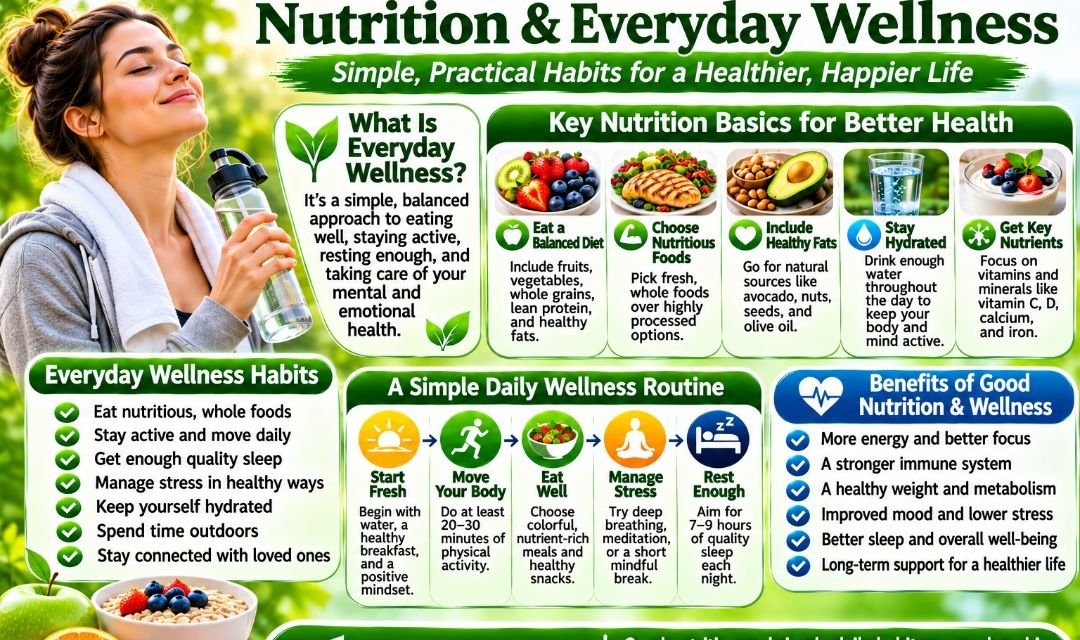
Nutrition & Everyday Wellness are closely connected because the foods people eat, their daily routines, and their lifestyle choices all influence overall health. Good nutrition provides the body with essential nutrients, while everyday wellness involves healthy habits such as regular physical activity, adequate sleep, stress management, and personal care. Understanding the basic principles of nutrition can help individuals make informed food choices without relying on extreme diets or expensive supplements. A healthy lifestyle is not about eating perfectly every day. Instead, it involves developing balanced, realistic habits that support physical and mental well-being over time.
Quick Overview of Nutrition & Everyday Wellness
| Category | Details |
|---|---|
| Main topic | Nutrition & Everyday Wellness |
| Primary goal | Supporting long-term health and well-being |
| Essential nutrients | Protein, carbohydrates, fats, vitamins, minerals |
| Healthy eating | Balanced meals and dietary variety |
| Hydration | Appropriate daily fluid intake |
| Physical activity | Regular movement and exercise |
| Mental wellness | Stress management and emotional support |
| Sleep | Generally 7–9 hours for most adults |
| Dietary fiber | Supports digestive health |
| Supplements | Useful in selected circumstances |
| Plant-based foods | Vegetables, fruits, legumes, whole grains |
| Main principle | Consistency, balance, and moderation |
Nutrition affects many aspects of everyday life.
Food provides energy for physical activity and normal body functions.
Protein supports the maintenance and repair of body tissues.
Vitamins and minerals contribute to essential biological processes.
Fiber supports digestive health.
However, nutrition is only one part of wellness.
Sleep, movement, social relationships, and access to healthcare also play important roles.
This guide explains how nutrition and everyday wellness work together and offers practical ways to build healthier routines.
What Is Nutrition?
Nutrition is the process through which the body obtains and uses nutrients from food.
These nutrients support growth, maintenance, energy production, and normal physiological functions.
The body requires both macronutrients and micronutrients.
Macronutrients include carbohydrates, proteins, and fats.
Micronutrients include vitamins and minerals.
Water is also essential for life.
A healthy dietary pattern provides appropriate amounts of these nutrients according to individual needs.
What Is Everyday Wellness?
Everyday wellness refers to habits and practices that support physical, mental, and social well-being.
It includes eating nutritious foods, staying active, sleeping adequately, and managing everyday stress.
Wellness also involves recognizing personal needs and seeking appropriate medical care.
However, wellness is not the same as being free from every illness.
People with chronic health conditions can still practice meaningful wellness habits.
1. Understand the Importance of Balanced Nutrition
Balanced nutrition involves consuming a variety of foods that provide essential nutrients.
No single food contains everything the body needs.
Different food groups contribute different nutritional benefits.
For example, vegetables provide vitamins, minerals, and fiber.
Legumes supply protein and fiber.
Whole grains contribute carbohydrates and other nutrients.
Healthy dietary patterns emphasize variety rather than relying on one supposedly perfect food.
2. Eat More Vegetables and Fruits
Vegetables and fruits are important components of a balanced diet.
They provide vitamins, minerals, fiber, and other naturally occurring compounds.
Different colors and varieties often contain different nutrient profiles.
For example, leafy greens provide nutrients that differ from those found in citrus fruits.
However, no particular fruit or vegetable guarantees disease prevention.
The overall dietary pattern matters most.
Simple Ways to Include More Produce
-
Add vegetables to lunch and dinner.
-
Choose fruit as a convenient snack.
-
Include vegetables in soups and stews.
-
Use frozen vegetables when fresh options are unavailable.
-
Try different seasonal produce.
Fresh, frozen, and appropriately prepared canned produce can all contribute to a healthy diet.
3. Choose Whole Grains Regularly
Whole grains contain components of the original grain, including the bran and germ.
Examples include oats, brown rice, whole wheat, and barley.
Whole grains often provide more fiber than refined grain alternatives.
Dietary patterns rich in whole grains are associated with several health benefits.
However, portion needs vary depending on individual energy requirements.
4. Include Adequate Protein
Protein is necessary for maintaining body tissues and supporting many biological functions.
Common protein sources include eggs, fish, poultry, dairy products, beans, lentils, tofu, and nuts.
Protein requirements vary by age, body size, activity level, and health conditions.
Some individuals may benefit from additional protein guidance.
However, high-protein supplements are not necessary for everyone.
5. Understand Healthy Fats
Dietary fats support normal cell function and help the body absorb certain vitamins.
However, different types of fats have different health effects.
Unsaturated fats are generally preferred over excessive saturated fat intake.
Sources of unsaturated fats include nuts, seeds, olive oil, and certain fish.
Trans fats from partially hydrogenated oils should be avoided.
A balanced diet considers both fat quality and overall intake.
6. Include Fiber-Rich Foods
Fiber is found in plant-based foods.
It supports digestive function and contributes to normal bowel movements.
Certain types of fiber can also help manage cholesterol levels.
Common sources include oats, beans, lentils, fruits, vegetables, and whole grains.
However, increasing fiber too quickly may cause digestive discomfort.
Gradual changes and appropriate hydration may help.
7. Maintain Proper Hydration
Water is essential for normal body functions.
It helps regulate temperature, transport substances, and support physiological processes.
Hydration requirements vary according to activity, climate, diet, and medical conditions.
There is no single water intake target that is appropriate for everyone.
People should drink according to their needs and follow medical guidance when fluid restrictions apply.
8. Understand the Role of Vitamins
Vitamins are essential micronutrients.
Different vitamins support different body functions.
For example, vitamin D contributes to bone health.
Vitamin C supports normal collagen formation.
B vitamins participate in various metabolic processes.
However, taking large doses of vitamins does not necessarily improve health.
Excessive supplementation can sometimes cause harm.
9. Understand Essential Minerals
Minerals are required for many physiological functions.
Calcium contributes to bone health.
Iron supports oxygen transport.
Potassium helps maintain normal nerve and muscle function.
Magnesium participates in numerous biological processes.
However, mineral needs differ between individuals.
Some supplements can interact with medications or cause adverse effects.
10. Reduce Excessive Added Sugar
Added sugars are found in many sweetened beverages, desserts, and processed foods.
Frequent excessive consumption can contribute to excess calorie intake and dental problems.
Reducing sugary drinks is one practical dietary change.
However, naturally occurring sugars in whole fruits are part of foods that also provide fiber and other nutrients.
Dietary context matters.
11. Manage Sodium Intake
Sodium is necessary for normal body function.
However, excessive sodium intake can contribute to elevated blood pressure in some people.
Processed and restaurant foods may contain substantial sodium.
Reading food labels can help consumers understand sodium content.
However, sodium requirements can vary with medical conditions and activity.
12. Practice Mindful Eating
Mindful eating involves paying attention to eating experiences.
This may include noticing hunger, fullness, taste, and eating pace.
Some people find it helpful for developing awareness of eating habits.
However, mindful eating is not a guaranteed weight-management treatment.
It should not become a source of anxiety or rigid food rules.
13. Maintain Regular Physical Activity
Nutrition and physical activity work together to support health.
Regular movement benefits cardiovascular fitness, muscle function, and general well-being.
Walking, cycling, swimming, and resistance training are common options.
Adults are generally encouraged to work toward at least 150 minutes of moderate-intensity aerobic activity per week, along with muscle-strengthening activities on two or more days.
However, activity should be adapted to individual ability and health.
14. Prioritize Healthy Sleep
Sleep is an important part of everyday wellness.
Most adults generally need seven to nine hours per night.
Poor sleep can affect concentration, mood, and appetite regulation.
Maintaining a consistent sleep schedule may help.
However, persistent insomnia or severe daytime sleepiness may require medical evaluation.
15. Manage Everyday Stress
Stress can influence eating habits, sleep, and daily functioning.
Some people eat more during stressful periods.
Others experience reduced appetite.
Relaxation techniques, physical activity, and supportive relationships may help.
However, significant or persistent mental health symptoms require appropriate professional support.
16. Plan Balanced Meals
Meal planning can make nutritious eating more convenient.
It may also help reduce food waste and unnecessary spending.
A balanced meal often includes vegetables, a protein source, whole grains or other appropriate carbohydrates, and healthy fats.
However, meal composition should reflect individual dietary needs.
Example Balanced Plate
This is a general educational model.
It is not a personalized meal prescription.
17. Choose Nutritious Snacks
Snacks can contribute useful nutrients.
Examples include fruit, yogurt, nuts, and whole-grain foods.
However, snacks are not necessary for everyone.
Some people prefer three regular meals.
Others benefit from smaller meals and snacks.
The best pattern depends on personal needs.
18. Understand Plant-Based Nutrition
Plant-based dietary patterns emphasize foods obtained from plants.
Examples include vegetables, fruits, legumes, whole grains, nuts, and seeds.
These diets can provide many essential nutrients.
However, fully vegan diets require attention to vitamin B12 and potentially other nutrients.
Individual planning may be necessary.
19. Limit Highly Processed Foods When Practical
Food processing includes many different techniques.
Some processed foods, such as canned beans or frozen vegetables, can be nutritious.
Others contain substantial added sugar, sodium, or saturated fat.
Therefore, processing level alone does not determine nutritional quality.
Reading labels and considering overall dietary patterns can help.
20. Understand Dietary Supplements
Dietary supplements may contain vitamins, minerals, herbs, proteins, or other substances.
They can be useful in selected circumstances.
For example, supplementation may be recommended for certain nutrient deficiencies.
However, supplements should not replace balanced nutrition.
Some products can cause side effects or interact with medications.
21. Evaluate Herbal Wellness Products
Herbal products are sometimes marketed for digestion, relaxation, and general wellness.
Common ingredients include ginger, chamomile, peppermint, and turmeric.
However, scientific evidence varies.
Some concentrated extracts can cause adverse effects.
Natural ingredients are not automatically safe.
22. Understand Hemp-Derived Nutrition Products
Hemp seeds contain protein, fats, and other nutrients.
They can be included in certain food products.
Hemp seed oil is also used in foods and cosmetics.
However, hemp seed products differ from CBD products.
Hemp seeds generally contain little to no CBD when properly processed.
23. Understand CBD and Everyday Wellness
CBD is a cannabinoid found in cannabis plants.
Some products are marketed for relaxation, sleep, and general wellness.
However, evidence supporting many commercial CBD wellness claims remains limited.
CBD can cause side effects and interact with medications.
It may also affect liver-related laboratory results.
Some products contain THC.
CBD is not an essential nutrient and is not necessary for a healthy lifestyle.
24. Support Digestive Wellness
Digestive health is influenced by diet, hydration, physical activity, and medical factors.
Fiber-rich foods can support bowel regularity.
Some fermented foods contain live microorganisms.
However, not every fermented food has proven probiotic benefits.
Persistent digestive symptoms should be evaluated by a healthcare professional.
25. Build Sustainable Wellness Habits
Long-term health depends on consistent habits rather than short-term trends.
Small changes can be easier to maintain.
For example, someone may begin by including vegetables at lunch.
Another person may focus on regular walking.
Gradually adding healthy habits can make lifestyle changes more manageable.
Essential Nutrients and Their Functions
| Nutrient | Main function | Common food sources |
|---|---|---|
| Protein | Tissue maintenance and repair | Eggs, legumes, fish, dairy |
| Carbohydrates | Energy supply | Grains, fruit, potatoes |
| Unsaturated fats | Cell function and energy | Nuts, seeds, olive oil |
| Fiber | Digestive health | Oats, beans, vegetables |
| Calcium | Bone health | Dairy, fortified foods |
| Iron | Oxygen transport | Meat, legumes, fortified cereals |
| Vitamin C | Collagen formation | Citrus fruits, peppers |
| Vitamin D | Bone and mineral metabolism | Fortified foods, selected fish |
| Potassium | Muscle and nerve function | Beans, potatoes, fruit |
| Magnesium | Normal metabolic functions | Nuts, legumes, whole grains |
Different foods provide different combinations of nutrients.
A varied dietary pattern can help meet nutritional needs.
Healthy Eating vs Restrictive Dieting
Healthy eating generally focuses on nutritional adequacy, variety, and sustainable habits.
Restrictive dieting may involve unnecessary food rules or severe calorie limitations.
However, some individuals require medically prescribed dietary restrictions.
For example, food allergies or specific medical conditions may require avoiding certain ingredients.
The goal is appropriate nutrition rather than unnecessary restriction.
Nutrition and Mental Wellness
Nutrition supports normal brain function.
Certain nutrient deficiencies can affect neurological or psychological health.
However, no single food has been proven to cure depression, anxiety, or other mental health conditions.
A balanced diet can support overall health.
Mental health treatment should be based on individual needs and appropriate clinical guidance.
Nutrition and Immune Health
The immune system requires adequate nutrition.
Protein, vitamins, and minerals contribute to normal immune function.
However, taking excessive supplements does not necessarily improve immunity.
Products claiming to instantly boost immune function should be evaluated cautiously.
Adequate sleep, vaccination, balanced nutrition, and appropriate healthcare remain important.
Nutrition and Healthy Aging
Nutritional needs can change with age.
Older adults may need particular attention to protein, calcium, vitamin D, and hydration.
However, individual requirements depend on health and activity.
Maintaining muscle strength through suitable physical activity is also important.
Professional dietary guidance may help people with complex medical needs.
Nutrition for Busy Adults
Busy schedules can make meal preparation difficult.
Simple strategies may help.
Examples include preparing ingredients in advance, using frozen vegetables, and keeping convenient nutritious foods available.
However, healthy eating does not require cooking every meal from scratch.
Affordable and practical food choices can still support good nutrition.
A Simple Seven-Day Nutrition and Wellness Plan
| Day | Nutrition focus | Wellness habit |
|---|---|---|
| Monday | Include vegetables in meals | Take a short walk |
| Tuesday | Choose whole grains | Maintain a consistent bedtime |
| Wednesday | Include protein-rich foods | Practice comfortable breathing |
| Thursday | Review hydration habits | Take movement breaks |
| Friday | Include fruit and fiber | Connect with a supportive person |
| Saturday | Prepare a balanced meal | Enjoy an outdoor activity |
| Sunday | Review weekly food habits | Plan realistic goals for next week |
This plan is an educational example.
People can adapt it according to their health, preferences, and circumstances.
Common Nutrition and Wellness Mistakes
Several habits can make healthy living unnecessarily complicated.
Common mistakes include:
-
Following extreme diets
-
Skipping essential nutrients
-
Relying heavily on supplements
-
Ignoring sleep and physical activity
-
Believing that one food can cure diseases
-
Using unverified detox products
-
Assuming natural products are always safe
-
Comparing personal health routines with social media trends
-
Making too many lifestyle changes at once
-
Avoiding professional medical advice
A balanced approach is generally more sustainable.
How to Read Nutrition Labels
Nutrition labels can help consumers compare foods.
Important details may include serving size, calories, protein, fiber, sodium, saturated fat, and added sugar.
However, label formats vary by country.
Consumers should consider the overall food rather than focusing on one number.
A food with a low calorie count is not automatically nutritious.
Likewise, a nutritious food may contain substantial calories.
Healthy Nutrition on a Budget
Good nutrition does not always require expensive ingredients.
Beans, lentils, oats, seasonal produce, eggs, and other basic foods can provide important nutrients.
Frozen and canned vegetables can also be practical.
However, food prices and availability vary.
Meal planning may help reduce unnecessary purchases and waste.
How to Build a Daily Wellness Routine
A daily wellness routine can combine nutrition with other healthy habits.
For example, the morning may include breakfast and personal hygiene.
The afternoon may involve balanced meals and movement breaks.
The evening may focus on relaxation and adequate sleep.
However, routines should remain flexible.
Individual responsibilities and health needs differ.
Frequently Asked Questions About Nutrition & Everyday Wellness
1. What is nutrition and everyday wellness?
It involves combining balanced nutrition with healthy lifestyle habits that support physical and mental well-being.
2. Why is nutrition important?
Nutrition provides nutrients needed for normal body functions, growth, and maintenance.
3. What is a balanced diet?
A balanced diet provides appropriate nutrients through a variety of foods.
4. What are the main nutrients?
Protein, carbohydrates, fats, vitamins, minerals, and water are essential nutritional components.
5. How much water should adults drink?
Fluid requirements vary according to climate, activity, diet, and health conditions.
6. Are carbohydrates unhealthy?
No. Carbohydrates are an important energy source, and food quality matters.
7. Is protein important for adults?
Yes. Protein supports normal tissue maintenance and many body functions.
8. What are healthy fats?
Unsaturated fats from foods such as nuts, seeds, and certain oils are generally preferred.
9. Why is dietary fiber important?
Fiber supports digestive health and can provide additional metabolic benefits.
10. Are vitamins necessary?
Yes. Vitamins are essential nutrients, but supplements are not always necessary.
11. Can supplements replace food?
No. Supplements should not replace an overall balanced diet.
12. Is a plant-based diet healthy?
A well-planned plant-based diet can provide many essential nutrients.
13. What is the healthiest breakfast?
There is no single best breakfast. Balanced choices depend on individual needs.
14. Is skipping breakfast harmful?
Not necessarily. Overall dietary quality and individual circumstances matter.
15. Does exercise improve wellness?
Regular physical activity supports cardiovascular health, fitness, and general well-being.
16. How much sleep do adults need?
Most adults generally need seven to nine hours per night.
17. Can nutrition affect mental health?
Nutrition supports brain function, but food alone does not treat mental health disorders.
18. Are herbal supplements safe?
Some can cause side effects or medication interactions.
19. Is hemp seed oil nutritious?
Hemp seed oil contains dietary fats and can be used as part of a balanced diet.
20. Is CBD an essential wellness ingredient?
No. CBD is not an essential nutrient.
21. Can healthy eating support immunity?
Adequate nutrition supports normal immune function.
22. Are processed foods always unhealthy?
No. Nutritional quality depends on the specific food and its composition.
23. Can healthy eating be affordable?
Yes. Many nutritious foods are relatively inexpensive, depending on local availability.
24. How can beginners improve nutrition?
Start with manageable changes such as including more vegetables, whole grains, and appropriate protein sources.
25. What is the best long-term wellness strategy?
A combination of balanced nutrition, physical activity, adequate sleep, stress management, and appropriate healthcare is a strong foundation.
Final Thoughts
Nutrition & Everyday Wellness are connected through the everyday choices people make about food, movement, sleep, and personal health.
A balanced diet provides essential nutrients.
Regular physical activity supports strength and cardiovascular fitness.
Adequate sleep contributes to physical recovery and emotional well-being.
Healthy routines can also support stress management and daily functioning.
However, wellness does not require extreme diets, expensive supplements, or complicated plans.
The most useful habits are realistic, flexible, and appropriate for individual needs.
Plant-based foods, fiber-rich meals, suitable protein sources, and appropriate hydration can all contribute to healthy nutrition.
Herbal supplements and CBD products should be evaluated carefully rather than treated as essential wellness solutions.
Long-term health is best supported through consistent habits and access to appropriate healthcare.
For more nutrition guides, natural wellness education, healthy lifestyle habits, plant-based food information, and beginner-friendly health articles, visit Picanto Magazine.
Medical Disclaimer: This article is for general educational purposes only and does not replace professional medical or nutritional advice, diagnosis, or treatment. Consult a qualified healthcare professional or registered dietitian before making significant dietary changes, particularly if you have a medical condition, take medication, or require a specialized diet.