
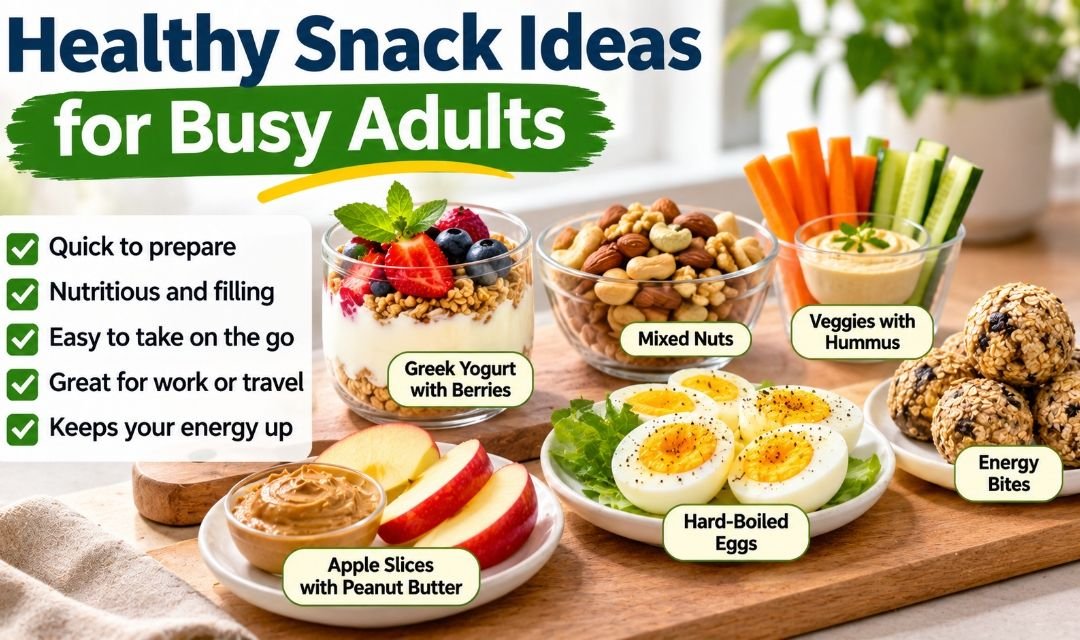
Quick Overview of Healthy Snack Ideas for Busy Adults
| Category | Details |
|---|---|
| Main topic | Healthy Snack Ideas for Busy Adults |
| Primary goal | Convenient and nutritious snacking |
| Best snack nutrients | Protein, fiber, healthy fats |
| Quick snack examples | Fruit, yogurt, nuts, boiled eggs |
| High-protein options | Greek yogurt, eggs, hummus, tofu |
| High-fiber options | Fruit, oats, chickpeas, whole grains |
| Budget-friendly snacks | Bananas, peanuts, roasted chickpeas |
| Office-friendly choices | Nuts, fruit, whole-grain crackers |
| No-cook options | Yogurt, fruit, nut butter |
| Meal preparation | Prepare snacks in advance |
| Hydration | Water and suitable unsweetened beverages |
| Food safety | Refrigerate perishable foods appropriately |
| Best approach | Variety, convenience, and moderation |
Busy adults often skip snacks because they believe healthy food requires too much preparation.
Others depend on vending machines, packaged sweets, or fast food because these options are convenient.
However, nutritious snacks can be simple.
An apple with peanut butter, a small serving of nuts, or plain yogurt with fruit may take only a few minutes to prepare.
The goal is not to eat constantly throughout the day.
Instead, snacks can be used when hunger, activity, or nutritional needs make them helpful.
This guide explores 30 practical snack ideas, their nutritional benefits, and ways to prepare them for busy schedules.
What Makes a Snack Healthy?
A healthy snack contributes useful nutrients to the overall diet.
Depending on the food, these may include protein, carbohydrates, fiber, vitamins, minerals, and healthy fats.
For example, fruit provides fiber and vitamins.
Nuts contain unsaturated fats and other nutrients.
Yogurt can provide protein and calcium.
However, a healthy snack does not need to contain every nutrient.
The overall dietary pattern matters more than the nutritional composition of one snack.
Why Are Healthy Snacks Useful for Busy Adults?
Snacks can help some people manage hunger between meals.
They may also provide additional nutrients.
For example, a person who eats limited fruit during regular meals might include fruit as a snack.
Someone with higher energy requirements may benefit from additional food between meals.
However, snacks are not necessary for everyone.
Some adults prefer three regular meals without snacks.
Both approaches can support balanced nutrition when overall needs are met.
1. Apple Slices With Peanut Butter
Apples provide fiber, water, and naturally occurring carbohydrates.
Peanut butter contributes protein and fats.
Together, they create a convenient snack.
However, peanut butter is calorie-dense, so portions should reflect individual needs.
People with peanut allergies must avoid peanut products.
2. Plain Greek Yogurt With Berries
Greek yogurt is often rich in protein.
Berries provide fiber and other nutrients.
Combining them creates a snack that requires little preparation.
However, yogurt products vary in sugar and protein content.
Plain options allow people to control added sweeteners.
3. A Small Handful of Nuts
Nuts are convenient because many varieties require no preparation.
Almonds, walnuts, pistachios, and peanuts provide fats, protein, and other nutrients.
Unsalted varieties can help reduce unnecessary sodium intake.
However, nuts are energy-dense and may trigger allergies.
Portions should be adjusted to individual needs.
4. Boiled Eggs
Boiled eggs provide protein and several essential nutrients.
They can be prepared in advance.
However, cooked eggs are perishable and should be refrigerated appropriately.
They should not be left unrefrigerated for extended periods.
5. Hummus With Vegetable Sticks
Hummus is commonly made from chickpeas, tahini, lemon juice, and other ingredients.
It provides plant protein, fiber, and fats.
Carrots, cucumbers, and bell peppers can be used for dipping.
However, commercially prepared hummus may vary in sodium content.
6. Banana With Nut Butter
Bananas provide carbohydrates, potassium, and other nutrients.
Nut butter contributes fats and protein.
This combination is convenient before or after certain activities.
However, people should choose appropriate portions and consider allergies.
7. Cottage Cheese With Fruit
Cottage cheese provides protein and calcium.
Fruit adds fiber, water, and natural sweetness.
However, some cottage cheese products contain substantial sodium.
Consumers can compare nutrition labels.
8. Roasted Chickpeas
Roasted chickpeas provide plant protein and fiber.
They can be seasoned with herbs and spices.
However, packaged varieties may contain added sodium.
Homemade versions allow greater control over ingredients.
9. Whole-Grain Crackers With Cheese
Whole-grain crackers provide carbohydrates and may contribute fiber.
Cheese provides protein and calcium.
However, both products can contain sodium.
Choosing suitable portions and comparing labels may help.
10. Oatmeal With Fruit
Oats provide carbohydrates and soluble fiber.
Fruit adds flavor and additional nutrients.
Oatmeal can be prepared quickly using plain oats and water or milk.
However, flavored instant oatmeal may contain substantial added sugar.
11. Homemade Trail Mix
Trail mix can combine nuts, seeds, and dried fruit.
It provides a mixture of fats, carbohydrates, and other nutrients.
However, some commercial mixes contain candy or substantial added sugar.
Homemade combinations allow greater control.
12. Whole-Grain Toast With Avocado
Whole-grain toast provides carbohydrates and fiber.
Avocado contributes unsaturated fats.
This snack can be prepared quickly.
However, avocado is not a major protein source.
People seeking additional protein may include another suitable food.
13. Edamame
Edamame consists of immature soybeans.
It provides protein, fiber, and other nutrients.
Frozen edamame can be prepared relatively quickly.
However, soy allergies must be considered.
14. Chia Pudding
Chia seeds contain fiber, fats, and other nutrients.
They can be mixed with milk or a fortified alternative and refrigerated.
However, chia pudding should be prepared with appropriate amounts of liquid.
People should avoid consuming large quantities of dry chia seeds without sufficient fluid.
15. Homemade Energy Bites
Energy bites often contain oats, nut butter, seeds, and dried fruit.
They can provide convenient energy.
However, recipes vary considerably.
Some contain substantial added sugar.
The ingredients and portion size determine their nutritional value.
16. Fresh Fruit
Whole fruit is one of the simplest snacks.
Apples, bananas, oranges, pears, and seasonal fruits require little preparation.
They provide fiber, vitamins, and water.
However, different fruits contain different nutrients.
Variety is useful.
17. Vegetable Sticks With Yogurt Dip
Carrots, cucumbers, and bell peppers can be paired with plain yogurt-based dip.
Vegetables contribute fiber and micronutrients.
Yogurt can provide protein.
However, prepared dips may contain significant sodium.
18. Pumpkin Seeds
Pumpkin seeds provide protein, fats, and minerals.
They can be eaten alone or added to yogurt.
However, salted versions may contain substantial sodium.
People should choose portions according to their needs.
19. Whole-Grain Sandwich
A small whole-grain sandwich can be a practical snack.
Fillings may include hummus, eggs, chicken, tofu, or vegetables.
However, sandwiches containing perishable ingredients require appropriate refrigeration.
20. Plain Popcorn
Air-popped popcorn is a whole-grain food.
It can provide fiber.
However, nutritional quality depends on preparation.
Large amounts of butter, salt, or sugary coatings can change its nutritional profile.
21. Rice Cakes With Peanut Butter
Rice cakes provide carbohydrates.
Peanut butter contributes fats and protein.
However, rice cakes are often relatively low in fiber and protein on their own.
Pairing them with nutritious toppings can improve the overall snack.
22. Tofu Cubes
Tofu provides plant protein.
Firm tofu can be prepared with herbs or spices.
However, tofu is perishable and requires safe storage.
People with soy allergies should avoid it.
23. Unsweetened Soy Yogurt With Fruit
Fortified soy yogurt can provide protein and other nutrients.
However, nutritional content varies between brands.
Some products contain little protein or limited fortification.
Reading labels can help.
24. Dried Fruit With Nuts
Dried fruit provides carbohydrates and certain nutrients.
Nuts add fats and protein.
However, dried fruit is concentrated in natural sugars because water has been removed.
Portions should reflect individual needs.
25. Whole-Grain Cereal With Milk
Whole-grain cereal can be a convenient snack.
Milk or a suitable fortified alternative adds nutrients.
However, cereal products vary in fiber and added sugar.
Comparing labels may help.
26. Cucumber and Cheese Slices
Cucumber provides water and small amounts of nutrients.
Cheese contributes protein and calcium.
This combination is simple to prepare.
However, cheese can contain saturated fat and sodium.
27. Lentil Salad Cups
Cooked lentils provide protein, fiber, and minerals.
They can be combined with tomatoes, cucumbers, and herbs.
However, cooked lentils are perishable and require appropriate storage.
28. Homemade Smoothie
A smoothie can include fruit, yogurt, milk, or fortified plant alternatives.
However, smoothies vary widely in nutritional content.
Large servings may contain substantial sugar or calories.
Whole fruits generally provide more chewing and may be more filling.
29. Nut Butter on Whole-Grain Bread
Whole-grain bread provides carbohydrates and fiber.
Nut butter adds protein and fats.
This combination is quick and portable.
However, people with nut allergies need suitable alternatives.
30. Roasted Soybeans
Roasted soybeans provide plant protein and fiber.
They can be convenient for travel or office snacking.
However, flavored varieties may contain added sodium.
People with soy allergies should avoid them.
Best Healthy Snacks by Nutritional Goal
| Goal | Snack examples |
|---|---|
| More protein | Greek yogurt, eggs, tofu, edamame |
| More fiber | Fruit, roasted chickpeas, oats |
| Healthy fats | Nuts, seeds, avocado |
| Quick energy | Banana, whole-grain toast |
| Plant-based nutrition | Hummus, lentils, soy yogurt |
| Budget-friendly | Peanuts, bananas, roasted chickpeas |
| Office convenience | Nuts, whole fruit, whole-grain crackers |
| Minimal preparation | Yogurt, fruit, cheese |
| After exercise | Yogurt with fruit, tofu sandwich |
| General balanced snacking | Fruit with nuts, hummus with vegetables |
No single snack is ideal for every person.
Individual preferences and nutritional needs matter.
Healthy Snacks That Require No Cooking
Some snacks can be prepared without cooking.
Examples include:
-
Fresh fruit
-
Plain yogurt
-
Nuts
-
Seeds
-
Whole-grain crackers
-
Nut butter
-
Hummus with vegetables
-
Cottage cheese
-
Dried fruit
-
Fortified plant-based yogurt
However, perishable products should be stored safely.
Healthy Snacks for Office Workers
Office workers often spend long periods sitting.
Keeping convenient nutritious foods available may help reduce reliance on vending machines.
Shelf-stable options include nuts, seeds, whole-grain crackers, and certain packaged roasted legumes.
Fresh fruit can also be practical.
However, refrigerated foods should be stored appropriately.
Healthy Snacks for People Who Travel Frequently
Travel can make regular meal schedules difficult.
Portable foods may help.
Examples include nuts, whole-grain crackers, bananas, and suitable shelf-stable snack products.
However, travelers should consider food safety, allergies, and local regulations.
Perishable snacks may require insulated storage.
Healthy Snacks for Remote Workers
Working from home provides access to a kitchen.
However, constant food availability can encourage distracted eating.
Planning snacks may help some people establish a routine.
Examples include fruit with yogurt, vegetable sticks with hummus, and whole-grain toast.
However, people should respond to genuine hunger rather than follow rigid eating schedules.
Healthy Snacks for Adults Over 50
Nutritional needs may change with age.
Some older adults benefit from snacks containing protein, calcium, or other important nutrients.
Examples include yogurt, eggs, tofu, and fortified foods.
However, medical conditions and medications can influence dietary needs.
Individual guidance may be useful.
Healthy Snacks for Plant-Based Diets
Plant-based snacks can include legumes, nuts, seeds, whole grains, vegetables, and fruits.
Examples include hummus, edamame, roasted chickpeas, and tofu.
However, fully vegan diets require reliable vitamin B12 intake from fortified foods or supplements.
Snack choices should contribute to overall nutritional adequacy.
Healthy Snacks Before Exercise
A pre-exercise snack may provide carbohydrates for physical activity.
Examples include fruit, toast, or oats.
However, timing and portion sizes depend on exercise intensity and individual tolerance.
Some people do not need a snack before shorter exercise sessions.
Healthy Snacks After Exercise
After exercise, food containing protein and carbohydrates may support recovery.
Examples include yogurt with fruit, a tofu sandwich, or milk with a suitable carbohydrate source.
However, recovery needs depend on activity duration, intensity, and overall diet.
Healthy Snacks for Weight Management
Snacks can fit into a weight-management plan.
However, snacking does not automatically cause weight gain or weight loss.
Total dietary intake and other factors matter.
Choosing nutrient-rich foods may help people meet nutritional needs.
Extreme restriction should be avoided.
Healthy Snacks on a Budget
Nutritious snacks do not need to be expensive.
Examples include bananas, peanuts, boiled eggs, oats, and roasted chickpeas.
Buying seasonal fruit may also reduce costs.
However, food prices vary by location.
Planning purchases can help reduce waste.
Seven-Day Healthy Snack Plan for Busy Adults
| Day | Morning snack | Afternoon snack |
|---|---|---|
| Monday | Apple with peanut butter | Plain yogurt with berries |
| Tuesday | Boiled egg | Roasted chickpeas |
| Wednesday | Banana with nuts | Hummus with vegetables |
| Thursday | Oatmeal with fruit | Cheese with whole-grain crackers |
| Friday | Cottage cheese with fruit | Pumpkin seeds |
| Saturday | Whole-grain toast with avocado | Edamame |
| Sunday | Fresh fruit | Homemade trail mix |
This is an illustrative snack plan.
Snacks are optional and should be adjusted according to hunger, dietary needs, allergies, and personal preferences.
How to Prepare Healthy Snacks for the Week
Step 1: Choose Simple Foods
Select snacks that require minimal preparation.
Examples include fruit, nuts, yogurt, and boiled eggs.
Step 2: Create a Grocery List
Buy ingredients according to the number of snacks you expect to need.
Avoid purchasing more perishable food than can be safely consumed.
Step 3: Prepare Ingredients
Wash produce and prepare suitable foods.
However, some fruits and vegetables are best prepared closer to eating.
Step 4: Store Food Safely
Refrigerate perishable foods promptly.
Follow appropriate storage temperatures and time limits.
Step 5: Adjust the Plan
Review which snacks were convenient and enjoyable.
Make changes according to preferences and nutritional needs.
How to Read Snack Food Labels
Packaged snack labels can provide useful information.
Important details include serving size, protein, fiber, sodium, saturated fat, and added sugar.
However, a product labeled healthy, natural, or high-protein is not automatically nutritionally balanced.
Consumers should compare the complete nutrition information.
Common Healthy Snacking Mistakes
Busy adults sometimes make snack choices based only on convenience.
Common mistakes include:
-
Ignoring serving sizes
-
Choosing products solely because they are labeled healthy
-
Relying heavily on sugary drinks
-
Forgetting food allergies
-
Leaving perishable foods unrefrigerated
-
Assuming all protein bars are nutritious
-
Eating snacks without considering overall dietary needs
-
Following extreme dietary restrictions
-
Believing that snacking is necessary for everyone
-
Replacing balanced meals with snacks too frequently
A flexible approach is generally more sustainable.
Frequently Asked Questions About Healthy Snacks for Busy Adults
1. What are healthy snack ideas for busy adults?
Examples include fruit, yogurt, nuts, boiled eggs, hummus, and roasted chickpeas.
2. What makes a snack healthy?
A healthy snack contributes useful nutrients and fits into an overall balanced diet.
3. Are snacks necessary every day?
No. Some adults meet their nutritional needs without snacks.
4. What are quick high-protein snacks?
Greek yogurt, boiled eggs, tofu, edamame, and cottage cheese are common options.
5. What are healthy snacks for office workers?
Fruit, nuts, seeds, whole-grain crackers, and appropriately stored yogurt are practical choices.
6. Are nuts healthy snacks?
Yes. Nuts provide fats, protein, and other nutrients.
7. Is fruit a good snack?
Yes. Whole fruit provides fiber, vitamins, and water.
8. Are protein bars healthy?
Nutritional quality varies. Some contain substantial added sugar or saturated fat.
9. Can snacks support weight management?
They can fit into a balanced plan, but outcomes depend on overall dietary intake and other factors.
10. Are homemade snacks healthier?
Not automatically. Nutritional quality depends on ingredients and preparation.
11. What are budget-friendly healthy snacks?
Bananas, peanuts, oats, boiled eggs, and roasted chickpeas are examples.
12. Are smoothies healthy?
They can be, depending on ingredients and portions.
13. Is popcorn a healthy snack?
Plain air-popped popcorn can contribute whole grains and fiber.
14. Are dried fruits nutritious?
They provide certain nutrients but contain concentrated natural sugars.
15. What are good plant-based snacks?
Hummus, edamame, tofu, nuts, seeds, and roasted chickpeas.
16. Can yogurt be a healthy snack?
Yes. Yogurt can provide protein and calcium.
17. Should snacks contain protein?
Not every snack must contain protein, but protein-rich foods can contribute to nutritional needs.
18. Are crackers healthy?
Nutritional quality varies. Whole-grain varieties may provide more fiber.
19. Can I prepare snacks in advance?
Yes, provided they are prepared and stored safely.
20. Are energy drinks healthy snacks?
Energy drinks are beverages, not balanced snacks, and some contain substantial caffeine or added sugar.
21. What snacks are suitable before exercise?
Fruit, toast, and oats may be useful depending on activity and individual tolerance.
22. What snacks are suitable after exercise?
Protein-containing foods combined with carbohydrates may support recovery.
23. Are hemp seeds nutritious?
Hemp seeds provide protein and fats and can be included in certain snacks.
24. Is CBD necessary for wellness snacks?
No. CBD is not an essential nutrient.
25. What is the best healthy snacking habit?
Choose convenient, nutritious foods according to hunger and individual needs rather than following rigid rules.
Final Thoughts
Healthy snack ideas for busy adults can make nutritious eating more convenient.
Simple foods such as fruit, yogurt, nuts, eggs, hummus, and roasted chickpeas can contribute valuable nutrients.
However, snacks are not necessary for everyone.
The most important consideration is whether the overall diet provides adequate energy and essential nutrients.
Preparing snacks in advance may help reduce last-minute food decisions.
Reading nutrition labels can also help people compare packaged products.
However, food safety, allergies, portion needs, and personal preferences should always be considered.
Healthy snacking does not require expensive products or complicated recipes.
Small, practical choices can help busy adults maintain balanced eating habits while managing everyday responsibilities.
For more healthy snack guides, balanced nutrition advice, plant-based eating tips, natural wellness education, and beginner-friendly lifestyle articles, visit Picanto Magazine.
Medical Disclaimer: This article is for general educational purposes only and does not replace professional medical or nutritional advice, diagnosis, or treatment. Consult a qualified healthcare professional or registered dietitian for personalized dietary guidance, especially if you have food allergies, diabetes, kidney disease, or other conditions requiring specialized nutrition.