
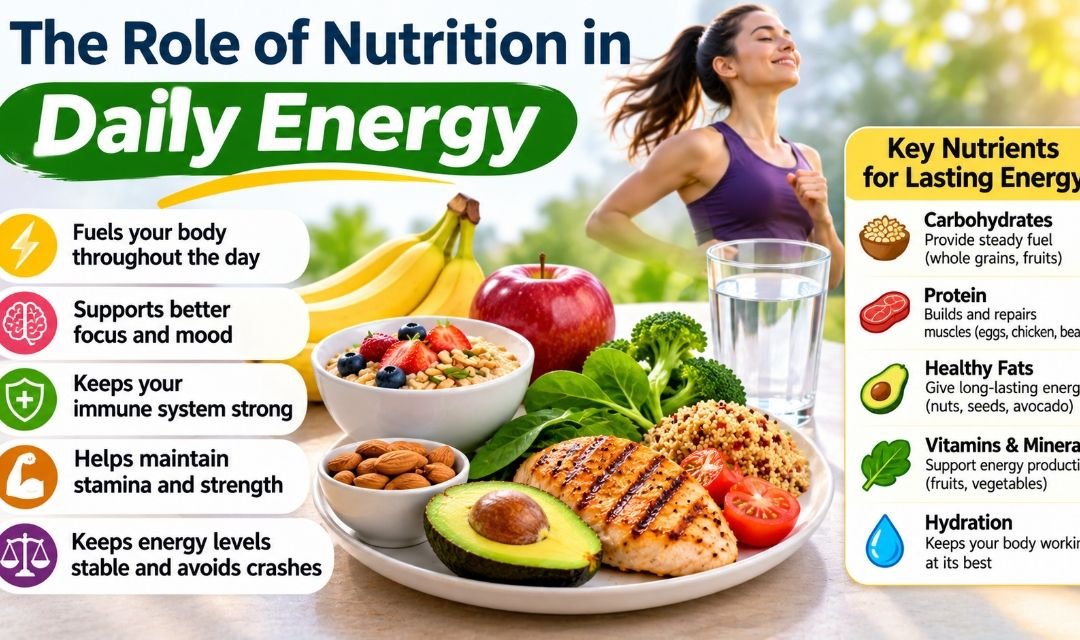
Quick Overview of Nutrition and Daily Energy
| Category | Details |
|---|---|
| Main topic | The Role of Nutrition in Daily Energy |
| Primary purpose | Understanding how food supports energy |
| Main energy nutrients | Carbohydrates, fats, and proteins |
| Main carbohydrate sources | Whole grains, fruits, vegetables, legumes |
| Protein sources | Eggs, fish, beans, lentils, dairy, tofu |
| Healthy fat sources | Nuts, seeds, olive oil, avocado |
| Important vitamins | B vitamins, vitamin B12 |
| Important minerals | Iron, magnesium, potassium |
| Hydration | Supports normal body functions |
| Meal planning | Helps maintain adequate nutrient intake |
| Physical activity | Supports fitness and overall wellbeing |
| Sleep | Important for alertness and recovery |
| Common energy problems | Poor sleep, inadequate nutrition, dehydration |
| Best approach | Balanced meals and sustainable daily habits |
Many people experience tiredness during busy days.
Some feel sleepy after lunch.
Others struggle to concentrate in the afternoon or feel exhausted after work.
When this happens, it is tempting to reach for coffee, energy drinks, or sugary snacks.
However, these products do not always address the underlying reason for fatigue.
A more useful approach is to understand how food supplies energy and how daily habits influence the body’s ability to function.
Good nutrition does not guarantee that someone will never feel tired.
It does, however, provide the nutrients needed for normal metabolism and physical activity.
What Is Daily Energy?
Daily energy refers to the body’s ability to perform physical and mental activities throughout the day.
In nutrition, energy is measured in calories.
Calories represent the amount of energy food can provide.
The body uses this energy for essential functions, including breathing, circulation, digestion, movement, and maintaining body temperature.
Even during sleep, the body requires energy.
However, the feeling of being energetic is not identical to calorie intake.
A person may consume enough calories and still feel tired because of poor sleep, illness, stress, or nutritional deficiencies.
Why Is Nutrition Important for Energy?
Food supplies both energy and nutrients needed for metabolism.
Carbohydrates and fats are major energy sources.
Protein can also provide energy, although it has important structural and functional roles.
Vitamins and minerals support chemical reactions involved in energy production.
However, vitamins themselves do not provide calories.
This distinction is important because many supplements are marketed as energy boosters.
Unless someone has a deficiency or another specific nutritional need, taking extra vitamins does not necessarily increase energy.
1. Carbohydrates: The Body’s Important Energy Source
Carbohydrates are found in grains, fruits, vegetables, legumes, milk, and other foods.
During digestion, many carbohydrates are broken down into sugars that the body can use for energy.
Glucose is particularly important for normal brain and body functions.
However, carbohydrate quality matters.
Whole grains, fruits, and legumes provide additional nutrients such as fiber, vitamins, and minerals.
Highly refined carbohydrate foods may contain less fiber.
Healthy Carbohydrate Sources
-
Oats
-
Brown rice
-
Whole wheat
-
Potatoes
-
Beans
-
Lentils
-
Fruits
-
Vegetables
Carbohydrates do not need to be eliminated for general wellness.
Individual requirements vary according to activity and medical conditions.
2. Protein Supports Tissue Maintenance and Recovery
Protein is necessary for muscle maintenance, tissue repair, and many biological functions.
It is made from amino acids.
Some amino acids must be obtained through food.
Common protein sources include eggs, fish, poultry, dairy products, beans, lentils, and tofu.
However, eating excessive protein does not automatically increase energy.
The body needs an appropriate balance of nutrients.
3. Healthy Fats Provide Concentrated Energy
Fat provides more calories per gram than carbohydrates or protein.
It also supports cell function and helps the body absorb certain vitamins.
Healthy fat sources include nuts, seeds, olive oil, and certain fish.
However, different types of fats have different health effects.
Unsaturated fats are generally preferred over excessive saturated fat intake.
Industrial trans fats should be avoided.
4. B Vitamins Support Energy Metabolism
B vitamins participate in many chemical reactions that help the body use nutrients.
Important examples include thiamine, riboflavin, niacin, vitamin B6, folate, and vitamin B12.
These vitamins do not directly provide energy.
Instead, they support normal metabolic processes.
People with certain deficiencies may experience fatigue or other symptoms.
However, taking large doses of B vitamins does not necessarily improve energy in people who already have adequate intake.
5. Iron Helps Transport Oxygen
Iron is necessary for producing hemoglobin.
Hemoglobin helps red blood cells transport oxygen throughout the body.
Iron deficiency can contribute to anemia.
Symptoms may include fatigue, weakness, and reduced exercise tolerance.
However, tiredness has many possible causes.
Iron supplements should not be taken unnecessarily because excessive iron can be harmful.
6. Magnesium Supports Normal Metabolism
Magnesium participates in numerous biochemical reactions.
These include processes involved in energy metabolism, muscle function, and nerve signaling.
Food sources include nuts, seeds, legumes, and whole grains.
However, magnesium supplements are not universal energy boosters.
Supplementation should reflect individual needs.
7. Vitamin B12 and Energy
Vitamin B12 supports normal red blood cell formation and nerve function.
Deficiency can cause anemia, neurological symptoms, and fatigue.
Vitamin B12 is naturally present in many animal-derived foods.
People following fully vegan diets need reliable B12 from fortified foods or supplements.
However, extra B12 does not necessarily increase energy when levels are already adequate.
8. Hydration Supports Normal Physical Function
Water is essential for normal body functions.
It contributes to circulation, temperature regulation, and other physiological processes.
Dehydration may cause fatigue, headache, or reduced physical performance.
However, fluid needs vary.
Climate, activity, diet, and medical conditions all influence hydration requirements.
Drinking excessive amounts of water is not beneficial and can be harmful.
9. Fiber Supports Digestive Health
Fiber is found in plant foods.
It contributes to digestive health and can influence how quickly certain carbohydrates are digested.
However, the effects vary by fiber type and food composition.
Fiber-rich foods include oats, beans, lentils, vegetables, fruits, and whole grains.
A varied diet can help provide adequate fiber.
10. Balanced Meals Support Nutritional Adequacy
Balanced meals provide a mixture of nutrients.
A practical meal may include vegetables, protein-rich foods, whole grains, and healthy fats.
However, the exact portions depend on individual needs.
Eating balanced meals can help people obtain essential nutrients throughout the day.
It does not guarantee perfectly steady energy levels at every moment.
Important Nutrients for Daily Energy
| Nutrient | Main role | Common food sources |
|---|---|---|
| Carbohydrates | Provide energy | Oats, rice, fruits, potatoes |
| Protein | Tissue maintenance and repair | Eggs, beans, fish, tofu |
| Fats | Concentrated energy and cell function | Nuts, seeds, olive oil |
| Vitamin B12 | Red blood cell and nerve function | Animal foods, fortified foods |
| Iron | Oxygen transport | Meat, lentils, beans |
| Magnesium | Metabolic reactions | Nuts, seeds, legumes |
| Folate | Cell division and red blood cell formation | Leafy greens, legumes |
| Thiamine | Carbohydrate metabolism | Whole grains, legumes |
| Riboflavin | Energy metabolism | Dairy, eggs, fortified foods |
| Water | Fluid balance and normal functions | Water, beverages, foods |
A varied diet can help provide these nutrients.
However, some individuals may require medical evaluation or supplementation.
11. Breakfast and Morning Energy
Breakfast can provide nutrients after an overnight period without eating.
However, breakfast is not essential for every adult.
Some people feel better eating early.
Others prefer eating later.
The important consideration is whether the overall diet meets nutritional needs.
Simple Breakfast Ideas
-
Oatmeal with fruit and nuts
-
Eggs with whole-grain toast
-
Yogurt with oats
-
Whole-grain bread with peanut butter
-
Tofu scramble with vegetables
Breakfast should reflect personal preferences and medical needs.
12. Lunch and Afternoon Energy
Lunch provides an opportunity to replenish energy and nutrients.
A balanced lunch may include vegetables, protein, and appropriate carbohydrates.
However, feeling sleepy after lunch is not always caused by eating unhealthy food.
Sleep patterns, meal size, circadian rhythms, and other factors may contribute.
People can experiment with meal composition and portions according to comfort.
13. Dinner and Overnight Recovery
Dinner contributes to daily nutrient intake.
It may include protein, vegetables, grains, and healthy fats.
However, eating dinner at a specific time is not necessary for everyone.
Meal timing should fit individual routines.
People who experience reflux or sleep discomfort may benefit from avoiding large meals close to bedtime.
14. Healthy Snacks and Energy
Snacks can provide additional nutrients and calories when needed.
Examples include fruit, nuts, yogurt, hummus, and whole-grain crackers.
However, snacks are optional.
Some people meet their needs through regular meals.
The best approach depends on hunger, activity, and nutritional requirements.
15. Understand Sugar and Energy
Sugary foods and beverages provide carbohydrates.
They can increase blood glucose.
However, frequent excessive added sugar intake can contribute to poor dietary quality and other health concerns.
Sugar does not provide a reliable long-term solution for persistent fatigue.
Balanced meals and appropriate nutrition are more sustainable.
16. Caffeine and Alertness
Caffeine is a stimulant found in coffee, tea, energy drinks, and some other products.
It can temporarily increase alertness.
However, caffeine does not replace adequate sleep.
Excessive intake can cause anxiety, palpitations, and sleep problems.
Sensitivity varies between individuals.
17. Understand Energy Drinks
Energy drinks often contain caffeine and other ingredients.
Some also contain substantial added sugar.
However, their composition varies.
Energy drinks are not necessary for normal energy metabolism.
Certain individuals, including children and people with specific medical conditions, should avoid or carefully limit them according to professional guidance.
18. Nutrition and Exercise Performance
Physical activity increases energy requirements.
The amount depends on exercise intensity, duration, and individual characteristics.
Carbohydrates can provide fuel for activity.
Protein contributes to muscle maintenance and recovery.
Hydration is also important.
However, not everyone needs specialized sports supplements.
19. Nutrition and Mental Concentration
The brain requires energy and nutrients for normal function.
Adequate nutrition supports overall neurological health.
However, concentration is influenced by sleep, stress, illness, medications, and other factors.
No single food guarantees improved memory or attention.
20. Nutrition and Sleep Quality
Sleep affects alertness and daily performance.
Most adults generally need seven to nine hours per night.
Insufficient sleep can contribute to fatigue even when dietary intake is adequate.
Certain eating habits may influence sleep comfort.
However, nutrition alone cannot treat every sleep disorder.
21. Stress and Daily Energy
Stress can influence appetite, sleep, and perceived energy.
Some people eat more during stressful periods.
Others may lose their appetite.
Balanced nutrition can support general health.
However, persistent stress or emotional distress may require professional support.
22. Plant-Based Nutrition and Energy
Plant-based diets can provide adequate energy and nutrients when appropriately planned.
Common foods include beans, lentils, whole grains, nuts, seeds, fruits, and vegetables.
However, fully vegan diets require reliable vitamin B12 intake.
Iron, calcium, iodine, vitamin D, and other nutrients may also require attention.
23. Understand Nutritional Deficiencies
Certain nutrient deficiencies can contribute to fatigue.
Examples include iron deficiency and vitamin B12 deficiency.
However, fatigue alone does not establish a deficiency.
Blood tests and medical evaluation may be necessary.
Taking supplements without identifying the cause may delay appropriate treatment.
24. Avoid Extreme Diets
Extreme diets can reduce energy intake or exclude important nutrients.
This may contribute to fatigue or other health problems.
However, medically prescribed dietary restrictions may be necessary for certain conditions.
People should avoid unnecessary food restrictions and seek appropriate guidance when needed.
25. Build Sustainable Eating Habits
Long-term energy and wellness depend on consistent habits.
Eating varied foods, maintaining appropriate hydration, and getting sufficient sleep can support normal functioning.
However, daily energy naturally fluctuates.
The goal is not to feel maximally energetic every hour.
Instead, focus on meeting nutritional needs and maintaining overall health.
Best Foods for Supporting Daily Energy
| Food | Main nutrients | Practical use |
|---|---|---|
| Oats | Carbohydrates, fiber | Breakfast |
| Bananas | Carbohydrates, potassium | Quick snack |
| Eggs | Protein, vitamins | Breakfast or lunch |
| Lentils | Protein, carbohydrates, iron | Lunch or dinner |
| Brown rice | Carbohydrates, fiber | Balanced meals |
| Nuts | Fats, protein, minerals | Snacks |
| Yogurt | Protein, calcium | Breakfast or snack |
| Beans | Protein, fiber, minerals | Lunch or dinner |
| Whole-grain bread | Carbohydrates, fiber | Sandwiches |
| Tofu | Protein and other nutrients | Plant-based meals |
No single food provides every nutrient.
Variety is important.
Seven-Day Nutrition Plan for Daily Energy
| Day | Breakfast | Lunch | Dinner |
|---|---|---|---|
| Monday | Oatmeal with fruit | Rice, lentils, vegetables | Chicken or tofu with vegetables |
| Tuesday | Eggs and whole-grain toast | Chickpea salad | Fish or beans with rice |
| Wednesday | Yogurt with oats | Vegetable and bean wrap | Lentil soup |
| Thursday | Whole-grain toast with nut butter | Rice and vegetables with protein | Tofu stir-fry |
| Friday | Oatmeal with seeds | Chicken or bean sandwich | Fish or legumes with vegetables |
| Saturday | Eggs with vegetables | Lentil and rice bowl | Vegetable pasta with protein |
| Sunday | Yogurt and fruit | Chickpea and vegetable bowl | Balanced family meal |
This plan is illustrative.
Portions and food choices should reflect individual needs.
A Simple Daily Routine for Nutrition and Energy
| Time | Nutrition habit | Wellness habit |
|---|---|---|
| Morning | Eat a balanced breakfast if desired | Get natural daylight |
| Mid-morning | Drink fluids as needed | Take a movement break |
| Lunch | Include vegetables and protein | Avoid rushing meals |
| Afternoon | Choose a snack if hungry | Walk or stretch |
| Evening | Eat a balanced dinner | Reduce unnecessary stress |
| Before bed | Avoid meals that disturb sleep | Maintain a regular sleep schedule |
This routine can be adjusted according to personal responsibilities.
Nutrition and Energy for Office Workers
Office workers may spend long periods sitting.
Balanced meals can support nutritional needs.
Regular movement breaks may also help reduce prolonged sedentary time.
However, fatigue at work may result from sleep problems, stress, or medical conditions.
Food alone may not resolve these issues.
Nutrition and Energy for Students
Students require adequate nutrition for normal growth, health, and daily functioning.
Balanced meals can provide energy for studying and other activities.
However, concentration also depends on sleep, mental health, and learning conditions.
Students should avoid extreme dieting or relying heavily on energy drinks.
Nutrition and Energy for Older Adults
Older adults may experience changes in appetite, muscle mass, and nutrient needs.
Protein, vitamin B12, iron, and other nutrients may require attention.
However, requirements vary.
Persistent fatigue should not automatically be attributed to aging.
Medical evaluation may be appropriate.
Common Nutrition Mistakes That May Affect Energy
Several eating habits can contribute to inadequate nutrition.
Common mistakes include:
-
Eating too little for activity needs
-
Following extreme restrictive diets
-
Ignoring protein-rich foods
-
Consuming limited dietary variety
-
Neglecting hydration
-
Relying heavily on sugary drinks
-
Using excessive caffeine
-
Ignoring possible nutrient deficiencies
-
Skipping sleep to maintain productivity
-
Assuming supplements can replace balanced meals
Addressing these habits may support overall wellbeing.
When Should Persistent Fatigue Be Evaluated?
Occasional tiredness is common.
However, persistent or unexplained fatigue may require medical attention.
Possible causes include anemia, thyroid disorders, sleep disorders, infections, medication effects, and other conditions.
People should seek professional evaluation if fatigue is persistent, worsening, or interfering with daily activities.
Sudden severe weakness, chest pain, fainting, or difficulty breathing requires urgent medical assessment.
Frequently Asked Questions About Nutrition and Daily Energy
1. What is the role of nutrition in daily energy?
Nutrition provides calories and essential nutrients needed for normal body functions and physical activity.
2. Which nutrient provides the most energy per gram?
Fat provides approximately nine calories per gram, compared with about four for carbohydrates and protein.
3. Are carbohydrates important for energy?
Yes. Carbohydrates are an important energy source.
4. Does protein provide energy?
Yes, but protein also has essential roles in tissue maintenance and repair.
5. Do vitamins provide calories?
No. Vitamins support metabolism but do not directly provide calories.
6. Can dehydration cause fatigue?
Yes. Dehydration can contribute to tiredness in some circumstances.
7. Is breakfast necessary for energy?
Not for every adult. Overall dietary adequacy matters.
8. Are energy drinks healthy?
Their nutritional profiles vary, and many contain substantial caffeine or added sugar.
9. Does coffee provide energy?
Caffeine can temporarily increase alertness, but coffee does not replace sleep.
10. Can iron deficiency cause tiredness?
Yes. Iron deficiency anemia can cause fatigue and weakness.
11. Is vitamin B12 important?
Yes. It supports normal red blood cell formation and nerve function.
12. Can plant-based diets provide enough energy?
Yes, when appropriately planned.
13. Are nuts good for energy?
Nuts provide calories, fats, protein, and other nutrients.
14. Is fruit useful as a snack?
Yes. Fruit provides carbohydrates, fiber, vitamins, and water.
15. Does sugar provide quick energy?
Sugar provides carbohydrates, but frequent excessive added sugar intake is not a good long-term strategy.
16. Can poor sleep affect energy?
Yes. Insufficient sleep is a common cause of fatigue.
17. Does exercise improve energy?
Regular physical activity can support fitness and overall wellbeing.
18. Are protein supplements necessary?
Not for everyone. Many people can meet protein needs through food.
19. Can stress affect energy levels?
Yes. Stress can influence sleep, appetite, and perceived energy.
20. Are whole grains useful?
Yes. Whole grains provide carbohydrates, fiber, and other nutrients.
21. Can low calorie intake cause fatigue?
Yes. Inadequate energy intake can contribute to tiredness.
22. Do older adults have different nutritional needs?
Some nutrient requirements and dietary considerations change with age.
23. Can nutrition improve concentration?
Adequate nutrition supports normal brain function, but concentration depends on many factors.
24. When should fatigue be checked by a doctor?
When it is persistent, unexplained, worsening, or interfering with daily activities.
25. What is the best nutrition habit for daily energy?
Eat a varied diet that provides adequate energy and nutrients while maintaining healthy sleep, hydration, and activity habits.
Final Thoughts
The role of nutrition in daily energy is closely connected to the body’s ability to perform normal physical and mental activities.
Carbohydrates, fats, and proteins provide energy.
Vitamins and minerals support metabolic processes.
Water helps maintain normal physiological functions.
However, feeling energetic depends on more than food alone.
Adequate sleep, physical activity, stress management, and medical health also influence daily performance.
A varied diet containing vegetables, fruits, whole grains, protein-rich foods, and healthy fats can help meet nutritional needs.
Extreme diets, unnecessary supplements, and excessive energy drink consumption are not reliable solutions for persistent fatigue.
The most sustainable approach is to maintain balanced eating habits, respond to individual needs, and seek medical advice when tiredness is unexplained or ongoing.
For more balanced nutrition guides, healthy eating advice, daily wellness tips, plant-based food education, and beginner-friendly lifestyle articles, visit Picanto Magazine.
Medical Disclaimer: This article is for general educational purposes only and does not replace professional medical advice, diagnosis, or treatment. Persistent or unexplained fatigue may have medical causes and should be evaluated by a qualified healthcare professional. Consult a registered dietitian for personalized nutritional guidance when needed