
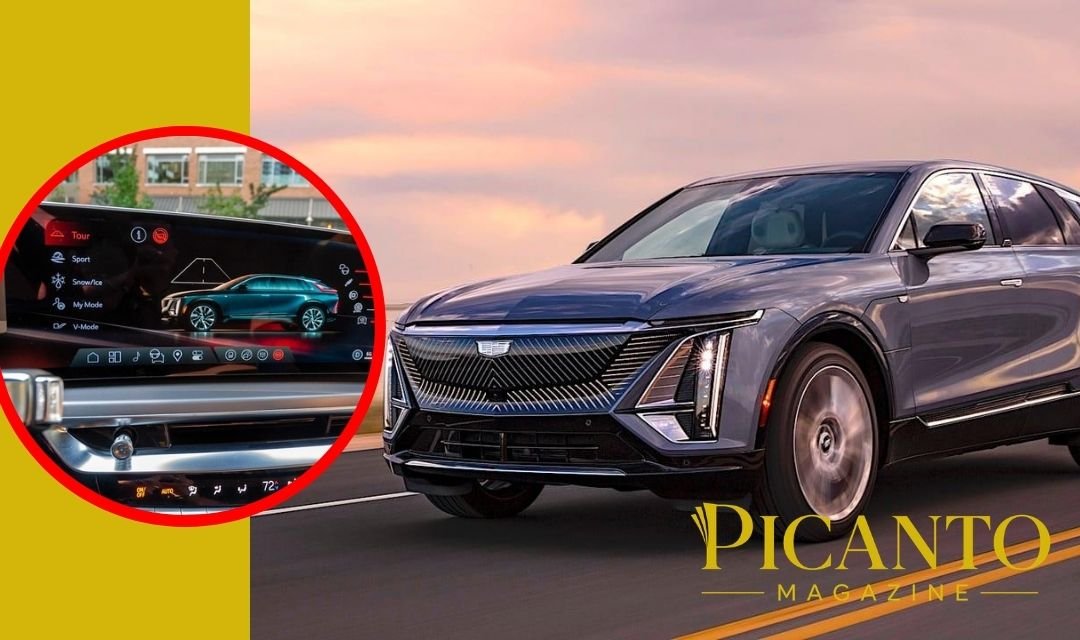
Do the driving modes in Cadillac Lyriq offer different ranges or battery usages? The short answer is that Cadillac does not give Tour, Sport, Snow/Ice, and My Mode separate official range ratings. The modes use the same battery, but they change how the LYRIQ responds to the accelerator, brakes, steering, and road conditions. These changes can indirectly increase or reduce energy use. Cadillac’s official LYRIQ owner documentation also makes clear that speed, temperature, terrain, driving technique, climate control, and vehicle load all affect real-world range.
Quick Answer
| Driving mode | Main purpose | Likely effect on energy use | Separate official range? |
|---|---|---|---|
| Tour | Smooth everyday driving | Usually the most predictable | No |
| Sport | Faster response and sportier steering | Can use more energy if driven aggressively | No |
| Snow/Ice | Slower power delivery on slippery roads | Mode itself may not use more, but cold weather does | No |
| My Mode | Personalized vehicle settings | Depends on the settings and driving style | No |
| V-Mode on LYRIQ-V | Quick access to performance settings | Can increase use during hard driving | No separate EPA figure |
| Velocity Max on LYRIQ-V | Unlocks maximum performance | High power demand can reduce range | No separate range rating |
Do Cadillac LYRIQ Driving Modes Change the Official Range?
No. Cadillac does not publish a different EPA-estimated range for each standard driving mode.
The official range belongs to the vehicle configuration, not to a button selected on the dashboard. Important configuration differences include:
- Rear-wheel drive or all-wheel drive
- Model year
- Wheel and tire size
- Standard LYRIQ or LYRIQ-V
- Battery and motor configuration
- Vehicle equipment
Selecting Sport mode does not suddenly install a smaller battery. Choosing Tour mode does not add more energy to the battery pack.
Instead, each mode changes how the vehicle reacts to the driver. Those changes can influence the amount of electricity used during a journey.
For example, Sport mode may make the accelerator feel more sensitive. If that encourages rapid acceleration, the vehicle will normally use more energy.
If the driver maintains the same gentle acceleration and steady speed in both Tour and Sport, the difference may be relatively small.
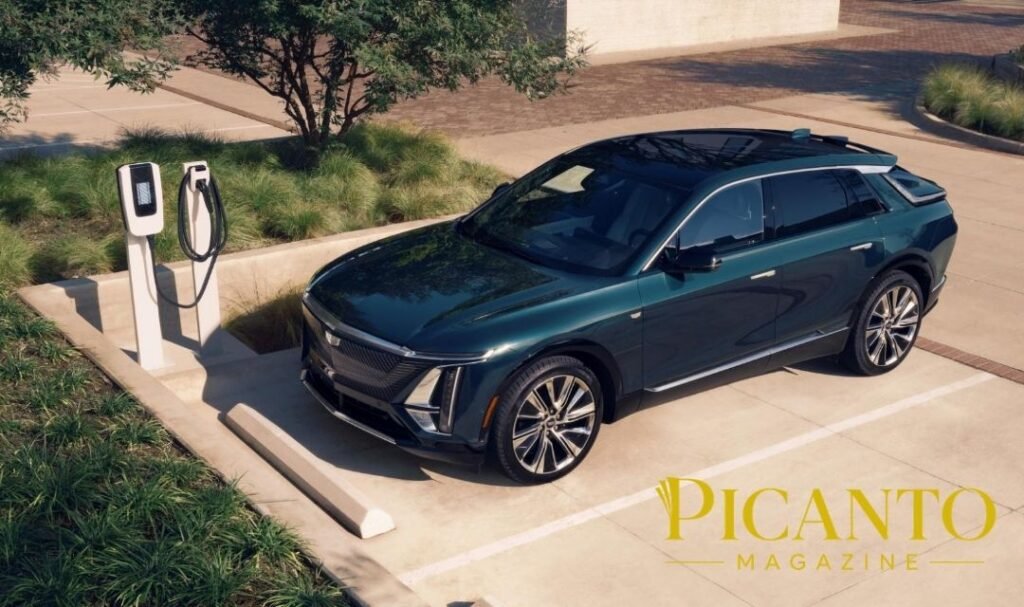
How the Cadillac LYRIQ Uses Its Battery
The Cadillac LYRIQ stores electricity in a large lithium-ion propulsion battery. That electricity powers the motor or motors that move the vehicle.
Battery energy is also used for several other functions, including:
- Heating and air conditioning
- Battery temperature control
- Infotainment
- Lights
- Seat heating and ventilation
- Window defogging
- Electronic vehicle systems
- Phone charging and accessories
The motors normally use the largest amount of energy while driving. However, cabin heating can also create a noticeable range reduction in cold weather.
The battery display shows an estimated remaining range. This number is not a promise that the vehicle will travel that exact distance.
It is a prediction based on available energy and recent or expected driving conditions.
What Does Tour Mode Do?
Tour is the LYRIQ’s normal everyday driving mode. It is designed to provide smooth acceleration, comfortable steering, and a relaxed driving experience.
For most journeys, Tour is the best mode to leave selected.
Its accelerator response is easier to control gently than the more immediate response found in Sport mode. This can make smooth and efficient driving simpler.
Tour mode is well suited to:
- Daily commuting
- City driving
- Highway travel
- Family trips
- Normal dry roads
- Long-distance journeys
Cadillac does not officially call Tour a dedicated “Eco” mode. However, its balanced response can help drivers avoid unnecessary bursts of power.
The final efficiency still depends on the driver. Pressing the accelerator hard in Tour will use more energy than driving gently in Sport.
Does Tour Mode Give the Longest Range?
Tour will often provide the most consistent and predictable everyday efficiency, but it does not guarantee the longest range.
The mode’s smoother response may encourage gentle acceleration. Gentle acceleration usually reduces unnecessary energy consumption.
However, driving speed matters much more than the name of the mode.
A LYRIQ traveling at a high highway speed in Tour can use more energy than one moving slowly and smoothly in Sport.
Wind, outside temperature, hills, and cabin heating can also create a larger difference than switching between Tour and Sport.
Tour should therefore be viewed as the most balanced setting, not as a magical range-extending mode.
What Does Sport Mode Change?
Sport mode makes the LYRIQ feel more responsive and connected to the road.
Depending on the model and equipment, it may change:
- Accelerator response
- Steering effort
- Brake-pedal feel
- Motor sound
- Suspension behavior on equipped models
- Power delivery
The accelerator may respond more quickly to the same movement of the driver’s foot. This makes the vehicle feel faster and more exciting.
Heavier or sharper steering can also create a sportier feeling. The vehicle does not necessarily travel faster simply because Sport is selected, but it becomes easier to request strong acceleration.
Does Sport Mode Use More Battery?
Sport mode can use more battery, but the difference mostly comes from how it encourages the vehicle to be driven.
Rapid acceleration demands a large amount of power from an electric motor. Repeating these bursts can reduce efficiency and lower the predicted range.
Higher speed also increases air resistance. The energy required to push a vehicle through the air rises significantly as speed increases.
A driver who selects Sport may be more likely to:
- Accelerate quickly
- Maintain a higher speed
- Pass other vehicles aggressively
- Brake harder
- Enjoy the vehicle’s full power
These actions consume more battery energy.
However, Sport mode does not constantly empty the battery at a dramatically higher rate. If the vehicle travels at the same speed on the same road with the same smooth inputs, the energy difference may be modest.
The mode creates the ability and feeling of greater performance. The driver determines how often that performance is used.
Can Sport Mode Reduce the Displayed Range?
The estimated range may fall more quickly during aggressive driving in Sport mode.
The LYRIQ monitors energy consumption and adjusts its prediction. If recent driving requires more energy per mile, the estimated remaining distance can decrease.
This does not mean the battery has suddenly lost capacity. It means the vehicle now expects that the remaining energy will not carry it as far.
If the driver later returns to gentle, steady driving, the estimate may become more favorable.
Range displays are always changing calculations. They should not be understood as fixed measurements.
What Does Snow/Ice Mode Do?
Snow/Ice mode is designed to improve control on slippery roads.
It softens or slows the accelerator response, helping prevent the wheels from receiving too much torque at once.
Electric motors can deliver power immediately. This instant torque feels exciting on dry roads, but it can cause wheelspin on snow or ice.
Snow/Ice mode makes the power easier to manage. Its goal is safety and traction, not maximum range.
The mode may be useful during:
- Snow
- Ice
- Freezing rain
- Slippery winter roads
- Loose or low-grip surfaces
Drivers must still slow down and leave greater stopping distance. A driving mode cannot defeat the physical limits of an icy road.
Does Snow/Ice Mode Save Battery?
Its softer accelerator response may help prevent wasteful wheelspin and sudden bursts of power. In that limited way, it could support smoother energy use.
However, winter conditions usually reduce EV range for reasons that have little to do with Snow/Ice mode.
Cold weather can affect:
- Battery performance
- Cabin heating demand
- Tire pressure
- Rolling resistance
- Regenerative braking availability
- Road conditions
- Driving speed
- Energy used to warm the battery
Snow, water, and slush also increase resistance against the tires.
As a result, the vehicle may use more energy while Snow/Ice mode is active. The extra use is normally caused by the cold and road conditions rather than the mode itself.
Turning off Snow/Ice mode will not remove the winter range penalty.
What Is My Mode?
My Mode allows a driver to personalize selected vehicle settings.
Available choices can vary by model year, software version, trim, and equipment. They may include:
- Acceleration feel
- Steering feel
- Brake response
- Motor sound
- Other driving characteristics
A driver may prefer comfortable acceleration with heavier steering, or sporty acceleration with a quieter sound setting.
My Mode combines these personal choices into one convenient selection.
It does not have one standard energy-use result because every driver can configure and use it differently.
Can My Mode Improve Range?
My Mode may help a driver create a calmer setup, but Cadillac does not give it a special higher range rating.
Choosing a gentle acceleration response can make smooth driving easier. This may help the driver avoid sudden power requests.
On the other hand, choosing the most responsive acceleration and using it frequently can increase consumption.
Steering weight and artificial motor sounds normally create a much smaller energy difference than speed, acceleration, heating, or terrain.
The most important part of My Mode is still the person behind the wheel.
Is There an Eco Mode in the Cadillac LYRIQ?
The standard LYRIQ has not traditionally offered a normal drive setting simply labeled “Eco” alongside Tour, Sport, Snow/Ice, and My Mode.
Tour acts as the balanced everyday mode, but it is not marketed as a dedicated range-maximizing setting.
Some LYRIQ versions may include an Eco Climate function. This is different from a complete driving mode.
Eco Climate changes how the heating and air-conditioning system uses energy. It tries to provide comfort more efficiently, such as directing air where passengers are seated.
Because cabin heating can use a meaningful amount of battery energy, efficient climate settings may help range—especially in cold weather.
Owners should check their vehicle’s software and model-year manual because available features can change.
What About V-Mode and Velocity Max?
The high-performance LYRIQ-V adds features not found on the standard LYRIQ.
V-Mode allows the driver to save a group of preferred performance settings and quickly activate them through a steering-wheel control or the infotainment system.
Velocity Max unlocks the vehicle’s maximum performance capability. The LYRIQ-V can deliver much stronger power and acceleration when this feature is active.
Using full performance requires considerable electrical power. Frequent hard acceleration will reduce range more quickly.
However, merely selecting V-Mode does not automatically use the battery at its maximum rate. The actual result still depends on how the driver uses the accelerator and other settings.
The LYRIQ-V also has a lower official range than some standard LYRIQ configurations because it uses a performance-focused dual-motor system, tires, tuning, and other equipment.
That difference is connected with the complete vehicle design, not simply the V-Mode button.
Do One-Pedal Driving and Regen On Demand Change Range?
One-Pedal Driving and Regen On Demand can recover some energy when the vehicle slows down.
In a traditional vehicle, friction brakes turn movement into heat. Regenerative braking uses the electric motor to slow the car and sends some energy back into the battery.
The recovered amount is never equal to all the energy previously used for acceleration. Energy is always lost through air resistance, tires, electronics, and conversion processes.
Still, regeneration can improve efficiency in stop-and-go traffic or on downhill roads.
One-Pedal Driving allows the driver to slow or stop the LYRIQ in many situations by lifting off the accelerator.
Regen On Demand uses a pressure-sensitive paddle behind the steering wheel. Pulling it allows the driver to request regenerative slowing.
Does Stronger Regeneration Always Give More Range?
Not necessarily.
Regenerative braking is useful when the vehicle needs to slow down. However, maintaining a smooth, steady speed or coasting efficiently can sometimes be better than repeatedly accelerating and regenerating.
Suppose a driver accelerates hard and then uses strong regeneration. Some energy returns to the battery, but the process still loses energy.
A smoother driver who never created the unnecessary speed may use less energy overall.
The best approach is:
- Look far ahead
- Accelerate gently
- Avoid unnecessary speed changes
- Use regeneration when slowing is required
- Maintain a safe, steady speed
One-Pedal Driving does not create free energy. It recovers part of the energy that would otherwise be lost during braking.
Does All-Wheel Drive Change Energy Use?
A dual-motor all-wheel-drive LYRIQ may use more energy than a comparable rear-wheel-drive model.
The second motor, extra components, and additional weight can affect efficiency. However, the exact difference depends on model year and configuration.
This is not the same as changing a driving mode. A rear-wheel-drive LYRIQ does not become an all-wheel-drive vehicle when Sport mode is selected.
The vehicle’s official range is based on its actual hardware configuration.
Buyers comparing two LYRIQ models should check the EPA rating for each exact version rather than assuming every LYRIQ travels the same distance.
How Wheel Size Affects LYRIQ Range
Large wheels can reduce efficiency.
Bigger or wider wheels may create more aerodynamic drag, greater rotating weight, and increased rolling resistance. Performance-oriented tires can also use more energy than low-resistance tires.
Cadillac may offer different wheels depending on trim and model year. The official range can vary between configurations.
Changing from Tour to Sport normally has less effect than fitting inefficient aftermarket wheels and tires.
Owners should also maintain the recommended tire pressure. Underinflated tires create additional resistance and reduce range.
Why Highway Speed Matters More Than Drive Mode
Speed has a major effect on electric-vehicle efficiency.
At higher speeds, the LYRIQ must push much more air out of the way. This requires more energy from the battery.
A small increase in highway speed can noticeably reduce range, especially during a long journey.
For example, driving steadily at a moderate legal speed in Sport mode may use less battery than driving much faster in Tour mode.
The mode name does not cancel the laws of physics.
Drivers trying to maximize range should reduce unnecessary speed and use cruise control when traffic, weather, and road conditions make it safe.
How Temperature Changes Battery Usage
Both very cold and very hot weather can affect range.
Cold weather is usually the greater challenge. The battery may need energy to reach an efficient working temperature, while passengers also request cabin heat.
Gasoline vehicles produce large amounts of waste heat from their engines. Electric vehicles are more efficient, so they have less wasted heat available for warming the cabin.
The LYRIQ uses modern thermal-management technology, but heating still requires energy.
Hot weather can increase air-conditioning and battery-cooling demand. The effect is often smaller than severe winter heating, although extreme heat can still reduce range.
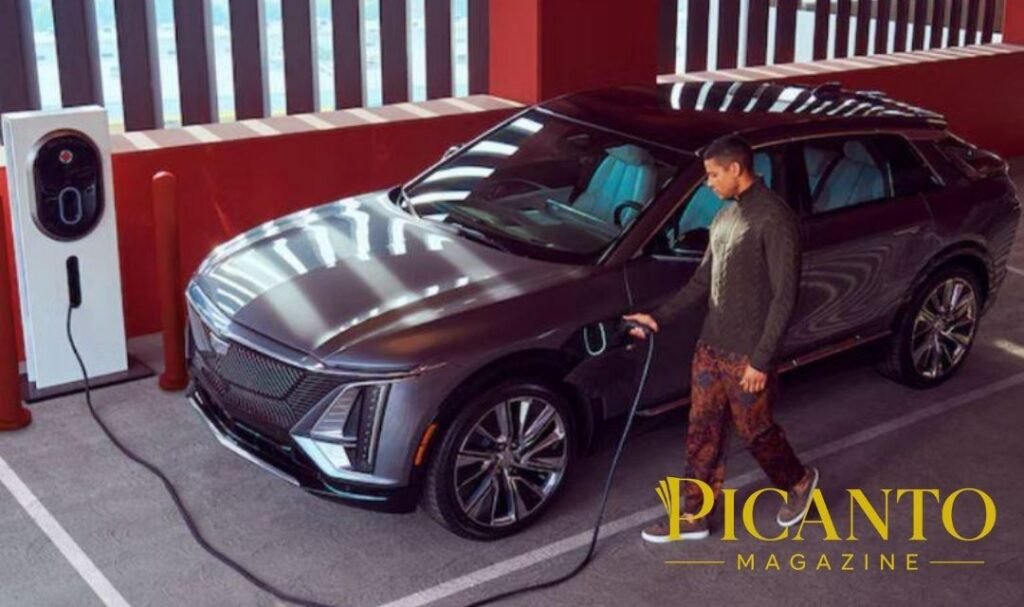
Whenever possible, drivers can precondition the cabin while the vehicle is connected to a charger. This allows the car to use external electricity for initial heating or cooling instead of relying only on the battery.
Other Factors That Affect LYRIQ Range
Driving mode is only one small part of the complete range picture.
Important factors include:
Rapid acceleration
Strong acceleration draws more power. Smooth starts generally improve efficiency.
Hills
Climbing requires additional energy. Some energy can be recovered while descending, but not all of it.
Headwinds
A strong headwind increases aerodynamic resistance, similar to driving faster.
Vehicle weight
Passengers, luggage, and cargo add weight. Towing can cause a much larger range reduction.
Tire condition
Incorrect tire pressure and high-resistance tires increase energy consumption.
Climate settings
Cabin heating and air conditioning draw energy from the battery.
Rain and snow
Wet, snowy, or slushy roads increase rolling resistance.
Battery age
A battery can gradually lose some capacity over many years.
Accessories
Lights, screens, and phone charging use energy, but their effect is usually much smaller than propulsion or cabin heating.
How to See Your LYRIQ’s Current Energy Usage
The LYRIQ’s display provides energy and range information. Available screens can vary with model year and software version.
Drivers can review information such as:
- Battery charge level
- Estimated remaining range
- Recent energy efficiency
- Energy use
- Climate-system effect
- Charging information
- Trip data
Watch the trend instead of worrying about every small change.
The predicted range may rise or fall after weather changes, highway driving, heavy climate use, or aggressive acceleration.
A changing estimate does not automatically mean the battery has a problem.
Simple Test to Compare Driving Modes
Owners can compare Tour and Sport under similar conditions, although a personal test will not be as exact as laboratory testing.
Follow these steps:
- Choose the same safe route.
- Start at a similar battery charge.
- Use similar cabin-temperature settings.
- Drive at approximately the same outside temperature.
- Maintain the same legal speed.
- Avoid heavy traffic when possible.
- Record energy efficiency, not only displayed miles.
- Repeat the test more than once.
One short journey can give a misleading result. Wind, traffic lights, elevation, and battery temperature may change consumption.
The most useful measurement is usually miles per kilowatt-hour or energy used over a known distance.
Which Mode Should You Use for Maximum Range?
Tour is the simplest choice for normal range-focused driving.
It offers smooth and predictable responses without encouraging unnecessary performance. Combine it with gentle acceleration and moderate speed.
For the best range:
- Use Tour mode
- Accelerate smoothly
- Maintain a steady speed
- Avoid unnecessary high-speed driving
- Precondition while plugged in
- Use efficient climate settings
- Keep tires properly inflated
- Remove unnecessary heavy cargo
- Plan charging stops before long journeys
- Use One-Pedal Driving or Regen On Demand intelligently
Snow/Ice mode should be used when road safety requires it. Never avoid a safety-focused setting merely to protect a few estimated miles.
Sport mode is fine when the driver wants a more responsive experience and has enough charge for the planned journey.
Final Thoughts
So, do the driving modes in Cadillac Lyriq offer different ranges or battery usages? They do not receive separate official range ratings, and they do not change the physical size of the battery.
Tour, Sport, Snow/Ice, and My Mode mainly change the vehicle’s response and driving feel. They can affect energy use indirectly because they influence how easily the driver requests power.
Tour generally makes smooth, efficient driving easiest. Sport can reduce range when its sharper response leads to hard acceleration or higher speed. Snow/Ice may limit sudden torque, but the cold weather surrounding its use normally creates the larger range loss.
My Mode depends on the personalized settings and driving style. Performance features in the LYRIQ-V can demand much more power when fully used.
Speed, temperature, heating, terrain, wind, tires, and driver behavior usually matter more than the selected mode. The smartest way to maximize range is to drive smoothly, keep a moderate speed, manage climate use, and monitor real energy efficiency.
Frequently Asked Questions
Does Sport mode reduce Cadillac LYRIQ range?
Sport mode can reduce range if it encourages rapid acceleration or faster driving. Selecting it alone does not guarantee a large increase in energy use.
Which Cadillac LYRIQ mode gives the best range?
Tour is normally the best balanced mode for predictable everyday efficiency. Actual range still depends more heavily on speed, weather, and driving style.
Does the Cadillac LYRIQ have an Eco driving mode?
The standard drive-mode list generally includes Tour, Sport, Snow/Ice, and My Mode rather than a dedicated Eco mode. Some versions may offer Eco Climate settings.
Does Snow/Ice mode use more battery?
The mode itself is not necessarily energy-hungry. Cold weather, cabin heating, winter tires, and snowy roads usually create the larger range reduction.
What does My Mode do in the Cadillac LYRIQ?
My Mode lets drivers personalize selected settings such as acceleration feel, steering, braking response, and motor sound, depending on the model and equipment.
Does One-Pedal Driving increase range?
It can recover energy during slowing and improve efficiency in some conditions. It does not create energy, and smooth driving remains more important.
Does Regen On Demand charge the battery?
It returns some energy to the propulsion battery while slowing the vehicle. The recovered amount is smaller than the energy originally used to reach that speed.
Why does the LYRIQ range estimate change?
The estimate responds to recent energy use, speed, temperature, climate settings, terrain, and other conditions. It is a prediction rather than a fixed promise.
Does all-wheel drive reduce LYRIQ range?
An all-wheel-drive model may use more energy than a comparable rear-wheel-drive version because it has a second motor and additional weight.
Does heating reduce Cadillac LYRIQ range?
Yes. Cabin and battery heating can noticeably increase energy use, especially in very cold weather.
Can preconditioning help range?
Yes. Heating or cooling the cabin while connected to a charger can reduce the amount of battery energy needed at the beginning of a trip.
Should I avoid Snow/Ice mode to save battery?
No. Use Snow/Ice mode when conditions require it. Maintaining control and safety is more important than achieving the highest possible range.
Does the LYRIQ-V use more energy in V-Mode?
It can use more energy when the driver takes advantage of its higher performance. The actual consumption depends on acceleration, speed, settings, and driving conditions.
For more info, visit picantomagazine.com.