
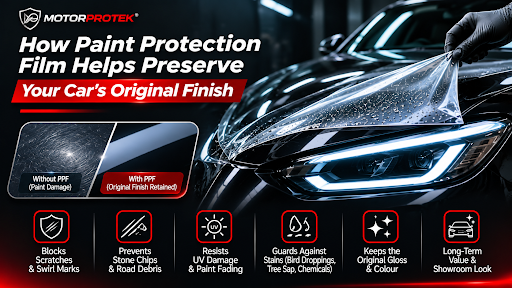
One of the first things people notice about a car is its original paintwork, but it is also one of the easiest parts of a vehicle to damage. Loose stones, road rubbish, bird droppings, tree sap, and repeated exposure to sunlight can slowly take their toll. Even careful driving can’t eliminate all risks, especially on busy Indian roads. Paint protection film is a practical way for car owners to minimize everyday wear without changing the vehicle’s original color if they want to keep the look of their car.
Paint protection film creates a physical barrier over the paint, as opposed to products that enhance the shine of the surface. When properly chosen and applied, it can help preserve the finish and make the long-term care of the vehicle easier.
What Is Paint Protection Film?
Paint protection film (or PPF for short) is a thin, flexible layer that can be applied to the painted surfaces of a vehicle. A lot of modern films are composed of thermoplastic polyurethane (TPU), which is flexible and can absorb some minor impacts.
It is suitable for fitment in high-risk areas like the front bumper, bonnet, side mirrors, and front wings. Owners may also opt to cover the whole body for more protection. Rather than leaving the painted surface completely exposed, the film sits over the paint and takes the first hit from some everyday hazards.
Quality products are designed to stay clear and to fit the contours of the vehicle. But the outcome will be dictated by the film, the condition of the paint, and the installer’s skill.
How PPF Protects Original Finish
1. Reduces stone chips & scratches
When driving, small stones and road debris can hit a car, especially on highways or construction roads. Paint impacts may mark/chip the bonnet & bumper.
2. Protect Paint from Pollutants
A vehicle with a lot of bird droppings, insect residue, tree sap, and road grime on it can be tough to clean. Contaminants can etch or stain paint.
3. Keeps Vehicle Appearance
Original paint is dulled by scratches, chips, and surface blemishes. PPF protects against daily damage, keeping the car cleaner and better maintained.
4. Possible finishes without painting
Paint protection film finishes are different. Clear gloss film maintains the glossy look. Matte film gives a satin finish.
PPF vs. Graphene Coating: Understanding the Difference
Graphene coating is a liquid surface treatment that is being marketed for such things as making surfaces water repellent, easier to clean, and to improve surface appearance. This is dependent on the formulation and the application. It can be helpful for owners who want to make routine maintenance easier, but it doesn’t typically offer the same physical barrier against stone impacts as PPF does.
Also, borophene coating is a name for some automotive coating products. Since commercial formulations vary, buyers should check the technical specifications and evidence provided by the manufacturer rather than rely on the name alone.
The main difference is simple: a coating changes the surface; PPF is a physical protective layer. The two approaches may complement each other if the products are compatible. For example, an approved film may be given a suitable coating to give it water repellency and cleaning.
How to Choose the Right PPF for Your Car
Films don’t all perform at the same level. Check the quality of material, clarity, thickness, expected service life, warranty terms, and quality of installation before buying. Ask the supplier what types of damage the product is designed to resist and what its limitations are.
Be sure to pay special attention to the installation. Dust trapped under the film, edges that are not well finished, and incorrect application can affect the look and lifespan of the film. Choose an experienced installer who will prepare the paint correctly and advise you on the maintenance required.
It is also worth getting the paint checked before installation. Any existing scratches or chips may still be visible under the film, so correction may be necessary for the best result.
PPF: keeping it after fitting
Use a mild automotive shampoo and a clean microfiber mitt to wash the car. Clean off bird droppings and other contaminants immediately with non-abrasive cleaning tools, following the manufacturer’s recommendations for pressure washing and approved products. Periodically check the edges for lifting or other damage.
These simple habits can keep the film looking right and working the way it should.
Conclusion
Paint protection film is a practical way to maintain a car’s original finish, minimizing exposure to stone chips, minor abrasion, and everyday contaminants. While graphene coating and borophene coating products are good for maintaining the surface, PPF is the better option if physical protection is the main priority.
Pick the right film, have it professionally installed, and maintain a regular care schedule, and your vehicle can look its best for years.