
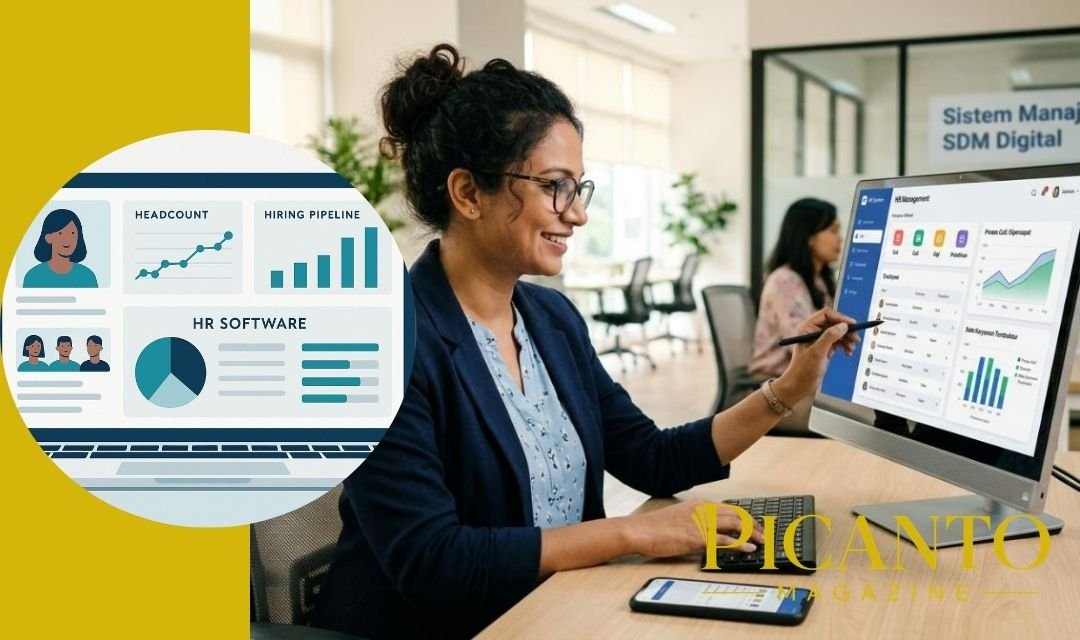
HRMtaila is an emerging online term commonly connected with artificial intelligence, automation, and human resource management. It is usually presented as an idea for combining important workplace tools—such as recruitment, payroll, attendance, employee records, and performance tracking—inside one intelligent system. However, HRMtaila does not currently appear to be a widely established software brand or formally recognized technical standard.
| Quick facts | Details |
|---|---|
| Name | HRMtaila |
| Main interpretation | AI-powered human resource management |
| Common category | Workplace technology concept |
| Main purpose | Making HR tasks quicker and more organized |
| Possible users | HR teams, managers and business owners |
| Key areas | Hiring, attendance, payroll and performance |
| AI connection | Automation, predictions and employee support |
| Confirmed major software platform | Not clearly established |
| Official creator | Not publicly confirmed |
| Best description | An emerging HR technology keyword |
What Is HRMtaila?
HRMtaila can be understood as a modern concept that connects human resource management with artificial intelligence. Its suggested purpose is to help companies manage their employees without depending on numerous disconnected spreadsheets, paper records, emails, and software applications.
Think of a company employing 200 people. Its HR team must store personal records, calculate working hours, arrange interviews, approve holidays, answer staff questions, and prepare performance reports.
Completing everything manually requires a great deal of time. It can also create mistakes.
An HRMtaila-style system would try to bring these jobs into one digital workplace. Automation could complete repetitive tasks, while AI could help managers understand information and make better decisions.
Several recent websites have adopted this interpretation, although they do not establish HRMtaila as an independently verified commercial platform.
Is HRMtaila a Real Software Platform?
This is the most important question.
At present, there is limited trustworthy evidence showing that HRMtaila is a fully developed commercial software product. No widely recognized developer, official launch announcement, detailed product documentation, or dependable company history is clearly connected with the name.
Most available information describes it as an emerging concept rather than a product that businesses can confidently purchase and install.
That means readers should not automatically assume that HRMtaila has:
- An official application
- A verified company
- A customer-support team
- Public pricing plans
- A mobile application
- A working demonstration
- Confirmed business customers
- Tested security systems
It is safer to describe HRMtaila as an online keyword associated with AI-powered HR management. If a genuine product later adopts the name, its official website and business records should provide verifiable information.
What Does the Name HRMtaila Mean?
The first three letters probably refer to Human Resource Management, normally shortened to HRM. The remaining part, “taila,” has no clearly documented explanation.
It could have been added to create a memorable technology name. It might also suggest a tailored or personalized approach, but this is only a possible interpretation.
No confirmed creator has publicly explained the word’s construction. Claims about its exact origin should therefore be treated carefully.
What is clear is that recent articles use HRMtaila when discussing smarter and more automated HR work. That shared theme provides a practical meaning even though the name’s history remains uncertain.
Why Are Businesses Interested in AI-Powered HR?
Human resources involves many small but important tasks. A single mistake in salary calculations, holiday records, or employee information can create a serious problem.
AI and automation can reduce some of this administrative pressure.
For example, a digital system can remind managers about expiring documents. It can automatically calculate attendance totals. It can arrange job applications according to skills and experience.
This allows HR professionals to spend more time speaking with employees, improving company policies, and solving complicated workplace problems.
However, technology should assist people rather than remove human judgment. A computer does not always understand personal circumstances, cultural differences, or the emotional side of a workplace decision.
Possible Features of an HRMtaila System
Because no definitive HRMtaila product specification is publicly established, its features cannot be confirmed. Still, an AI-powered HR platform based on this idea could contain several useful tools.
Employee Record Management
Every company needs accurate employee records. These may contain contact information, job titles, joining dates, emergency contacts, contracts, salary details, and training history.
A central system could store this information securely. Authorized employees would be able to find records without searching through paper files or long email conversations.
Different access levels would be essential. A department manager might see an employee’s job information but not private banking or medical details.
Recruitment and Applicant Screening
Hiring can become difficult when hundreds of people apply for one position. Recruiters may spend days opening résumés and identifying suitable candidates.
AI could organize applications according to relevant qualifications, work experience, location, or required skills. It could also schedule interviews and send automatic messages.
However, the system should never make the final hiring decision alone. Automated screening can repeat unfair patterns hidden inside historical data.
A trained person must review the results.
Employee Onboarding
New employees need contracts, account access, company policies, training, and introductions to their teams. Missing even one step can make their first week confusing.
An HRMtaila-style platform could create a personal onboarding checklist. It might remind the new worker to upload documents while telling the manager to prepare equipment and arrange training.
A clear onboarding process helps an employee feel welcomed and ready to work.
Attendance and Leave Management
Paper attendance sheets are slow to check and easy to misplace. Separate leave requests can also make scheduling difficult.
A central platform could record working hours, late arrivals, holidays, sick leave, and remote-working days. Employees could submit requests online, and managers could approve them from one screen.
The software might also warn a manager if too many people from the same department request leave on one day.
Payroll Assistance
Payroll requires accuracy. Companies must consider salaries, working hours, bonuses, overtime, deductions, taxes, and leave.
Automation can collect the necessary information and prepare calculations. It can also reduce repeated data entry.
Still, local employment and tax rules can change. Qualified payroll professionals should review calculations before employees are paid.
Performance Management
Traditional performance reviews often happen only once or twice a year. Employees may receive feedback long after a problem begins.
Digital HR tools can support more frequent conversations. Managers can record goals, recognize achievements, and arrange development plans throughout the year.
AI could identify patterns, but performance should never be judged using numbers alone. Teamwork, creativity, leadership, and personal growth can be difficult for software to measure fairly.
Employee Self-Service
HR teams regularly receive simple questions:
“How many holiday days do I have?”
“Where can I download my salary slip?”
“How do I update my home address?”
A self-service area could allow employees to complete these tasks without waiting for an HR representative. A carefully designed assistant might also answer common questions using approved company policies.
Complex or personal questions should always be passed to a real person.
How HRMtaila Could Help Small Businesses
Large organizations normally have dedicated HR departments, but small businesses may depend on one manager to handle almost everything.
An affordable HR platform could help a small company create a more organized process. It might keep employee records together, prepare reminders, record attendance, and manage holiday requests.
The greatest benefit would be saved time.
Imagine a restaurant owner who currently records staff shifts in a notebook. A digital system could show who is working, calculate total hours, and highlight scheduling gaps.
The owner would still make the decisions, but the system would make the information easier to understand.
Benefits for Larger Organizations
A large company may employ people across several offices, cities, or countries. Managing information consistently becomes much harder at that scale.
An intelligent HR system could create one place for shared records while allowing each office to follow local rules. Managers could study general workforce patterns without opening thousands of individual files.
Potential benefits include:
- Faster reporting
- Consistent onboarding
- Easier document management
- Fewer repeated administrative tasks
- Clearer attendance information
- Improved communication
- Better access to training
- More organized performance reviews
The system’s value would depend on accurate data and responsible use. Poor information can lead to poor recommendations, regardless of how advanced the AI appears.
The Human Side of Human Resources
The word “human” is the most important part of human resources.
Employees are not simply numbers inside a database. They have families, responsibilities, ambitions, health concerns, and different ways of communicating.
Technology can organize records, but it cannot replace empathy.
Suppose an employee begins arriving late because a family member is seriously ill. A computer may identify an attendance problem. A thoughtful manager will ask what is happening before deciding how to respond.
HRMtaila should therefore be imagined as an assistant rather than a digital boss. It can present useful information, but sensitive decisions must remain under responsible human control.
Privacy and Data Security
An HR platform may contain some of a company’s most sensitive information. This can include home addresses, identification numbers, salaries, bank details, contracts, attendance records, and performance reviews.
Strong security is not optional.
A trustworthy system should provide:
- Data encryption
- Secure login protection
- Multi-factor authentication
- Permission-based access
- Regular security updates
- Activity records
- Reliable backups
- Clear data-retention rules
- A process for reporting security incidents
Before using any HR platform, a company should know where its information will be stored and who can access it.
Businesses should be particularly careful about giving employee data to an unverified service. A modern design and impressive AI promises do not prove that a platform is secure.
Can AI Create Unfair HR Decisions?
Yes, it can.
AI learns from data. If previous company decisions contained unfair treatment, an automated system may discover and repeat those patterns.
Imagine that a company’s earlier managers usually selected applicants from one particular background. An AI trained on those decisions might incorrectly learn that this background predicts success.
The machine would not need to understand prejudice to produce an unfair result.
Businesses should regularly test automated HR tools for bias. Employees should also have a way to question decisions and request a human review.
Important decisions about hiring, promotion, discipline, or dismissal should not be made entirely by an algorithm.
HRMtaila and the Future of Recruitment
Recruitment is one of the areas most likely to change through AI.
Future systems may help write job descriptions, match skills with vacancies, arrange interviews, and answer applicants’ basic questions. They may also help candidates discover positions that suit their experience.
This could make hiring faster, but speed is not everything.
A good recruitment process must be fair, understandable, and respectful. Applicants should know when automated tools are examining their information.
They should not be silently rejected because a system misunderstood their résumé.
Could HRMtaila Support Remote Teams?
Remote and hybrid working have created new HR challenges. Employees may work from different cities and rarely meet their managers in person.
A shared HR platform can help these teams access policies, training, leave records, announcements, and support from anywhere.
Managers could see whether remote employees have completed required training or received essential documents. Employees could update information without visiting an office.
However, workplace software should not become a surveillance tool. Constantly watching every mouse movement or screen activity can damage trust and create unnecessary stress.
The goal should be better support—not endless monitoring.
How to Evaluate an HRMtaila-Type Platform
If a product is promoted under the HRMtaila name, businesses should investigate it carefully before uploading employee information.
Ask the provider:
- Who owns and operates the software?
- Where is the company legally registered?
- Where will employee information be stored?
- Which security standards does the platform follow?
- Can the customer export and delete its data?
- How does the AI make recommendations?
- Can managers override automated results?
- What customer support is available?
- Are there independent reviews?
- What happens if the service closes?
A genuine supplier should answer these questions clearly. Avoid platforms that hide basic company information or demand sensitive data before explaining their security practices.
Advantages and Possible Limitations
An HRMtaila-style system could offer valuable benefits, but it could also create new risks.
| Possible advantages | Possible limitations |
|---|---|
| Saves administrative time | May misunderstand human situations |
| Organizes employee records | Stores highly sensitive information |
| Automates repeated tasks | Can repeat bias found in old data |
| Supports faster reporting | Requires training and setup |
| Improves employee self-service | May feel impersonal |
| Helps identify workforce patterns | Recommendations may be inaccurate |
| Supports remote access | Can become a surveillance concern |
| Reduces manual mistakes | Depends heavily on data quality |
Businesses should consider both sides before introducing any new HR technology.
Why Is HRMtaila Appearing on Different Websites?
HRMtaila has recently appeared in several online articles, often with similar descriptions involving AI and human resources. However, these pages do not always provide an original source or confirmed product documentation.
This may mean the keyword is developing through online publishing rather than through an official software launch.
One website explains the term. Other writers then create their own versions, adding possible functions and future benefits. Eventually, the repeated explanations can make it appear more established than it really is.
Readers should remember that repetition is not the same as verification.
Final Thoughts
HRMtaila is an interesting emerging term associated with AI-powered human resource management. It represents the idea of using automation to organize hiring, onboarding, payroll, attendance, employee support, and performance information.
The idea is practical because real HR platforms already perform many of these tasks. However, HRMtaila itself does not currently appear to be a clearly verified, widely recognized software product.
Businesses should therefore explore the concept without making assumptions about the name. Any platform handling employee information must be checked for security, legal compliance, company ownership, and reliable customer support.
The future of HR will almost certainly involve more artificial intelligence. Yet the best technology will not remove people from human resources. It will give them more time to listen, communicate, and make thoughtful decisions.
Frequently Asked Questions
What is HRMtaila?
HRMtaila is an emerging online term commonly interpreted as an AI-powered approach to human resource management.
Is HRMtaila a real company?
No widely recognized company operating under this exact name has been clearly verified. Available articles mostly describe it as a technology concept.
Is HRMtaila an HR application?
It may be discussed as if it were an application, but no definitive official platform or product documentation is currently well established.
What could HRMtaila be used for?
An HRMtaila-style system could potentially help with recruitment, onboarding, employee records, attendance, leave, payroll, performance reviews, and workplace reporting.
Can HRMtaila replace HR employees?
No. Automation can complete repeated tasks, but sensitive workplace decisions still require human experience, empathy, and judgment.
Is employee information safe in AI-powered HR software?
Safety depends on the platform. Businesses must examine encryption, access controls, data storage, privacy rules, and the provider’s reputation before uploading information.
Can AI make biased hiring decisions?
Yes. AI can repeat unfair patterns found in historical data. Employers must test their systems and provide human review.
Is HRMtaila suitable for small businesses?
The general concept could help small businesses organize their HR work. Suitability would depend on the actual platform’s price, features, security, and ease of use.
What should a company check before using HRMtaila?
It should verify the provider’s identity, security measures, data location, legal compliance, pricing, customer support, and procedures for exporting or deleting information.
Will HRMtaila become a recognized technology?
It may become better known if a genuine product or widely accepted definition develops. For now, it remains an uncertain emerging keyword connected with AI and HR management.
For more technology explanations, business insights, and helpful guides, visit Picanto Magazine.