
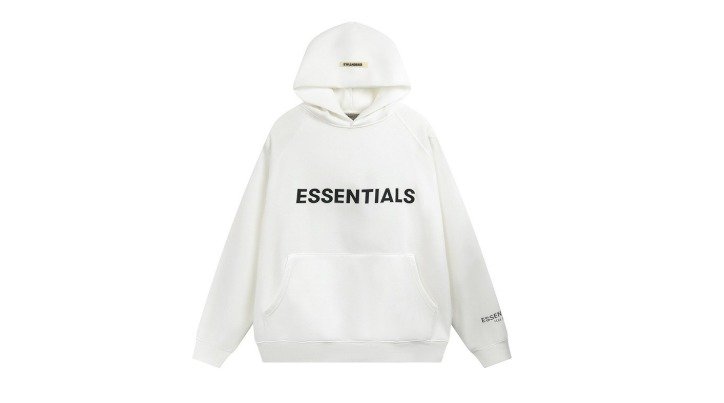
Nine hoodies sit in their own corner of the catalogue, filed under 1977, and nearly everyone who lands on that page asks the same thing within about four seconds — is this a different garment, or a different print on the same one? Fair question. The listing price doesn’t settle it either, because over on the hoodie pages at Essential Hoodie those nine carry the same flat C$99 as the seventy plain ones sitting beside them. So the number across the chest isn’t buying you a tier.
Nine pieces, not a separate line
Worth being clear about the shelf these things actually sit on. On essentialhoodiecanada.com the 1977 group has its own category link, nine products deep, while the main hoodie page runs to around seventy. That’s the whole structural difference — a subsection of the same Essentials Hoodie rail, not a parallel collection with its own fabric, its own sizing logic or its own delivery terms.
Shoppers tend to read a small product count as scarcity, and I’d push back on that a bit. Nine is simply how many pieces the shop happens to list under that heading right now, the way the Fear of God graphic language itself shows up across hoodies, tees and tracksuit pieces in different doses. A category that holds nine things is still a category.
So what actually changes?
The graphic. That’s the honest answer, and it’s a smaller answer than the category badge implies. A 1977 Essentials Hoodie carries the number as part of the front treatment rather than the plain logo block you get across the rest of the hoodies, so the chest reads as something specific instead of a blank slab of fleece.
Which matters more than it sounds like it should, because it turns the whole decision into a visual one. You’re choosing a face, basically, not a build. And once you’ve accepted that, the usual spec-sheet anxiety stops being relevant — there’s no hidden upgrade underneath the print that you’d be missing out on by going plain.
Same fleece, same drawcord
Open a 1977 listing in one tab and a plain hoodie in another and the description language reads more or less identically: fleece body, the French terry feel on the lighter pieces, a kangaroo pocket, ribbed cuffs and hem, a drawcord through the hood. Neither shop publishes a size chart or a fabric weight, so nobody can hand you chest and length numbers here, and I’d be a little suspicious of any article that tries.
Cut is the same story. Essentials runs oversized, as the shop itself puts it, and the oversized cut doesn’t quietly tighten up on the 1977 pieces just because they’ve got a number on them — that whole between sizes conversation plays out the same either way. Same drape, same shoulder drop, same slightly boxy hang at the hem.
The price holds still on one shop and moves on the other
On essentialhoodiecanada.com the flat C$99 covers both groups, which is genuinely unusual and means the 1977 choice costs you nothing extra. The other shop carrying this line, Essentials Hoodie, splits them: its plain hoodies land somewhere around C$111 to C$120, while the 1977 pieces run roughly C$117 up to about C$170. Treat those as approximate bands rather than a fixed sticker, because they shift by piece.
Why the gap? No idea, and I’m not about to invent a supply-chain story to fill it in. What I will say is that when the graphic costs nothing, the main argument against picking it disappears, and that’s a nicer position to shop from than the alternative.
Who ends up choosing one
Second-hoodie buyers, mostly. If there’s already a plain black one in the rotation, a 1977 front keeps the two from looking like duplicates in every photo, and that’s a practical reason rather than a style lecture. The other group is people who want the piece to read from the far side of a room — a quiet logo block does not do that, and no amount of good fleece will make it.
- Someone who already owns a plain hoodie in the same fleece and wants the next one to look different
- Anyone who finds the standard logo block a bit too quiet for how they dress
- Shoppers on the flat-priced shop, where going with the graphic version costs the same C$99
And it suits nobody who wants the most subdued thing on the rail. If the plan is layering it under a parka through a Toronto or Vancouver February, where only the hood and cuffs ever see daylight, then the print is money spent on something you’ll barely look at. Plain is the smarter buy there. Seriously.
A couple of things I’d look at before adding one to a cart
Colour is the first one, and it’s the real constraint of a nine-product category. The grey or off-white colourway you had in mind might simply not exist with the number on it, which is a narrowing problem rather than a quality one. The second is ordinary sizing care, since the shop says outright that mix-ups happen with a cut this loose, and the 14-day window for an exchange is there precisely because they do.
| Pro Tip: I look at the 1977 category first and the seventy-piece hoodie page second. Going the other way round means falling for a colour on the main page, then discovering the number version never came in it — at which point every 1977 piece looks like a compromise, which isn’t a fair way to judge them. |
Frequently Asked Questions
Is a 1977 Essentials Hoodie warmer than a plain one?
Nothing in the listings suggests so. Same fleece body, same hood, same cuffs — the number is a front graphic, not insulation, and I’d treat the two as interchangeable for warmth.
Does it cost more?
Depends which of the two shops you’re on. The flat C$99 on essentialhoodiecanada.com covers the 1977 pieces and the plain hoodies alike, while the second shop prices its 1977 group higher than its plain rail.
Should I size it differently?
No. It’s the same oversized cut as the rest of the hoodies, so whatever size works for you on a plain one works here, and the usual advice about the Essentials fit applies without adjustment.
Why are there only nine of them?
That’s just the current count under that category heading, nothing more. The main hoodie page carries roughly seventy, and the 1977 section is a slice of the same catalogue rather than a limited release with a closing date.
If the number does something for you, the flat price on one of these two shops means you’re not paying a surcharge for liking it, which is about as clean as this decision gets. If it does nothing for you, the plain Essentials Hoodie rail is seventy pieces deep and nobody is going to notice. The fleece underneath is identical either way, and that’s the part that actually spends the winter on your back.