
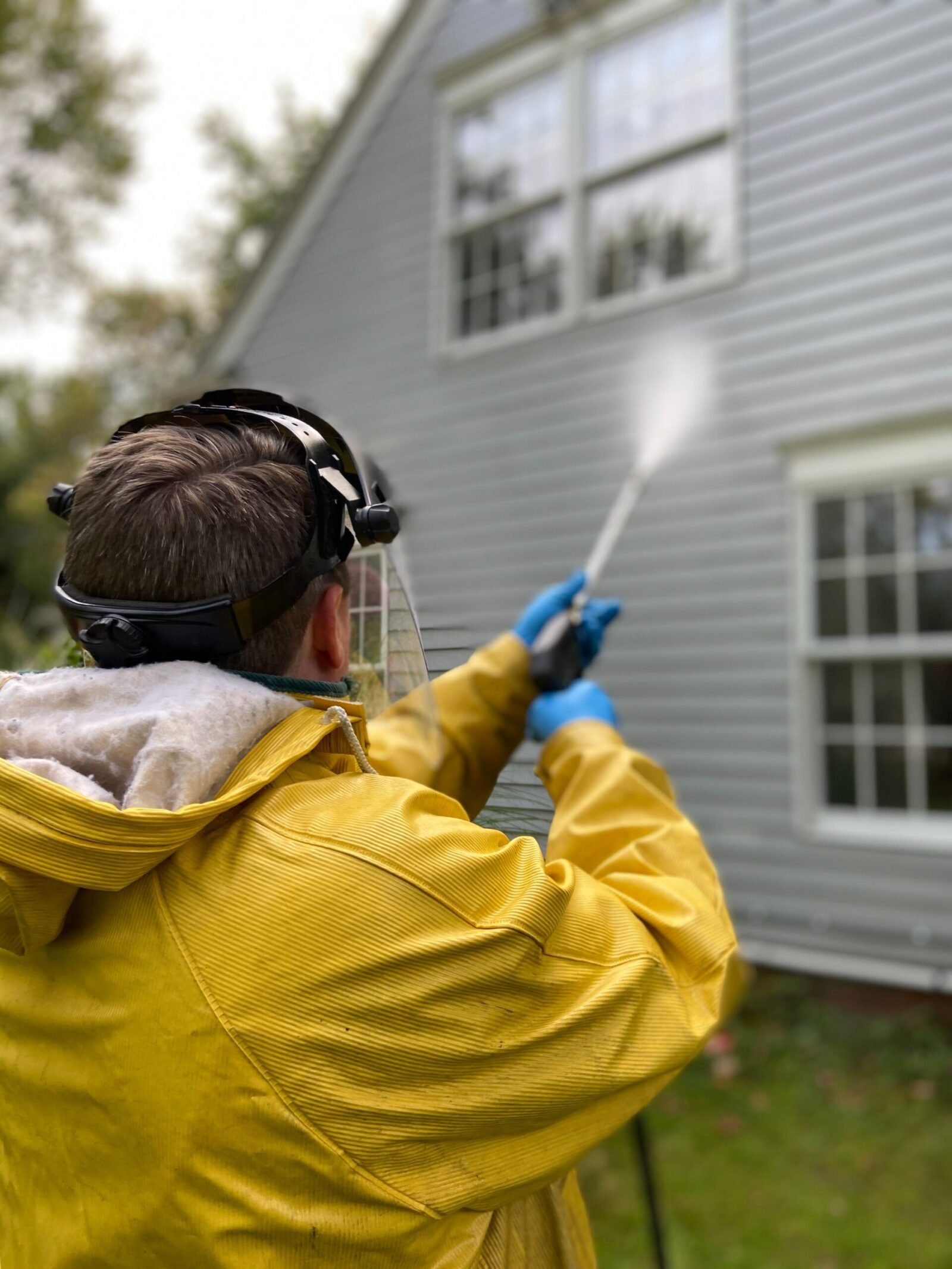
Power washing and regular cleaning both aim to remove dirt and buildup, but they go about it very differently. Regular cleaning typically relies on methods such as scrubbing, rinsing, and cleaning solutions, while power washing uses pressurized, heated water to tackle tougher buildup. Choosing the wrong approach can waste time or even damage the surface you’re trying to clean.
Most homes and businesses need both at some point. A driveway with years of oil stains calls for something stronger than a patio that just needs its yearly dust-off. Getting this choice right matters more than people think. The wrong method can strip paint, force water behind siding, or simply fail to remove the grime you are after.
Knowing which one fits the job saves you time, money, and the hassle of repairing a surface later.
What is Power Washing?
Power washing uses high-pressure water combined with a heating element. That heat is the whole point. It loosens grease, breaks down oil, and cuts through stubborn buildup that can be much harder to remove with cold water alone. Therefore, because of that heat and force, power washing works best on tough, durable surfaces.
It is suitable for heavy-duty jobs. For example, thick motor oil stains on a garage floor, old chewing gum stuck to concrete, or stubborn salt and mildew that’s built up over a whole winter. Durable surfaces such as concrete driveways, brick, and unpainted industrial floors are often suitable for power washing when the appropriate pressure and temperature are used. This method is often used in commercial or industrial settings where sanitation and heavy-duty grime removal are key.
If you are running a business or managing a property in New Hampshire, consider investing in professional power washing in Concord to enhance both cleanliness and curb appeal.
Benefits of Professional Power Washing
Professional power washing does more than make outdoor surfaces look cleaner. The combination of heated water and high pressure can remove stubborn grease, oil, mildew, dirt, and other buildup that ordinary cleaning may leave behind. This can restore the appearance of driveways, walkways, patios, brick surfaces, and other durable areas around a property.
It also saves time and effort. Large surfaces can take hours to clean by hand, while the right power-washing equipment can clean them much faster. Professionals also know how to adjust the pressure and temperature for different surfaces, reducing the risk of cracked mortar, stripped paint, or other damage.
Power washing can also be helpful when you are doing home-maintenance work. For example, if you are planning interior painting in Concord, cleaning the exterior beforehand can give the property a more finished and well-maintained appearance.
What’s the Difference?
The following are the main ways power washing and regular cleaning differ, broken down one by one.
Water temperature
Heat is one of the main things that sets power washing apart. Power washing uses heated, pressurized water, while regular cleaning may use water at different temperatures depending on the surface and cleaning method. The added heat can make power washing particularly effective against grease, oil, and stubborn buildup.
Industry testing indicates that hot-water pressure washing can reduce cleaning time by around 35–40% compared with cold-water cleaning in certain applications.
Type of contamination
Power washing has an advantage when dealing with oil, grease, and stubborn buildup because heat can help loosen these substances. Regular cleaning is often sufficient for everyday dirt, dust, mud, and light grime. The right method depends on both the type of buildup and the surface being cleaned.
Type of surfaces
Power washing is particularly effective on durable surfaces that can withstand heat and pressure, such as certain concrete, brick, stone, and metal surfaces. Regular cleaning remains useful for routine maintenance and surfaces that do not require the additional cleaning power of heated, pressurized water.
Need for detergent
The heat used in power washing can help loosen oily or greasy buildup, potentially reducing the amount of detergent needed. Regular cleaning may rely more on cleaning solutions, scrubbing, or other methods to loosen stubborn grime. The amount of detergent required ultimately depends on the surface and type of contamination.
Water pressure
Power washing uses high-pressure water to loosen and remove buildup efficiently. Regular cleaning generally relies on lower-pressure water, manual scrubbing, brushes, or cleaning solutions. Because power-washing equipment can produce significant pressure, choosing the correct setting and nozzle is important to avoid damaging the surface.
Research indicates that a standard garden hose delivers water at around 50 psi, whereas a pressure washer can reach 1,500 to 4,000 psi. This difference is big enough to strip paint, gouge wood, or crack aging mortar if the wrong setting is used on the wrong surface.
Drying Time
Heated water can help cleaned surfaces dry faster, which can be useful when turnaround time matters. Drying time with regular cleaning varies depending on the method used, the amount of water involved, the surface, and environmental conditions.
Common Use Cases
Power washing is most common in commercial, industrial, and restoration jobs, where buildup is heavier and requires a stronger approach. Regular cleaning is better suited to routine residential and commercial upkeep.
The choice of washing method usually depends on the size of the job and how much grime has built up. The risk increases quickly once height, electrical outlets, or delicate materials are involved.
Final Thoughts
Regular cleaning can handle everyday dirt and routine upkeep, but some surfaces need more than basic scrubbing and rinsing. When stubborn grease, grime, stains, and years of buildup are involved, power washing offers a faster and more effective way to restore the appearance of durable outdoor surfaces.
With heated water, professional equipment, and the right technique, power washing can take much of the effort out of heavy-duty exterior cleaning. For homeowners and businesses looking to refresh driveways, walkways, patios, and other suitable surfaces, professional power washing can be a worthwhile addition to regular property maintenance.