
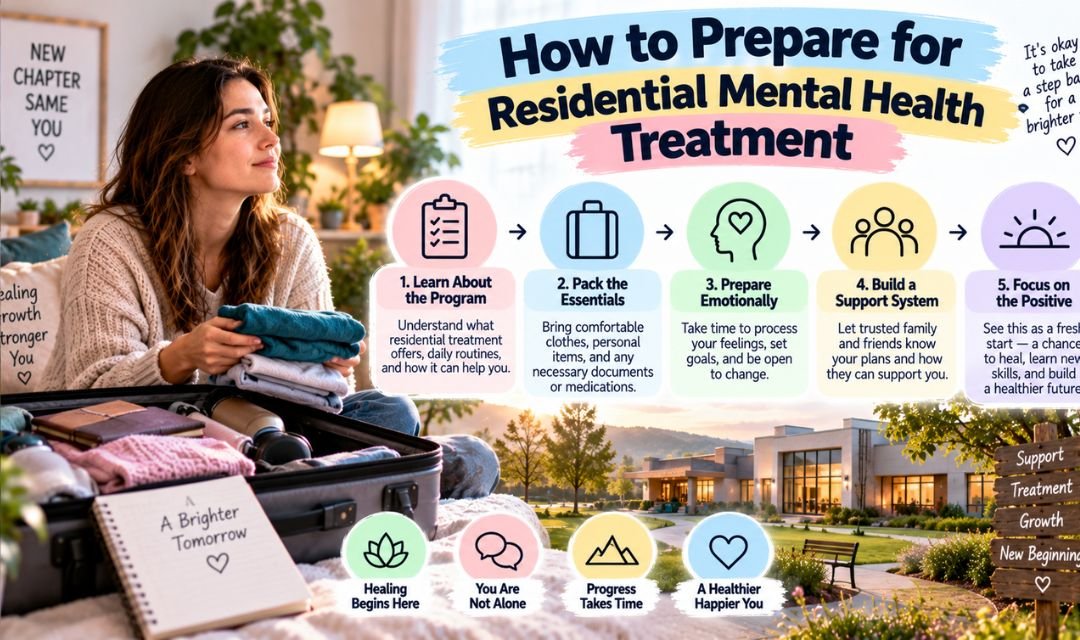
Choosing to enter residential treatment for mental health or substance use is one of the most significant decisions a person can make. It takes courage, and it takes planning. Yet most people who arrive at that decision spend far more energy wrestling with the choice itself than preparing for what comes next. That gap between deciding and preparing can make the first days of treatment feel chaotic and overwhelming, which is the last thing anyone needs when they are already in a vulnerable place.
This article walks through what residential treatment actually involves, how to get your mind and your life ready before you check in, and what the research tells us about who tends to do well. Whether you are preparing for yourself or helping someone you love, the information here should give you a clearer picture of what to expect.
What Residential Treatment Actually Looks Like
Residential treatment means living at a facility full-time for a defined period while receiving intensive therapeutic support. Unlike outpatient programs, which allow patients to return home each evening, residential care provides a structured, immersive environment. That structure is intentional. Removing a person from their everyday triggers, stressors, and social pressures gives the brain and body a genuine chance to reset.
Programs vary considerably in length and focus. Some specialize in acute psychiatric stabilization and last a few weeks. Others address co-occurring disorders, meaning both a mental health condition and a substance use disorder at the same time, and may run 60 to 90 days or longer. The clinical model matters too. Evidence-based approaches such as cognitive behavioral therapy, dialectical behavior therapy, and trauma-focused care appear frequently across reputable programs.
| Program Type | Typical Duration | Primary Focus |
| Acute Psychiatric Stabilization | 7 to 30 days | Crisis management, medication evaluation |
| Residential Mental Health | 30 to 90 days | Therapy, skill building, stabilization |
| Dual Diagnosis (Co-occurring) | 60 to 90+ days | Mental health and substance use together |
| Long-Term Residential (e.g., therapeutic communities) | 6 to 12 months | Deep behavioral and social restructuring |
What the Research Says About Residential Treatment Outcomes
Skepticism about residential treatment is understandable, especially given its cost and the disruption it causes to daily life. But the evidence is fairly consistent: longer, more intensive treatment tends to produce better outcomes than shorter or less intensive alternatives for people with severe or complex conditions.
The Substance Abuse and Mental Health Services Administration (SAMHSA) has documented that individuals who complete a full course of residential treatment show significantly better rates of sustained recovery compared to those who leave early. A study published in the Journal of Substance Abuse Treatment found that program completion was one of the strongest predictors of long-term sobriety, outweighing factors like the type of substance used or prior treatment history. For mental health conditions, a 2020 review in Psychiatric Services found that residential care reduced symptom severity and hospitalizations for patients with serious mental illness, particularly when combined with robust aftercare planning.
One finding that surprises many people: the therapeutic alliance, meaning the quality of the relationship between a patient and their treatment team, predicts outcomes nearly as reliably as the specific treatment technique used. Arriving prepared and open makes it easier to build that alliance quickly.
Preparing Your Mind Before You Arrive
Practical preparation matters, but mental preparation matters just as much. Many people arrive at residential treatment with a mix of relief, fear, shame, and ambivalence. All of those feelings are completely normal. Acknowledging them beforehand, rather than pushing them aside, tends to make the transition smoother.
Adjusting Expectations
Treatment is not a retreat. It is not a punishment either. It sits somewhere in between: a demanding, sometimes uncomfortable process that requires active participation. Progress is rarely linear. There will be days when old patterns feel more appealing than new ones, and days when something genuinely shifts. Going in with realistic expectations, rather than hoping for a sudden transformation or dreading an ordeal, tends to support better engagement with the process.
Talking to People Who Need to Know
Deciding who to tell, and how much to share, is a personal decision. Some people find that being open with close family members reduces stress. Others prefer privacy. What tends to create problems is leaving important relationships and responsibilities in a state of uncertainty. If you have a partner, children, an employer, or financial obligations that will be affected, addressing those before you check in allows you to be present in treatment rather than preoccupied with unresolved loose ends.
Handling Practical Logistics Before Check-In
The administrative and logistical side of entering residential treatment can feel overwhelming on top of everything else. Breaking it down into categories helps.
- Insurance and payment: Verify your coverage with the facility’s admissions team before your start date. Understand what your out-of-pocket costs will be and ask about payment plans if needed.
- Medical documentation: Gather a list of current medications, dosages, and prescribing providers. Bring enough medication to last at least the first few days, even if the facility has a pharmacy on site.
- Legal and financial matters: Set up bill autopay, notify your bank if needed, and consider granting a trusted person limited power of attorney if you will be unavailable for an extended period.
- Employment: The Family and Medical Leave Act (FMLA) in the United States may protect your job while you are in treatment. Speak with your HR department confidentially if this applies to you.
- Childcare and pet care: Arrange reliable coverage before you leave. Worrying about your children or animals during treatment is a real barrier to engagement.
Knowing what to bring to residential treatment is another practical piece that many people overlook until the last minute. Most facilities provide a specific packing list that reflects their policies around electronics, clothing, toiletries, and personal items. Reviewing that list early prevents the scramble of packing the night before admission and reduces the chance of bringing something that will be flagged at intake.
What to Expect During the First Few Days
The first 48 to 72 hours of residential treatment are typically devoted to orientation and assessment rather than deep therapeutic work. Staff will review your medical history, conduct psychiatric evaluations, and begin to understand your specific needs. This phase can feel slow or even frustrating if you arrived eager to get started, but it serves an essential function. Treatment that is tailored to an accurate clinical picture works better than a one-size-fits-all approach.
Group therapy usually begins within the first day or two. Many people feel self-conscious or guarded in group settings at first, which is completely expected. Over time, group work tends to become one of the most valued parts of the residential experience. Hearing others articulate feelings that felt impossible to express on your own has a kind of relief that individual therapy alone does not always provide.
Sleep disruption is common in the early days, particularly if detox is involved or if the schedule is dramatically different from what a person is used to. Physical activity, consistent mealtimes, and limited screen time, all of which are built into most residential schedules, help the body recalibrate faster than most people expect.
Building a Foundation for What Comes After
Residential treatment is a beginning, not an end point. The gains made during an intensive inpatient stay are most durable when they connect to a structured plan for what happens after discharge. Relapse rates for both mental health conditions and substance use disorders are significantly higher among people who transition directly from residential care to no care at all.
Step-down planning, which involves arranging a less intensive level of care before returning fully to independent life, is considered best practice across the field. This might mean transitioning to a partial hospitalization program, an intensive outpatient program, or a sober living environment, depending on individual circumstances. Peer support, whether through 12-step programs, SMART Recovery, or other community groups, also plays a meaningful role in sustaining progress over the long term.
- Identify a step-down program before your discharge date, not after.
- Schedule your first outpatient therapy appointment to occur within the first week after leaving residential care.
- Create a concrete plan for managing high-risk situations or triggers you identified during treatment.
- Share your aftercare plan with at least one trusted person in your support network.
- Know the warning signs of relapse or crisis specific to your condition, and know who to call.
Preparation does not guarantee a smooth experience. Treatment is hard, and recovery has setbacks. But arriving informed, with logistics handled and realistic expectations in place, gives the process the best possible chance to do what it is designed to do: help a person build a genuinely different life. The effort you put in before the first day matters more than most people realize.