
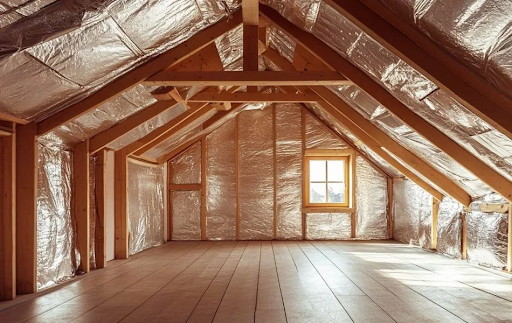
Choosing insulation becomes easier when you understand where heat enters a building. A roof exposed to direct sunlight can transfer considerable radiant energy toward the attic. Garage doors, metal sheds, and exterior walls can also contribute to unwanted indoor heat.
Different insulation materials address these problems in different ways. Some slow heat movement through solid materials, while others reduce radiant heat exchange. This distinction matters when choosing a product for a specific surface.
A roof radiant barrier uses a reflective surface to reduce radiant heat transfer. A foam core product adds another layer to the construction, which can provide additional resistance to heat movement.
Before purchasing anything, consider the building structure and available installation space. The right material should match the surface, climate, and intended application.
How Does a Foam Core Insulation Roll Work?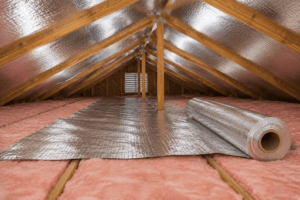
A foam core insulation roll usually contains a lightweight internal layer covered by reflective material. The outer facing reflects radiant energy when it faces a suitable air space. The internal core contributes additional resistance to heat movement.
Some products use polyethylene foam between two reflective aluminum surfaces. This arrangement creates a flexible material that can be cut and fitted around different areas.
The foam layer also gives the roll more structure than a thin foil sheet. It can make handling easier during installation, particularly when covering larger surfaces.
However, the complete assembly determines thermal performance. A reflective facing needs an adjacent air space to reduce radiant heat transfer. Direct contact with another solid surface can allow heat to move through the material by conduction.
When Does a Roof Radiant Barrier Make Sense?
Roof surfaces receive solar energy throughout the day. As roofing materials become warmer, they transfer heat toward the structure underneath. This can increase the temperature inside a vented attic.
A reflective layer can reduce the radiant energy moving between the underside of the roof and other attic surfaces. It is particularly relevant when summer heat gain is a major concern.
New Roof Construction
Installing reflective material during roof construction can make placement easier. The installer can position it before the roof assembly becomes difficult to access.
Some roofing products also include a reflective layer as part of the roof sheathing. This approach allows the reflective surface to become part of the original construction.
Existing Attic Improvements
An existing attic may allow reflective material to be attached beneath the roof rafters or trusses. The installation needs to preserve the required ventilation paths.
Dust accumulation also matters. A reflective surface covered with dust may lose some of its ability to reflect radiant energy.
Metal Roof Structures
Metal roofs can become hot under direct sunlight. A suitable roof radiant barrier may help reduce radiant heat transfer into the space below.
However, metal roof assemblies also require careful moisture management. Condensation can develop when warm, humid air contacts cooler surfaces. Review the complete roof design before adding a reflective layer.
What Makes a Foam Core Roll Different From Other Roof Insulation Options?
Not every insulation product uses the same construction. Some are flexible rolls, while others are rigid panels or sprayed materials.
Reflective Foil Without a Foam Core
A basic radiant barrier consists of a reflective surface, often aluminum foil. Its main purpose is to reduce radiant heat transfer across an adjacent air space.
This type of material is lightweight and easy to handle. However, it doesn’t provide the same material-based thermal resistance as thicker foam products.
Foam Core Reflective Rolls
These products combine reflective outer layers with an internal foam structure. Their flexible construction makes them useful for selected applications where rigid panels are difficult to fit.
A foam core insulation roll may suit window coverings, garage doors, and certain roof or wall assemblies. Check its technical specifications before using it as a primary insulation layer.
Rigid Foam Boards
Rigid boards provide a more solid insulation layer. They are commonly used in walls, roofs, foundations, and other building assemblies.
Their thickness and compressive strength can make them suitable for applications where a stable panel is needed. However, they require accurate cutting and careful joint treatment.
The following comparison explains the main differences.
| Material | Main characteristic | Suitable applications |
| Reflective foil | Reduces radiant heat transfer | Suitable attic and roof assemblies |
| Foam core reflective roll | Flexible construction with reflective surfaces | Selected windows, doors, and building surfaces |
| EPS board | Lightweight expanded foam | Walls, roofs, and foundations |
| XPS board | Closed-cell rigid foam | Foundations, floors, and walls |
| Polyiso board | High thermal resistance per inch | Suitable roof and wall assemblies |
Choosing Between Radiant Barrier Spray and Spray Foam Insulation
These two options may sound similar, but they perform different functions. Understanding their construction helps prevent purchasing the wrong product.
A radiant barrier coating uses reflective properties to reduce radiant heat exchange. It is applied to a suitable surface and doesn’t function like a thick insulating foam layer.
Spray foam expands after application and forms an insulating layer. Depending on its formulation, it can also help reduce air leakage when installed correctly.
When Reflective Spray Products Are Considered
Reflective coatings may suit selected surfaces where a coating application is practical. Their performance depends on measured reflectivity, emissivity, surface preparation, and application thickness.
A coating shouldn’t be assumed to perform like a foil barrier. Check independent technical data before relying on its advertised heat control properties.
When Spray Foam Is More Suitable
Spray foam can be useful when a building requires insulation around irregular surfaces. It can fill gaps and form a continuous layer when installed correctly.
However, installation requires attention to ventilation, chemical handling, fire protection, and moisture control. Some applications also require professional installation.
A reflective coating and spray foam aren’t direct replacements for each other. Choose according to whether your main concern is radiant heat, conductive heat transfer, or air leakage.
Understanding the Main Types of Foam Board Insulation
Foam boards come in several forms. Their differences affect thermal resistance, moisture behavior, strength, and installation requirements.
Expanded Polystyrene
Expanded polystyrene, or EPS, is made from expanded foam beads. It is lightweight and available in different thicknesses and densities.
Its thermal performance depends on the specific product. Check its R-value, compressive strength, and moisture properties before selecting it for a roof or wall.
Extruded Polystyrene
Extruded polystyrene, or XPS, has a closed-cell structure. It generally offers good moisture resistance and is used in foundations, floors, and walls.
Its strength can make it suitable for applications where insulation experiences physical pressure. However, the product still needs correct detailing around joints and edges.
Polyisocyanurate
Polyisocyanurate, commonly called polyiso, is known for its relatively high R-value per inch under standard testing conditions. Many products include reflective foil facings.
It can be useful where installation space is limited. Its actual thermal performance can vary with temperature and product construction.
How to Select the Right Material for Your Project
The product’s appearance should not be your main selection factor. Check the specifications and installation requirements before comparing different options.
Consider these important details:
- Intended installation location.
- Reflective surface and emissivity.
- Foam type and thickness.
- Published R-value and testing method.
- Moisture resistance and vapor permeability.
- Fire classification and temperature limits.
- Required air space.
- Available mounting and fastening methods.
For example, a garage door may benefit from a flexible reflective material that fits its individual panels. A roof assembly may require a different product with specific moisture and ventilation properties.
Also consider the climate. A material suitable for a hot, dry building may require different moisture protection in a humid environment.
Installation Practices That Affect the Final Result
Even a suitable product can perform poorly when installed incorrectly. Start by measuring the surface and checking its condition.
Remove loose dirt and identify existing moisture problems. Repair roof leaks before covering the structure with any insulation material.
Cut the roll according to the required dimensions. Use compatible fasteners or adhesives and follow the product’s instructions for overlapping joints.
For a roof radiant barrier, preserve the required air space and ventilation openings. Avoid covering soffit vents, ridge vents, or other designed airflow paths.
Keep reflective materials away from exposed electrical wiring and heat-producing equipment. Follow fire clearance requirements around chimneys, flues, and other hot surfaces.
After installation, inspect the complete area. Look for loose edges, damaged facings, blocked openings, and gaps that could affect the assembly.
Common Problems to Check Before Buying
Some insulation products are marketed with thermal ratings that can be difficult to compare. A claimed R-value may describe the complete assembly rather than the material alone.
Ask how the product was tested and whether its rating includes an air space. Don’t assume a thin reflective roll provides the same resistance as several inches of conventional insulation.
Moisture is another important concern. Reflective facings can restrict vapor movement, depending on their construction. Using them in the wrong location can create condensation problems.
Finally, check the intended application. A product designed for window coverage may not be suitable for permanent roof installation.
Final Words
A foam core roll can be a practical option when flexibility, lightweight construction, and reflective surfaces are important. It may suit selected projects where rigid boards are difficult to install.
However, the best material depends on the building assembly. A roof radiant barrier addresses radiant heat, while foam boards and spray foam provide different forms of thermal resistance.
Review the product specifications, available air space, moisture conditions, and installation requirements before purchasing. This approach helps you select insulation that addresses the actual problem rather than relying on general product claims.
Frequently Asked Questions
How do I choose the right radiant barrier for my roof?
Check the reflective surface, emissivity, fire rating, reinforcement, and installation requirements. Make sure the product allows suitable air space and doesn’t interfere with roof ventilation.
What should I consider when choosing between radiant barrier spray and spray foam insulation?
Consider the type of heat transfer you want to control. Reflective coatings reduce radiant heat exchange, while spray foam provides thermal resistance and can reduce air leakage.
What are the differences between various foam board insulations for radiant heat?
EPS, XPS, and polyiso differ in thermal resistance, moisture behavior, strength, and thickness. None should be selected based on radiant performance alone because their main function is providing thermal resistance.
Does a foam core insulation roll need an air gap?
A reflective facing generally needs an adjacent air space to reduce radiant heat transfer. Follow the manufacturer’s instructions for the intended installation.
Can a foam core roll replace roof insulation?
Not automatically. Its suitability depends on the required R-value, roof assembly, climate, and installation conditions. It may work as an additional layer rather than a complete replacement.