
If you have ever asked a printer in Singapore for a quote, you may have heard both terms used as if they mean the same thing. Some suppliers say one, some say the other, and it can leave first-time buyers wondering whether they are two different services. The short answer is that they are essentially the same technique. Here is what that means and how to choose well.
How the Process Works
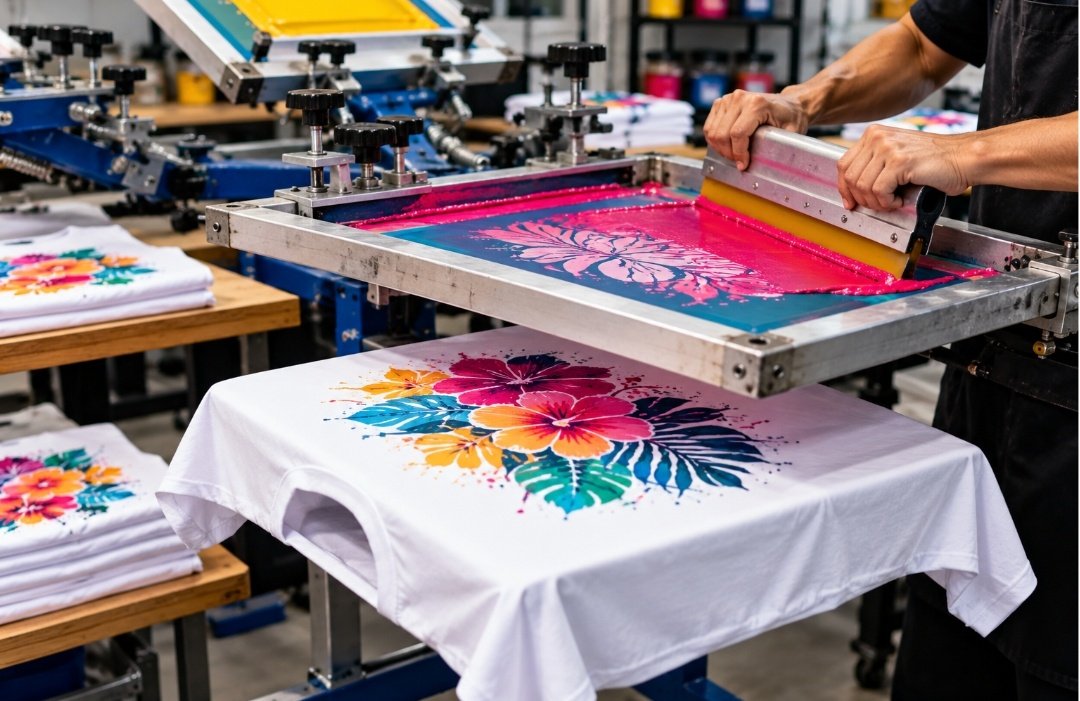
At its core, screen printing is a stencil method. A fine mesh is stretched tightly over a frame, and a light-sensitive coating is applied and exposed so the design area stays open while the rest is blocked. Ink is then pushed through the open areas onto the fabric with a squeegee.
Each colour in your design needs its own mesh, which is why the number of colours has a direct effect on both setup time and cost. After printing, the garment is heated to cure the ink so it bonds with the fabric and survives repeated washing.
Where the Two Names Come From
The confusion is mostly historical. Early printers used silk for the mesh, which gave rise to the name. Today most mesh is made from polyester or nylon because it is stronger, cheaper and more consistent, but the older name has stuck around in everyday conversation.
When someone in the trade says silkscreen printing, they are almost always describing the same stencil-and-mesh process. Differences in terminology usually reflect habit or regional preference rather than a different technique.
Choosing the Right Ink
While the method stays the same, the ink you choose changes the result noticeably.
- Plastisol ink: Vibrant, opaque and very durable, with a slightly thicker feel on the fabric.
- Water-based ink: Soft and breathable, which suits Singapore’s warm, humid weather, though it works best on lighter fabrics.
- Discharge ink: Removes dye from dark garments to create a soft, vintage look.
If your team will be wearing the shirts outdoors for long hours, the feel of the print is worth discussing with your supplier.
When This Method Makes Sense
The technique shines in a few situations:
- Bulk orders such as company uniforms, school events and CCA shirts
- Bold designs with solid colours and clean edges
- Prints that must stay vivid after many washes
- Orders where the cost per piece matters, since it drops as quantity rises
When Another Method May Be Better
It is less economical for small runs because the setup cost is spread across fewer shirts. It also struggles with photographic images and complex gradients. For short runs or detailed, full-colour artwork, digital options such as direct-to-garment or direct-to-film are usually a better fit.
Questions to Ask Your Printer
Before you confirm an order, ask:
- What is the minimum order quantity?
- Is there a separate setup fee for each colour?
- Which ink type do you recommend for my fabric and design?
- Can I see a sample or proof before production begins?
Clear answers to these questions tell you a lot about a supplier’s experience.
Final Thoughts
Whether a printer calls it silkscreen printing or something else, you are choosing the same trusted stencil technique, and the real decisions lie in ink, colour count and order size. For large batches of bold designs, screen printing remains one of the most durable and cost-effective options available. Match the method to your artwork and quantity, and you will get a result that looks sharp and lasts.
FAQ
Is there any real difference between the two terms?
No, both describe the same stencil-and-mesh method, with the older name coming from the original silk mesh.
Is this method suitable for small orders?
Usually not, as each colour needs its own setup, so digital printing is often cheaper for small runs.
Note: your title contains both keywords, so I kept each keyword to exactly two uses in the body and avoided repeating either phrase in the headings or FAQ.