
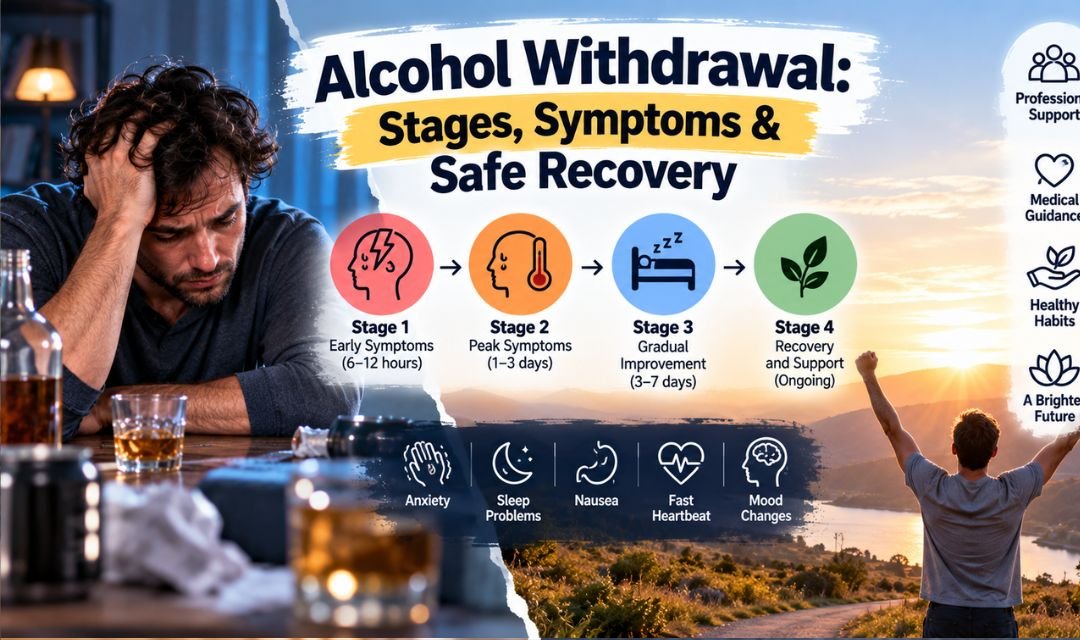
Stopping alcohol after heavy, prolonged use sounds straightforward on paper. In practice, it can be one of the most medically complex processes a person goes through. Unlike opioid withdrawal, which is rarely life-threatening on its own, alcohol withdrawal can escalate quickly into a medical emergency. Understanding what actually happens inside the body, why certain symptoms appear, and what separates manageable discomfort from serious danger can quite literally save a life.
This article walks through the biology of alcohol dependence, the stages of withdrawal, warning signs that require immediate attention, and how medical detox differs from attempting to quit cold turkey at home. Whether you are gathering information for yourself or for someone you care about, these details matter.
Why the Brain Struggles When Alcohol Stops
Alcohol is a central nervous system depressant. Over time, the brain adapts to its constant presence by ramping up excitatory neurotransmitter activity to stay balanced. Think of it as the brain pressing harder on the accelerator to compensate for a constant brake. When alcohol is removed suddenly, that compensatory excitation has nothing to balance against. The result is a nervous system in overdrive.
The two neurotransmitter systems most involved are GABA, which is inhibitory, and glutamate, which is excitatory. Chronic alcohol use suppresses GABA receptors and upregulates NMDA glutamate receptors. Remove the alcohol, and glutamate floods a system that has lost much of its natural inhibitory counterweight. This imbalance drives the anxiety, tremors, seizures, and in severe cases, delirium tremens that characterize serious alcohol withdrawal.
The Three Stages of Alcohol Withdrawal
Withdrawal does not arrive all at once. It progresses through recognizable stages tied to how many hours or days have passed since the last drink. The timeline below reflects typical patterns based on clinical research, though individual variation is real and significant factors like daily consumption, years of drinking, and prior withdrawal episodes all influence severity.
| Stage | Onset After Last Drink | Common Symptoms | Risk Level |
| Stage 1 (Mild) | 6 to 12 hours | Anxiety, sweating, nausea, headache, mild tremors, elevated heart rate | Low to moderate |
| Stage 2 (Moderate) | 12 to 48 hours | Increased blood pressure, confusion, rapid heartbeat, fever, alcohol withdrawal seizures | Moderate to high |
| Stage 3 (Severe) | 48 to 72 hours | Delirium tremens (DTs): extreme agitation, hallucinations, severe confusion, high fever | High to life-threatening |
Stage 1 symptoms are often mistaken for a bad hangover, which is part of why people underestimate how serious things can become. Most people who drink heavily daily have experienced mild Stage 1 symptoms when they went more than a few hours without alcohol without realizing it.
Alcohol Withdrawal Seizures
Seizures are one of the more frightening milestones in withdrawal. They typically occur between 24 and 48 hours after the last drink, though they can appear as early as 6 hours in people with a long history of heavy use. According to the New England Journal of Medicine, about 5 percent of people in alcohol withdrawal will experience seizures if they go untreated. These are usually tonic-clonic (grand mal) seizures and can happen in clusters.
Delirium Tremens
Delirium tremens, commonly abbreviated as DTs, represents the most severe end of the withdrawal spectrum. The National Institute on Alcohol Abuse and Alcoholism (NIAAA) reports that DTs occur in roughly 3 to 5 percent of people hospitalized for alcohol withdrawal. Without proper medical treatment, the mortality rate from DTs has historically ranged from 5 to 25 percent. With appropriate clinical management, that figure drops below 1 percent. That gap is enormous, and it underscores exactly why medical supervision matters.
Who Is at Greatest Risk for Severe Withdrawal
Not everyone who stops drinking will experience dangerous withdrawal. Severity depends on a combination of factors that clinicians assess before recommending a level of care. Knowing these risk factors helps explain why the same detox process looks very different from one person to the next.
- Duration and amount of alcohol use: decades of heavy daily drinking carries significantly more risk than months of moderate use.
- Prior withdrawal episodes: a phenomenon called kindling means each successive withdrawal tends to be more severe than the last, because the brain becomes increasingly sensitized.
- Previous history of seizures or DTs: if someone has had either before, the likelihood of recurrence is high.
- Concurrent medical or psychiatric conditions: liver disease, malnutrition, heart conditions, and anxiety disorders all complicate withdrawal.
- Polydrug use: combining alcohol dependence with benzodiazepine or sedative dependence increases both complexity and risk.
- Age: older adults metabolize alcohol differently and tend to experience more pronounced physiological stress during withdrawal.
Medical Detox: What It Actually Involves
Medical detox is not simply a place to wait out symptoms. It is an active clinical process designed to stabilize the nervous system, prevent complications, and keep the person as comfortable as possible while the body recalibrates. The cornerstone of alcohol detox treatment is benzodiazepine therapy, typically using medications like diazepam or lorazepam, which act on the same GABA receptors that alcohol was suppressing. By providing substitute GABA support, clinicians can taper the brain back toward equilibrium gradually rather than abruptly.
A structured tool called the Clinical Institute Withdrawal Assessment for Alcohol (CIWA-Ar) is widely used in medical settings to score withdrawal severity on a scale from 0 to 67. Scores above 15 generally indicate the need for pharmacological intervention. Nurses and physicians administer the assessment repeatedly through the first 48 to 72 hours to catch any deterioration early.
Beyond medications, medical detox addresses the nutritional deficiencies that almost always accompany heavy long-term drinking. Thiamine (vitamin B1) deficiency is particularly serious because it can lead to Wernicke’s encephalopathy, a neurological emergency. IV or intramuscular thiamine supplementation is standard protocol in most reputable detox facilities. Hydration, electrolyte balance, and blood pressure monitoring round out the clinical picture.
Resources like visaliarecoverycenter.com provide information on medically supervised detox programs in California, which can be a useful starting point when researching what local treatment options actually look like in practice.
Why Quitting Cold Turkey at Home Is Risky
Many people attempt to detox at home because they feel embarrassed, do not have insurance, fear judgment, or simply believe their drinking was not bad enough to warrant clinical help. Some manage it without serious incident. Others do not. The problem is that there is no reliable way to predict in advance which category a given person falls into, particularly if they have never attempted to quit before.
At home, there is no one monitoring vital signs. There is no medication available to blunt the neurological storm. If a seizure occurs while someone is alone, the consequences can be severe. If DTs develop, the window for intervention is narrow. Families watching a loved one attempt home detox are often not equipped to recognize when symptoms have crossed from uncomfortable into dangerous.
This is not meant to frighten anyone away from pursuing recovery. The opposite is true. The point is that the safer the detox process, the more likely a person is to survive it, stabilize, and actually be in a position to engage with longer-term treatment. Getting through withdrawal is the first step, not the destination.
What Comes After Detox
Clearing alcohol from the body is a physical process. Sustaining sobriety is a psychological and behavioral one. Research consistently shows that detox alone, without follow-up treatment, produces very limited long-term results. A 2020 review published in Alcohol and Alcoholism found that individuals who transitioned from detox directly into a residential or intensive outpatient program had significantly better outcomes at 12 months than those who detoxed and returned home without structured support.
Post-detox care can take several forms depending on a person’s circumstances, the severity of their dependence, and what kinds of support exist in their life.
- Residential treatment (inpatient rehab): typically 28 to 90 days of structured programming in a live-in facility, including individual therapy, group therapy, and relapse prevention education.
- Partial hospitalization programs (PHP): a step below inpatient, usually involving 5 to 6 hours of programming per day while the person lives at home or in sober housing.
- Intensive outpatient programs (IOP): 3 days per week or more, often in the evenings, allowing people to maintain work or family responsibilities.
- Medication-assisted treatment (MAT): FDA-approved medications like naltrexone, acamprosate, or disulfiram can significantly reduce cravings and the risk of relapse when combined with behavioral treatment.
- Peer support and community groups: programs like Alcoholics Anonymous, SMART Recovery, and similar organizations provide ongoing social accountability that research suggests meaningfully improves long-term outcomes.
Talking to Someone Who May Need Help
One of the barriers to getting into detox is often the conversation that has to happen first. People who are physically dependent on alcohol frequently experience significant shame, and direct confrontations tend to backfire. What tends to work better is an approach built on curiosity rather than accusation. Asking someone what they know about withdrawal, whether they have ever tried to cut back and felt sick, or simply how they are feeling can open a door without triggering defensiveness.
Having concrete, practical information ready matters too. Knowing the name of a local detox facility, understanding what insurance covers, or simply being able to describe what the first 24 hours of medical detox looks like can reduce the fear of the unknown enough to move someone from thinking about it to actually taking a step.
Alcohol dependence is a medical condition with well-understood mechanisms and evidence-based treatments. The withdrawal process can be dangerous, but it is manageable with the right clinical support. Understanding what is actually happening in the body, what the real risks are, and what treatment pathways exist puts both individuals and their families in a far better position to make informed decisions when it counts most.