
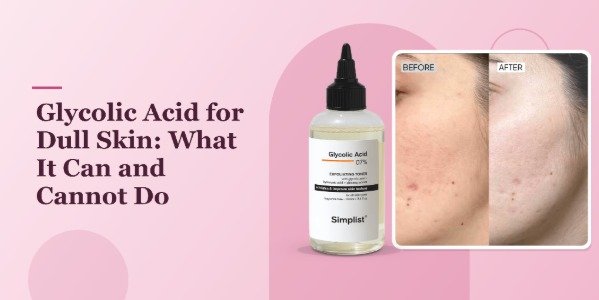
If your face looks flat and feels slightly rough no matter how much moisturizer you use, you are not alone. Glycolic acid for dull skin is one of the most common fixes people try, and it can help. But it is not magic, and it works best when you know what it actually does. This guide covers why dullness happens, how an AHA exfoliant works, who should be careful, and what a realistic timeline looks like.
What Usually Causes Dull, Rough Skin
Dullness is rarely one problem. It is usually a few small ones stacking up.
The top layer of your skin is made of dead cells that shed naturally. When that shedding slows down, cells pile up. Light bounces off an uneven surface instead of reflecting evenly, so skin looks tired and feels bumpy.
Common reasons include:
- Dryness, which makes dead cells cling to the surface
- Sun exposure over time, which can leave skin looking uneven
- Not exfoliating, or exfoliating with a harsh scrub that leaves tiny scratches
- Poor sleep, stress and a skipped routine, which show up on your face quickly
Notice what this list says. Some causes are about dead cells, and an exfoliant can help with those. Others, like dehydration or lack of sleep, need a different fix. That is the first honest limit of any acid.
How Glycolic Acid for Dull Skin Works, in Plain Words
Glycolic acid is an alpha hydroxy acid (AHA). Think of dead skin cells as bricks held together by a thin glue. An AHA loosens that glue, so the cells shed more easily instead of sitting on top.
The result is a smoother surface that reflects light better. That is why people reach for it when skin looks dull or feels rough, including on the arms and legs.
If you want to see a real formula, the Glycolic Acid toner from Simplist lists its strength openly: 7% AHA at a pH of 3 to 4. Strength and pH both matter, because together they decide how strongly an acid acts on your skin. A product that hides either number gives you less to judge it by.
It is also a leave-on product, so it stays on your skin overnight instead of being rinsed away. That is a different experience from a face wash, and it is why a slow start matters.
Who Should Be Careful
An exfoliating acid is not right for everyone, and it is better to know this before you buy.
- Sensitive or reactive skin: Go slowly, or talk to a dermatologist first. Mild tingling can happen, but redness that lingers means you are moving too fast.
- Broken, sunburned or irritated skin: Wait until it has healed.
- Pregnant or breastfeeding: The Simplist product page says to consult your doctor first. Ask about alternatives.
- Anyone already using other strong actives: Retinol, BHA and vitamin C should not share a night with this toner, according to the brand. Spread them across different nights.
Age matters too. The product page lists the toner for ages 18 and up.
Why Daily Sunscreen Is Not Optional
This is the part many guides rush past. AHAs can make skin more sensitive to UV light for a while. Research sponsored by the US FDA found that 10% glycolic acid increased how easily normal skin reacted to UVB rays. That effect faded within about seven days after people stopped using it. FDA draft guidance on AHA products recommended pairing them with sunscreen and limiting sun exposure.
The effect is temporary, but it is real while you are using the acid. So daily SPF is part of the routine, not an extra. Skip it and you can undo the very brightness you are chasing.
A Simple Weekly Pattern
A calm schedule beats an ambitious one. Here is a pattern that follows the brand’s own directions for its toner:
- Weeks one and two: Use it at night, two nights per week, for example Monday and Thursday. Press a few drops into clean skin and do not rinse.
- Other nights: Skip it. Use a simple cleanser and a moisturizer, or use your retinol or BHA on those nights, never on the same night.
- Every morning: Moisturizer, then sunscreen.
- Later: If your skin feels comfortable, add a night slowly. The brand says to use it no more than once a day.
The Glycolic Toner is built for night use only, so keep it out of your morning routine. A rich moisturizer afterward helps skin feel less tight.
Realistic Expectations
Here is the honest version. Many people notice skin feels a little smoother within the first couple of weeks. Visible brightness and a more even look often take longer. That depends on your skin, how often you use the acid, and how well you protect it from the sun. Results differ from person to person, and no product can promise an outcome.
An AHA also cannot do everything. It will not replace sleep, water or sunscreen. It will not change deep texture overnight. And if rough patches are painful, itchy or spreading, that is a question for a doctor, not an exfoliant.
Final Takeaway
Glycolic acid can be a useful tool for dull, rough-feeling skin, as long as you start slowly, keep actives on separate nights and wear sunscreen every morning. Begin with two nights a week, watch how your skin responds, and give it a few weeks before you judge it.